Sundubu Jjigae
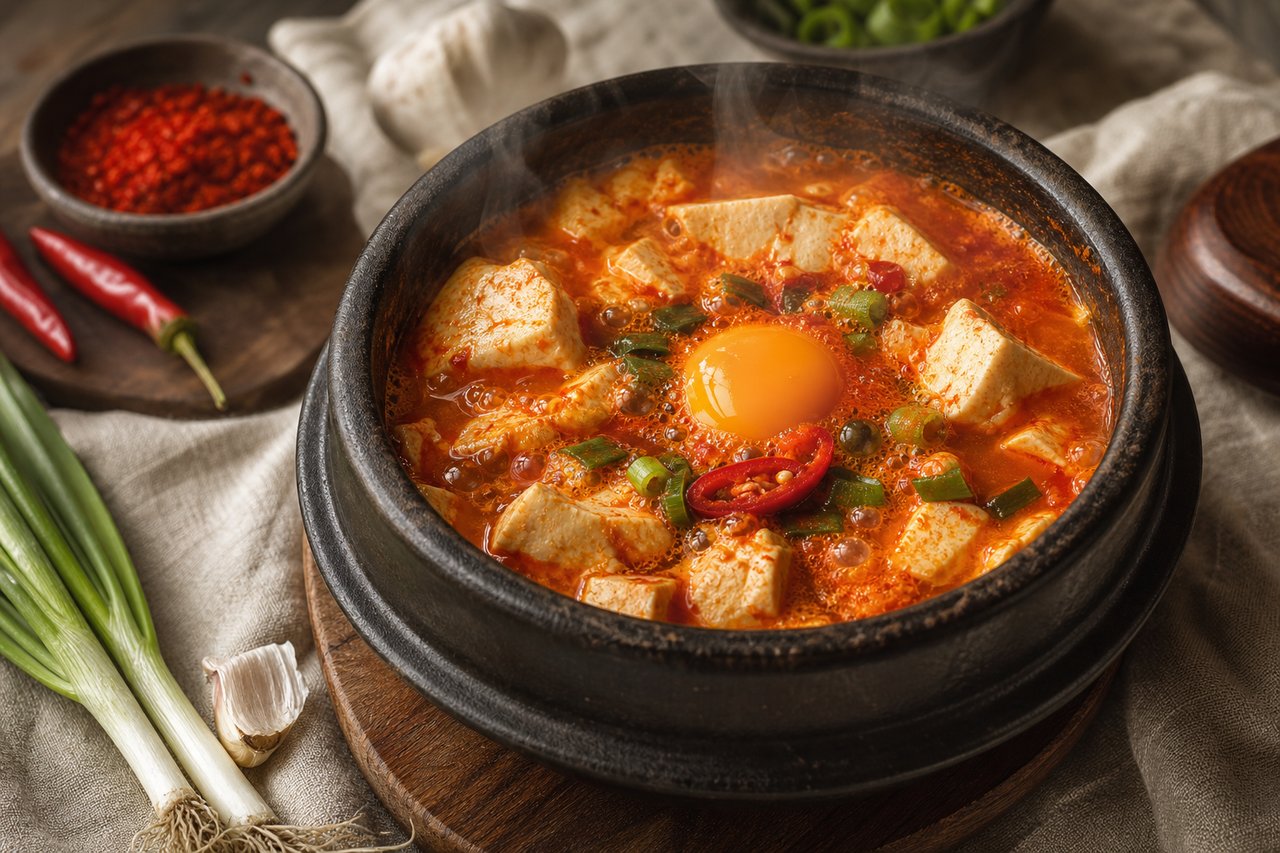
A fiery, silky Korean soft-tofu stew built on a fragrant gochugaru-and-garlic chilli oil base, finished with uncurdled tofu and a raw egg cracked in at
- Prep
- 15 min
- Cook
- 25 min
- Serves
- 2 to 3
- Level
- Easy
By Maya Chen
Method
- 01
Make the chilli base: heat the neutral and sesame oils in a pot over medium-low heat, add the gochugaru, garlic and onion, and stir gently for 2 minutes until the oil turns deep red and fragrant. Do not let the chilli scorch.
- 02
Add the pork (or seafood) and stir-fry for a couple of minutes until it colours and the fat renders.
- 03
Pour in the stock and soy sauce, bring to a boil, and simmer for 10 minutes so the base develops.
- 04
Spoon the soft tofu into the pot in large curds, breaking it only a little so it stays in silky clouds. Do not stir vigorously.
- 05
Simmer gently for 5 minutes until the tofu is heated through and the broth is bubbling. Taste and adjust salt.
- 06
Crack the egg into the centre if using, scatter over the spring onions, and bring the pot to the table still boiling so the egg poaches in the residual heat.
- 07
Serve with a bowl of plain rice, spooning broth, tofu and rice together.
Sundubu jjigae is the stew you order when you want something that arrives at the table still violently bubbling in its stone pot. It is built around sundubu, the softest, custard-like tofu, suspended in a fiery red broth that gets its colour and depth from a simple chilli oil made at the start of the cook.
Bloom the chilli first
The defining step is gently frying the gochugaru in oil before any liquid goes in. This blooms the chilli, releasing its colour and fragrance into the fat and giving the broth its deep red glow and rounded heat. Keep the heat low and stir constantly — scorched chilli turns bitter fast — and let the garlic and onion soften in the same oil to build the base.
Keep the tofu in silky clouds
Once the broth is simmering, the soft tofu goes in last and barely gets disturbed. Spoon it in large curds and break it only a little, so it stays in delicate, spoonable clouds rather than dissolving into the broth. A raw egg cracked into the centre at the table is traditional, poaching in the residual heat as you serve. Eat it spoon by spoon with plain rice alongside.