Cuisine guide
Korean Home Cooking: A Cook's Guide
How Korean home cooking actually works — the gochujang-and-doenjang pantry, banchan culture, rice and bubbling jjigae, grilled gui and the fermented
By Maya Chen
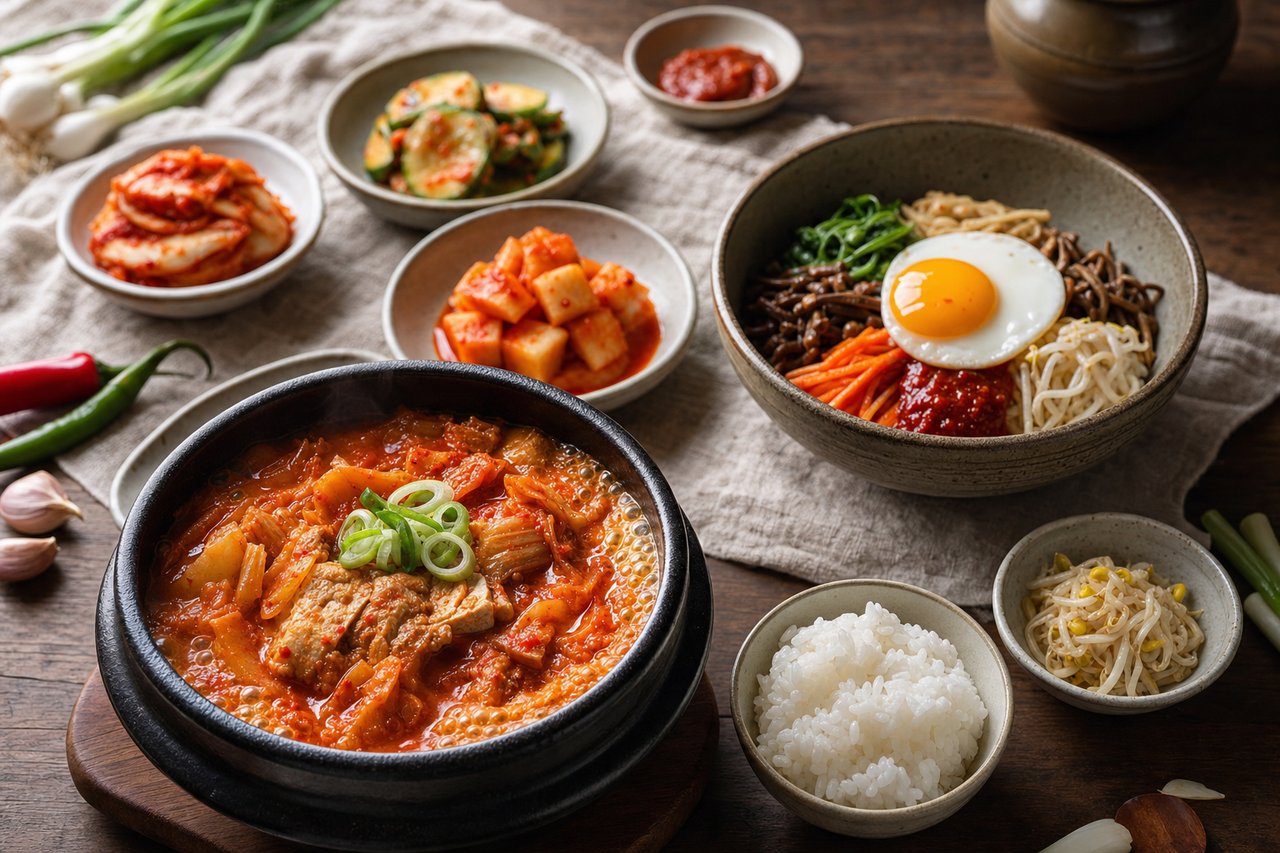
Korean home cooking is built on contrast and balance rather than on a single hero dish. A typical meal is not one large plate but a spread: a bowl of rice, a bubbling stew or soup, perhaps a grilled or braised protein, and a cluster of small side dishes that play hot against cool, fermented against fresh, and crunchy against soft. Once that rhythm makes sense, the cuisine stops feeling like a list of restaurant items and becomes a flexible, everyday way to cook.
What gives the food its character is the interplay of three forces: fermentation, which supplies the deep sour-savoury backbone; chilli, which brings heat and colour without dominating; and a generous hand with garlic, sesame and aromatics that ties everything together. Understanding those forces matters more than memorising recipes, because almost every dish is a different arrangement of the same building blocks.
The pantry that does the work
A short, fermented pantry carries most of the flavour. The two foundations are made from chillies: gochugaru, the coarse dried chilli flakes that bring heat and red colour to kimchi and stews, and gochujang, the thick sweet-savoury chilli paste used in sauces and glazes. Alongside them sits doenjang, a robust fermented soybean paste that is earthier and funkier than Japanese miso and forms the base of countless soups and dipping sauces.
Round those out with soy sauce for salt and depth, plenty of garlic used far more generously than newcomers expect, and toasted sesame oil and toasted sesame seeds for the nutty fragrance that finishes so many dishes. A bottle of fish sauce or a tub of salted shrimp deepens stews and kimchi, while a little sugar or syrup balances the chilli. With this handful of ingredients, most of the home repertoire is within reach. A fuller list of staples, with notes on what to buy and how to keep it, is in the Asian pantry guide.
It is worth knowing how the chilli products differ, because they are not interchangeable. Gochugaru is sun-dried chilli ground to flakes; it ranges from coarse to fine and from mild to hot, and it dissolves into a broth to spread heat and colour evenly. Gochujang is a slow-fermented paste of chilli powder, glutinous rice, fermented soybean and salt — sweet, thick and intensely savoury, used where the cook wants body and depth rather than raw heat. Reaching for one when the dish wants the other is the most common pantry mistake: gochujang will not give kimchi its clean colour, and a spoon of gochugaru will not lend a bibimbap sauce its glossy sweetness.
Garlic, sesame and the finishing aromatics
If the fermented pastes are the foundation, garlic and sesame are the signature. Korean cooking uses garlic in quantities that surprise newcomers — minced raw into marinades and stews, sliced for grilling, even eaten raw in lettuce wraps. Toasted sesame oil is a finishing flavour rather than a cooking fat: a few drops stirred in at the end perfume a dish far more effectively than oil added at the start, which would scorch and turn bitter. Toasted sesame seeds, often lightly crushed, scatter over almost everything. Scallions, ginger and, in many dishes, a little grated pear or onion for sweetness round out the aromatic palette.
Banchan: the small dishes that define the table
The set of small side dishes known as banchan is the heart of a Korean meal. They are not afterthoughts but the structure of the table, served all at once and shared, refilled freely, and eaten in any order between bites of rice. A modest dinner might have three or four; a generous one many more.
What makes banchan clever is the way it spreads the work across time. Many keep for days or weeks, so a cook builds up a rotating stock rather than making everything fresh each night. Sesame-dressed spinach, soy-braised potatoes, seasoned bean sprouts, pickled radish and, of course, kimchi can all sit in the fridge ready to round out a quick meal. Because each dish is small, even a simple bowl of rice and stew feels complete when a few banchan surround it.
Rice and the bubbling jjigae
Short-grain rice anchors every meal, cooked until tender and slightly sticky so it can be picked up cleanly with chopsticks or a spoon. Rinse the grains until the water runs nearly clear, cook with a touch less water than you might expect, and always rest the pot off the heat so the steam finishes the grains evenly. Korean cooks often mix in other grains — barley, millet or beans — for texture and nourishment, and the prized crust of toasted rice that forms at the bottom of a heavy pot, called nurungji, is scraped up and even simmered with water into a comforting end-of-meal porridge.
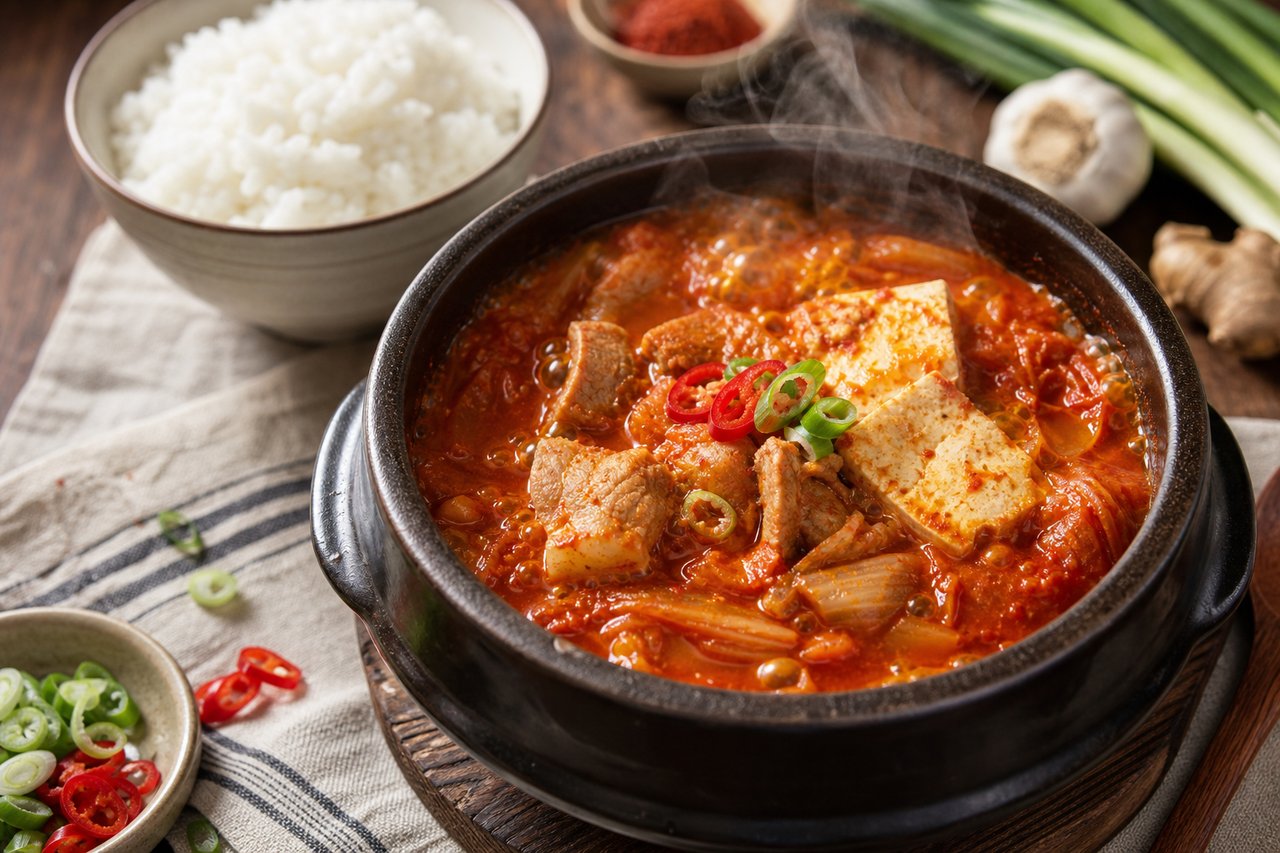
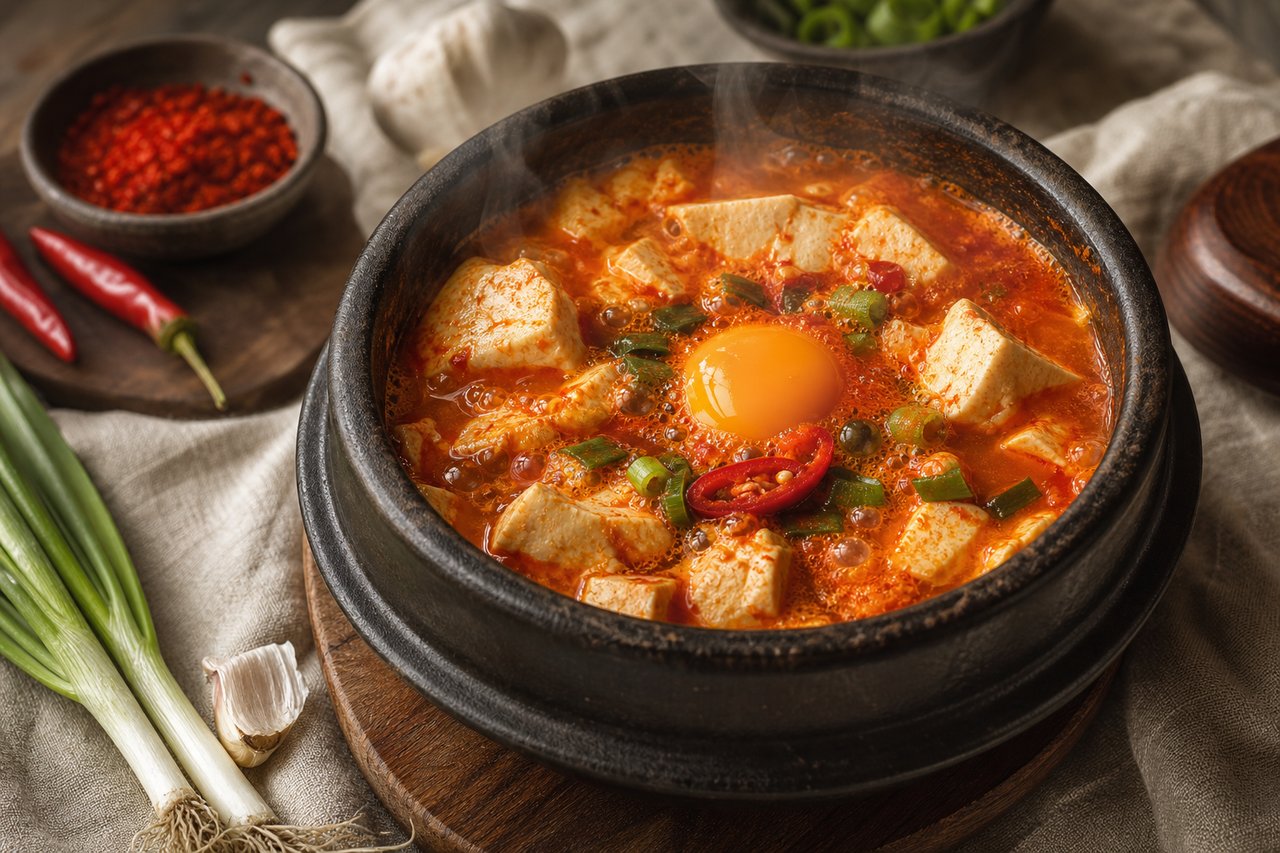
Beside the rice sits the stew. Jjigae is the thick, intensely flavoured Korean stew — heartier and saltier than a soup, meant to be shared from a communal pot and eaten with rice rather than on its own. The two most beloved versions are a spicy Kimchi Jjigae, which transforms older, well-soured kimchi into something far greater than its parts, and the silky-soft Sundubu Jjigae built around uncurdled tofu in a fiery, savoury broth. Both come together quickly once the pantry is stocked, and both reward the cook who lets the base fry briefly before the liquid goes in.
Not every stew is fiery. A gentle doenjang-jjigae built on the fermented soybean paste is the everyday, comforting counterpart to the spicy versions — earthy and savoury rather than hot, often loaded with whatever vegetables and tofu are on hand. The distinction worth learning is between jjigae and the thinner soups, guk and tang, which are lighter, less salty and eaten more like a soup in their own right. A clear soup balances a meal where a heavy stew would overwhelm it, and many homes keep one of each in rotation.
Gui: the pleasure of grilling
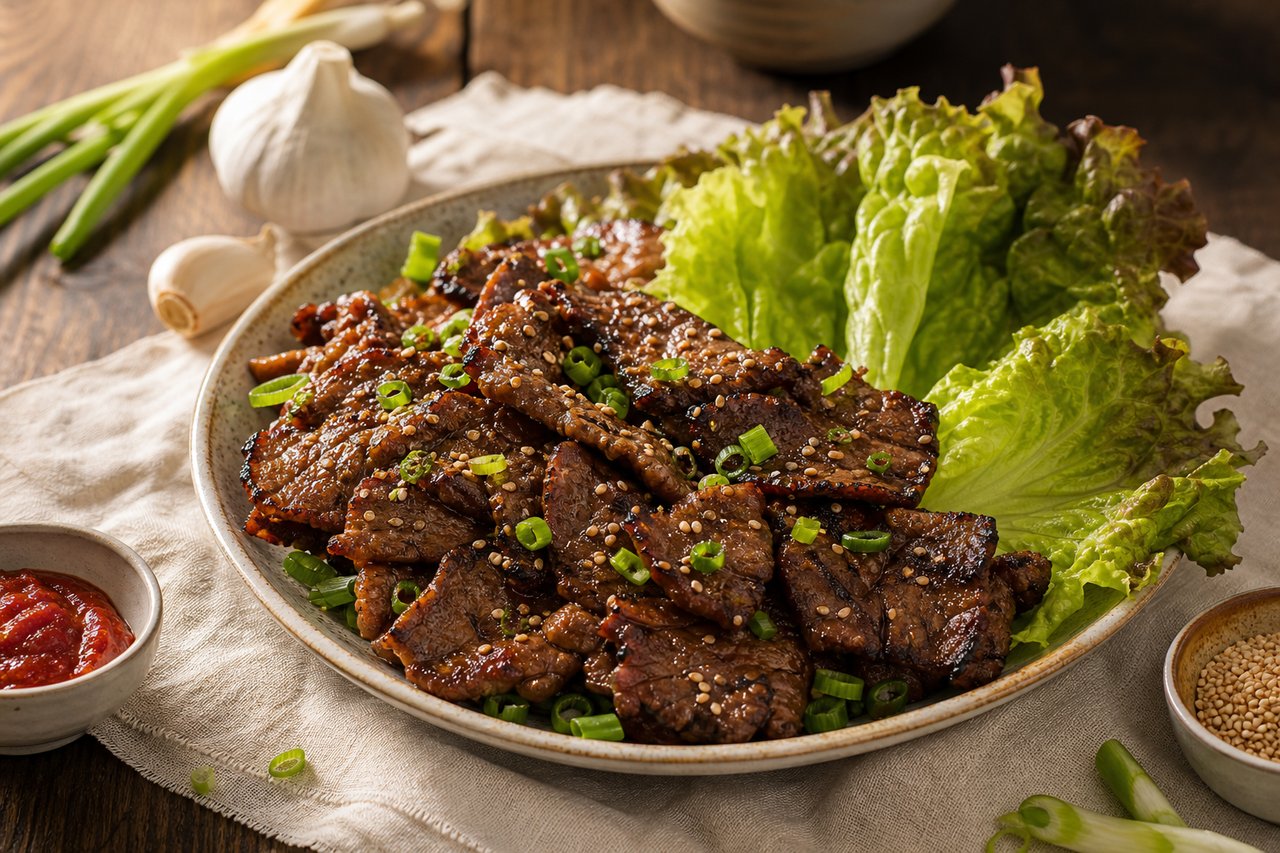
Grilling, or gui, is the social face of Korean cooking — meat or vegetables cooked over heat at the table and wrapped, dipped and shared. The most famous example is Bulgogi, thin slices of beef marinated in a sweet-savoury blend of soy, garlic, sesame and often grated pear, which tenderises the meat and lends a gentle fruity sweetness. The marinade does most of the work; the cooking itself is fast and forgiving.
Even without a tabletop grill, the spirit of gui translates easily to a hot pan or a domestic grill. The ritual matters as much as the technique: a piece of grilled meat tucked into a lettuce leaf with a smear of seasoned soybean paste, a sliver of garlic and a little rice becomes a perfect single bite, assembled by hand and eaten in one go.
Fermentation: the foundation under everything
It is hard to overstate how much fermentation underpins this cuisine. The pastes that flavour the pantry are fermented, the soy sauce is fermented, and kimchi — the most iconic of all — is a living, souring vegetable preserve that changes character week by week. Far from being a niche craft, fermentation is the everyday engine that gives Korean food its sour, savoury, deeply layered backbone.
Kimchi is the gateway. At its simplest it is salted napa cabbage coated in a paste of gochugaru, garlic, ginger and a savoury element, then left to bubble and sour before going into the fridge. Young kimchi is crisp and bright and eaten as a fresh side; older, more sour kimchi is prized as a cooking ingredient, lending its tang to stews, fried rice and pancakes. Learning to read kimchi at its different stages is one of the quiet skills that unlocks the whole table.
Cabbage kimchi is only the most famous of a large family. There is a crisp, refreshing cubed-radish kimchi, a quick “fresh” kimchi eaten within a day or two, a watery kimchi whose brine doubles as a cold soup base in summer, and seasonal versions built on whatever vegetable is at its peak. The common thread is the salting-then-seasoning method and the slow souring that follows, but the texture and intensity vary enormously, which is why a Korean fridge often holds several at once.
Core techniques worth practising
A few methods recur across the cuisine, and getting comfortable with them unlocks far more than any single recipe.
Seasoning and dressing (muchim)
Many banchan are made by the muchim method — blanched or raw vegetables dressed by hand with sesame oil, garlic, salt or soy, and sesame seeds. There is no cooking sauce to reduce; the cook simply tosses and tastes until the balance is right. It is the fastest route to a varied table and the technique behind sesame spinach, seasoned bean sprouts and dozens of quick greens.
Building a stew base
The best jjigae start with a brief fry. Aromatics, gochugaru or gochujang, and often a little protein are sautéed first so the chilli blooms and the paste loses its raw edge before the liquid goes in. Skipping this step gives a thinner, harsher result. Tasting and adjusting salt at the end — with soy, fish sauce or a little more paste — is what brings a stew into focus.
Marinating for the grill
The grill dishes lean on marinades that both flavour and tenderise. Soy, sugar or syrup, sesame oil, garlic and grated fruit such as pear or apple combine to season the meat and break down its fibres, which is why thinly sliced beef for Bulgogi turns so tender. Even a short marinade makes a noticeable difference; a longer one, up to a few hours, deepens it.
Frying for crunch
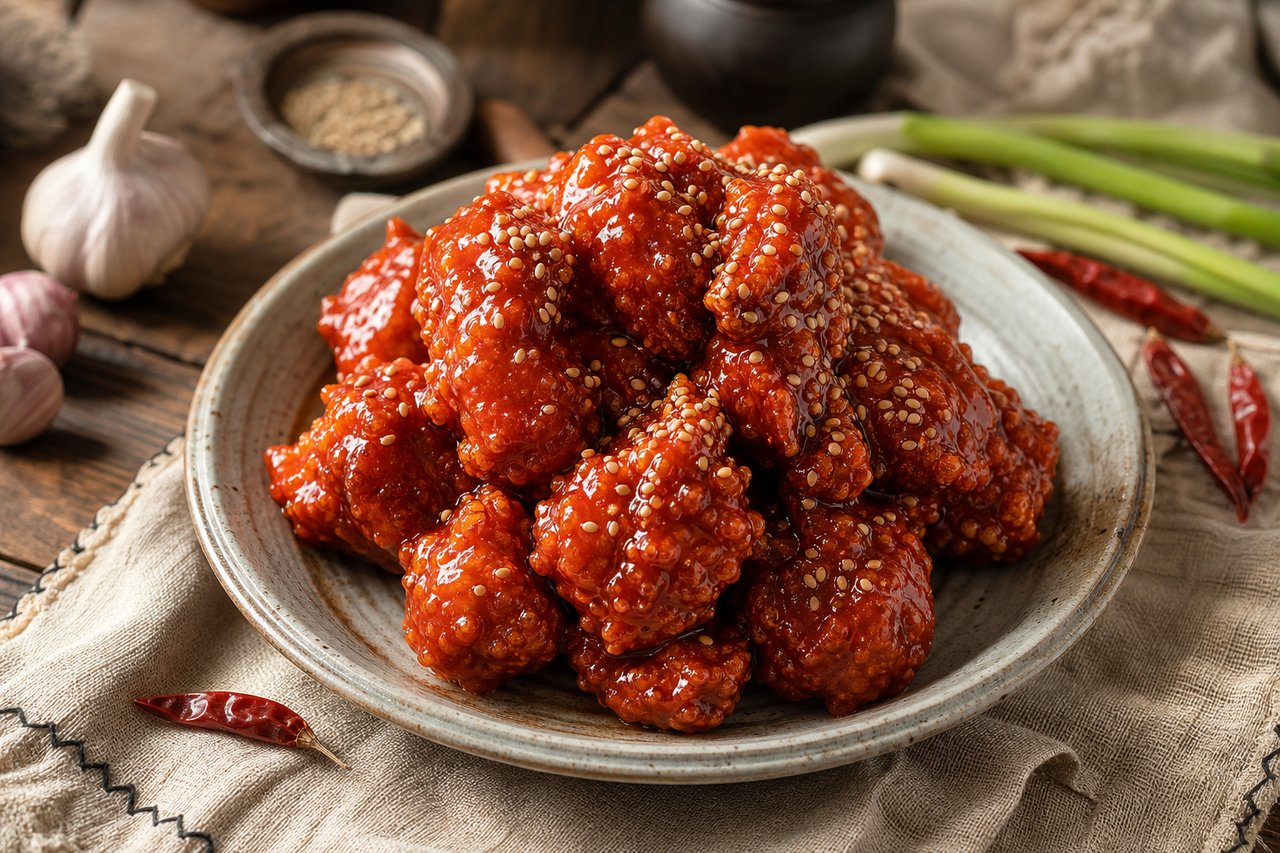
Korea has a distinct frying tradition built on a light, often double-fried crust. Twice-frying — once to cook through, once to crisp — is the secret behind shatteringly crunchy Korean Fried Chicken that stays crisp even under a sticky glaze. A thin, lightly starchy coating and oil held at a steady temperature do the rest.
Equipment: less than you think
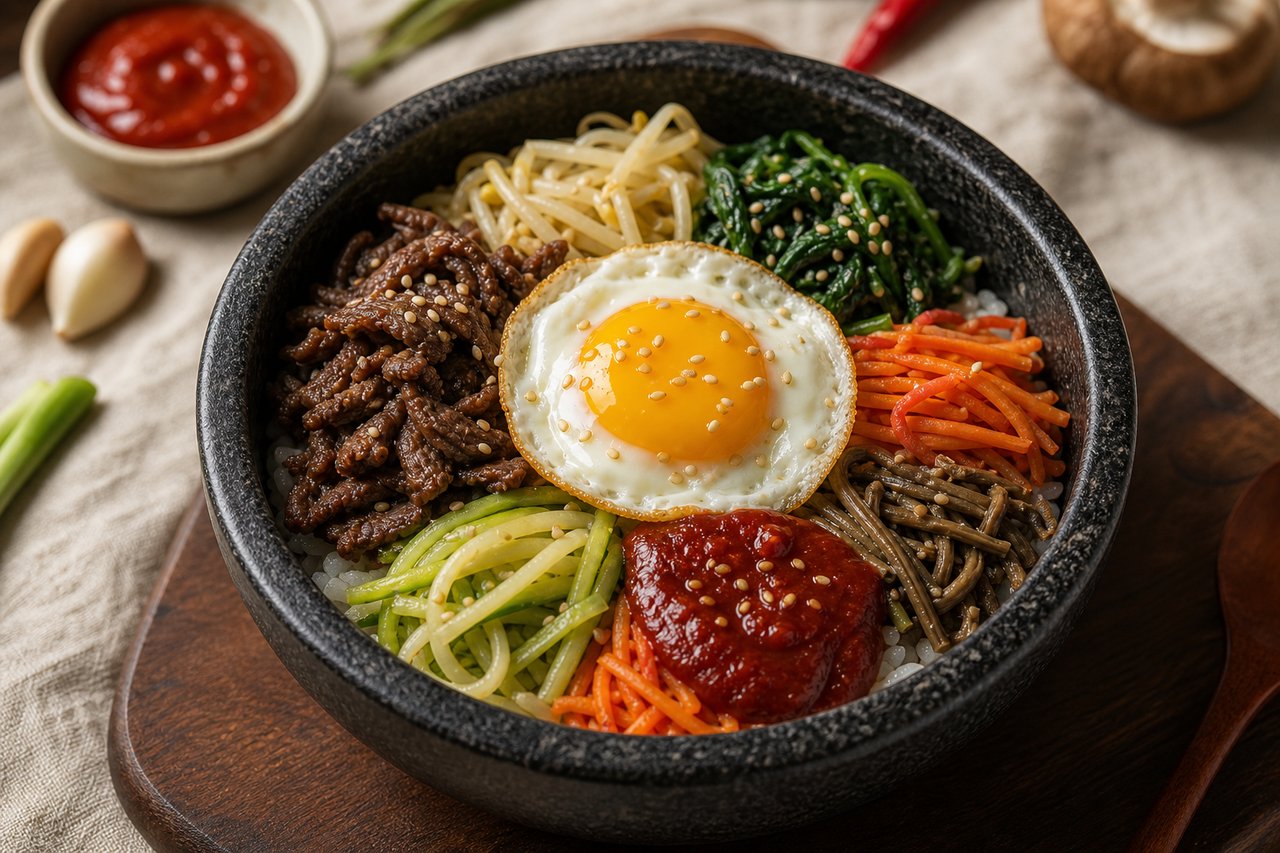
Korean home cooking needs surprisingly little. A heavy pot with a lid handles rice and stews; a wide non-stick or cast-iron pan covers stir-fries, pancakes and grilling. A stone or earthenware pot — the dolsot or ttukbaegi — keeps a stew bubbling at the table and gives bibimbap its prized crisp rice crust, but it is a pleasure rather than a necessity, and an ordinary saucepan makes the same dish. The genuinely useful additions are humble: a sturdy pair of kitchen scissors, which Korean cooks reach for constantly to snip noodles, kimchi and grilled meat, and a few airtight containers for fermenting and storing the rotating stock of banchan.
Common mistakes to avoid
A handful of errors account for most disappointing results. Confusing gochugaru and gochujang throws off both the heat and the balance of a dish. Skipping the initial fry when building a stew leaves the chilli raw and the flavour flat. Adding sesame oil at the start of cooking, where it scorches, wastes its fragrance — it belongs at the end. Under-salting the cabbage for kimchi, or rushing the salting step, leaves the vegetable watery and slow to ferment. And treating the cuisine as uniformly spicy leads cooks to overdo the chilli; the everyday table is about balance, and many of its best dishes carry little or no heat at all. As ever, the fix is to build flavour in stages and taste as you go.
Noodles, pancakes and the wider repertoire
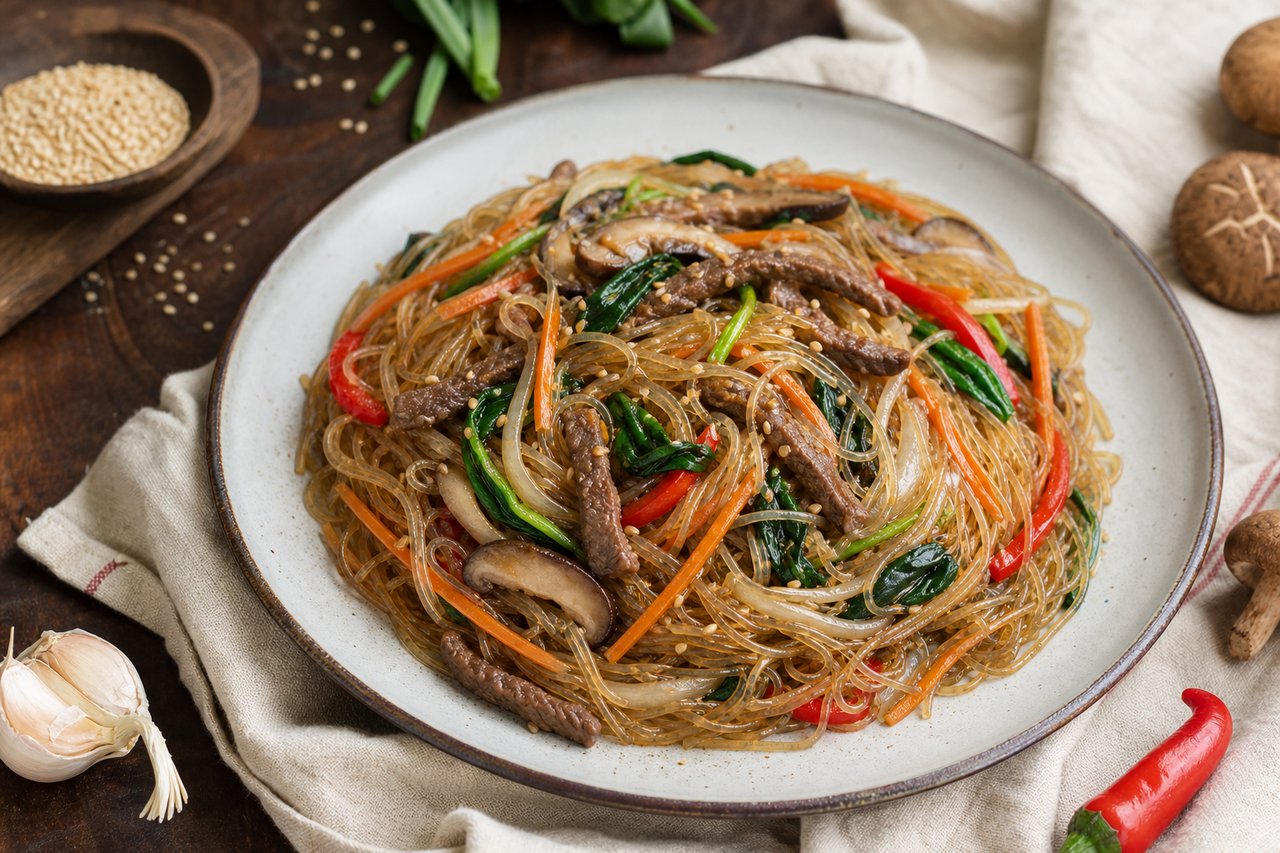
Beyond rice, stews and the grill, two more categories round out everyday cooking. Noodles appear in many forms: the glassy sweet-potato strands of Japchae, wheat noodles in cold and hot soups, and chewy rice cakes that, while not strictly noodles, occupy a similar comforting place. Korean cooks famously cut noodles in the bowl with kitchen scissors, a practical habit that makes long strands easier to share and eat.
Savoury pancakes, jeon, are the other great everyday pleasure — a loose batter bound with egg and filled with anything from kimchi to scallion to seafood, fried until the edges crisp. They are quick, forgiving and a clever way to use up odds and ends, and they double as both a side dish and a casual main with a soy-and-vinegar dipping sauce. Together, noodles and pancakes show how the same small pantry stretches well past the headline dishes.
Reading flavour: the art of balance
The skill that ties Korean cooking together is balance, and it is learned by tasting. Almost every dish plays sweet against salty, heat against cool, and fermented funk against fresh brightness. A glaze that tastes too hot is calmed with a little sugar or syrup; a stew that falls flat gains depth from a spoon more of paste, soy or fish sauce; a rich dish is lifted by a sharp, crunchy banchan alongside. None of this is precise chemistry — it is the habit of tasting at each stage and nudging the dish toward equilibrium. Newcomers often under-season and over-spice; experienced cooks do the reverse, seasoning confidently while keeping the chilli in proportion. Developing that palate is what turns a collection of recipes into genuine fluency at the stove.
Regional character and seasonality
Korea’s regional cooking varies with climate and geography. The cold north traditionally favours milder, less heavily seasoned dishes and clear soups, while the southern provinces, with their longer growing season and abundant seafood, lean toward bolder, saltier and spicier food and a wider range of fermented sides. Coastal areas make liberal use of fish and shellfish, both fresh and salted, while inland cooking relies more on preserved vegetables and soybean products.
Seasonality runs deep, in large part because fermentation evolved as a way to carry the harvest through the winter. The great communal kimchi-making of late autumn, kimjang, laid in a vegetable store for the cold months and remains a defining ritual. Spring brings tender wild greens and herbs; summer leans on cooling dishes, cold noodles and the watery kimchi whose brine refreshes in the heat; autumn is the season of abundance and preserving. Even a home cook far from Korea can borrow the instinct — lighter, cooler dishes when it is hot, hearty stews and richer banchan when it is cold.
How dishes fit a meal
Pulling it together, a Korean meal is assembled rather than plated as a single course. Each diner gets a bowl of rice and often a portion of soup or stew, while the banchan and any grilled or braised main sit in the centre to share. There is no set order: a bite of rice, a little kimchi, a spoon of stew, a forkful of sesame greens, building contrast across the meal. This is why the food feels so balanced — a fiery stew is eaten against cooling, mild sides, and rich grilled meat is freshened by pickles and raw garlic. It also makes home cooking flexible, since a single new dish slots into a table already half-built from make-ahead banchan and a pot of rice.
Everyday dishes worth knowing
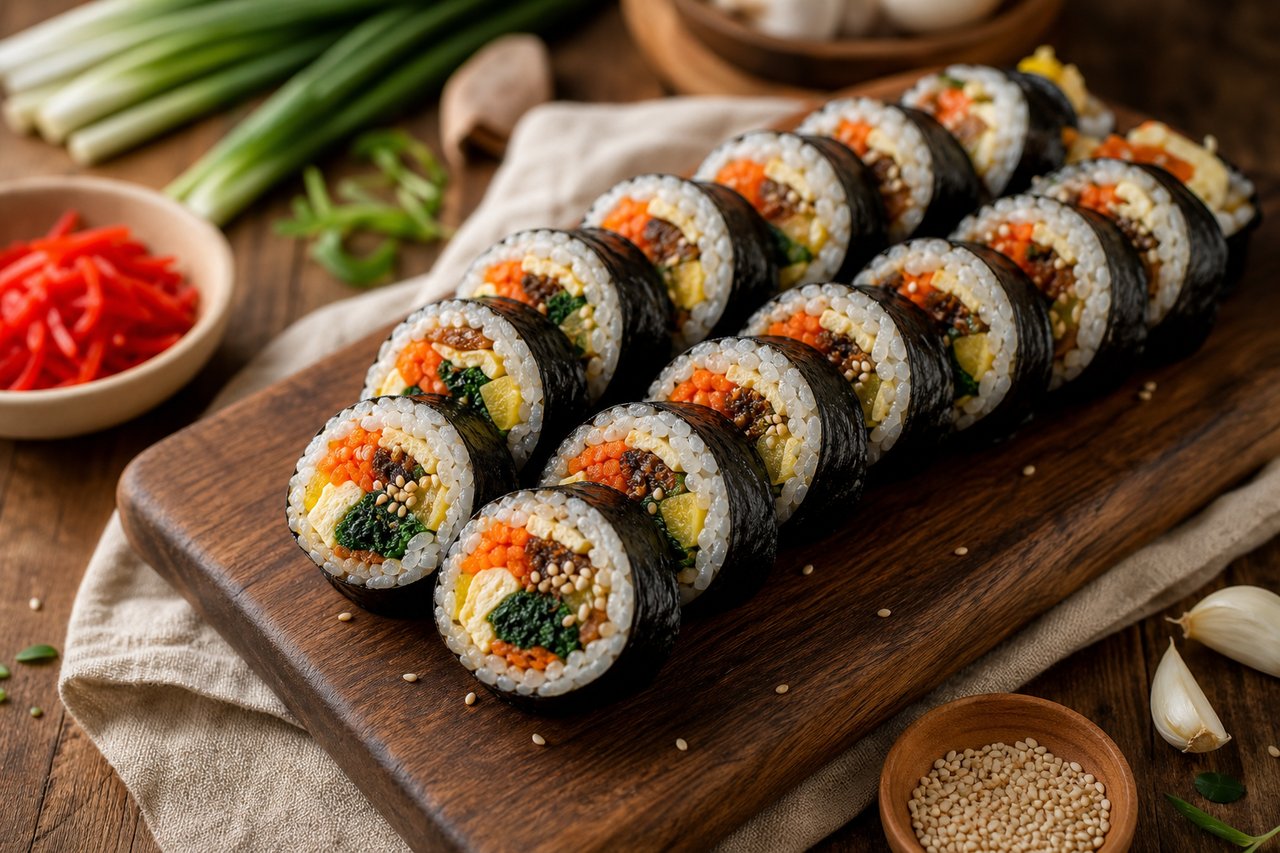
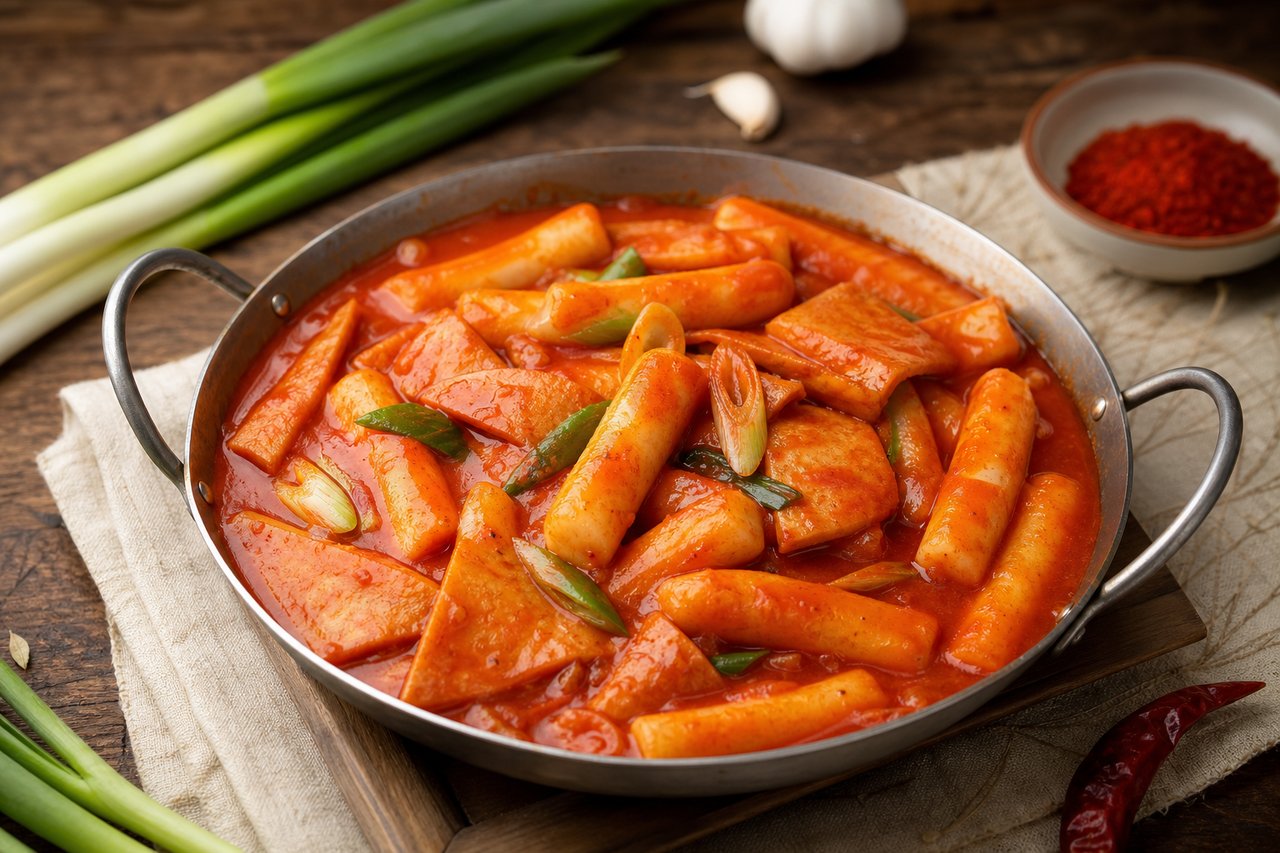
Beyond the stews and the grill, the home repertoire is wide and approachable. Bibimbap turns a bowl of rice, assorted seasoned vegetables and a fried egg into a complete meal bound together by gochujang sauce. Japchae, glassy sweet-potato noodles tossed with vegetables and sesame, is a celebratory favourite that is equally good as a weeknight side. Chewy rice cakes simmered in a sweet-spicy sauce make the beloved street snack Tteokbokki, and twice-fried, lacquer-crisp Korean Fried Chicken has become a national obsession in its own right. For lunch or a picnic, Kimbap rolls rice and an array of fillings in seaweed into neat, portable slices.
None of these demands special skill — only the foundations above and a willingness to taste and adjust. Stock the pantry, keep a few banchan in the fridge, learn to balance chilli with sweetness and ferment with freshness, and you build a way of cooking that feeds you well for years.