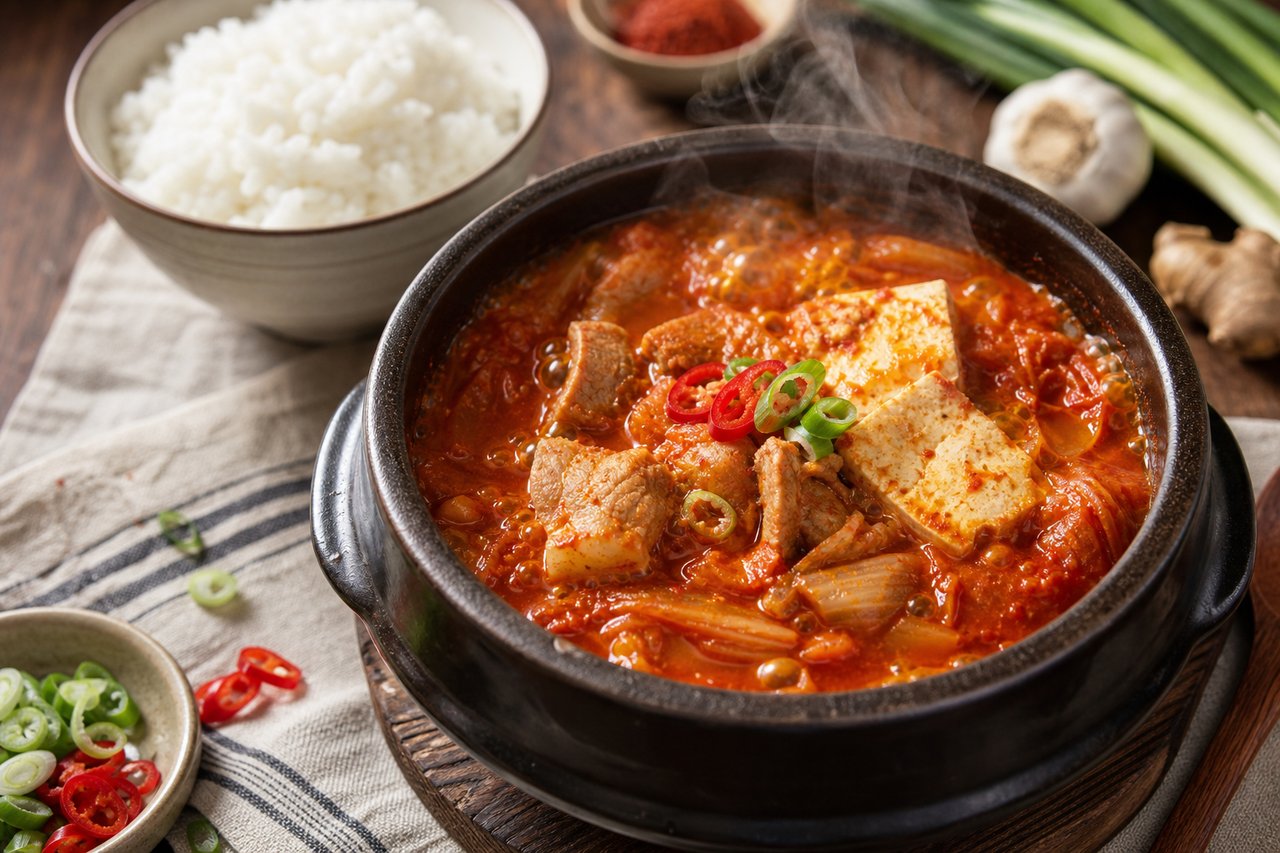
Kimchi Jjigae
The classic Korean kimchi stew — sour, aged kimchi simmered with pork, tofu and a deep gochugaru broth that tastes like it cooked all day but comes together
- Prep
- 15 min
- Cook
- 35 min
- Serves
- 3 to 4
- Level
- Easy
By Maya Chen
Method
- 01
Heat the sesame oil in a heavy pot over medium heat. Add the pork and cook until it loses its raw colour and the fat begins to render, about 4 minutes.
- 02
Add the chopped kimchi, garlic and onion. Stir-fry for 5 to 6 minutes so the kimchi softens, deepens in colour and starts to caramelise at the edges — this step builds most of the flavour.
- 03
Stir in the gochugaru and gochujang and fry for one more minute until the oil turns red and fragrant.
- 04
Pour in the kimchi brine, soy sauce and water or stock. Bring to a boil, then reduce to a steady simmer.
- 05
Simmer uncovered for 20 minutes so the broth concentrates and the pork turns tender. Taste and add the sugar if the kimchi is aggressively sour.
- 06
Lay the tofu slabs and spring onions on top, cover, and simmer for a further 5 minutes until the tofu is heated through.
- 07
Serve bubbling hot, straight from the pot, with a bowl of plain short-grain rice on the side.
Kimchi jjigae is the dish that explains why Korean cooks treasure a jar of kimchi as it ages. Young kimchi is for eating fresh; old, deeply soured kimchi is for this stew, where its tang becomes the whole point. It is humble, fast and endlessly comforting — the kind of thing eaten several times a week in many homes.
Build flavour before you add liquid
The single most important move is frying the kimchi before any water goes in. Cooking it down with the pork and aromatics caramelises its sugars, softens its texture and concentrates its sourness into something rounder and richer. Skipping straight to a watery simmer gives a thin, raw-tasting stew; a few patient minutes of frying gives one that tastes long-cooked.
Balancing the broth
The brine from the kimchi jar is liquid gold — pour it in for instant depth. From there, taste and adjust: more gochugaru for heat, soy for salt, and a pinch of sugar only if the kimchi is fierce. The stew should land somewhere spicy, sour and savoury all at once, with the tofu and rice there to soften each spoonful.