Cuisine guide
Chinese Home Cooking: A Cook's Guide
How Chinese home cooking really works — the pantry, the wok, velveting, and the regional breadth from Cantonese to Sichuan — with the techniques that make it
By Maya Chen
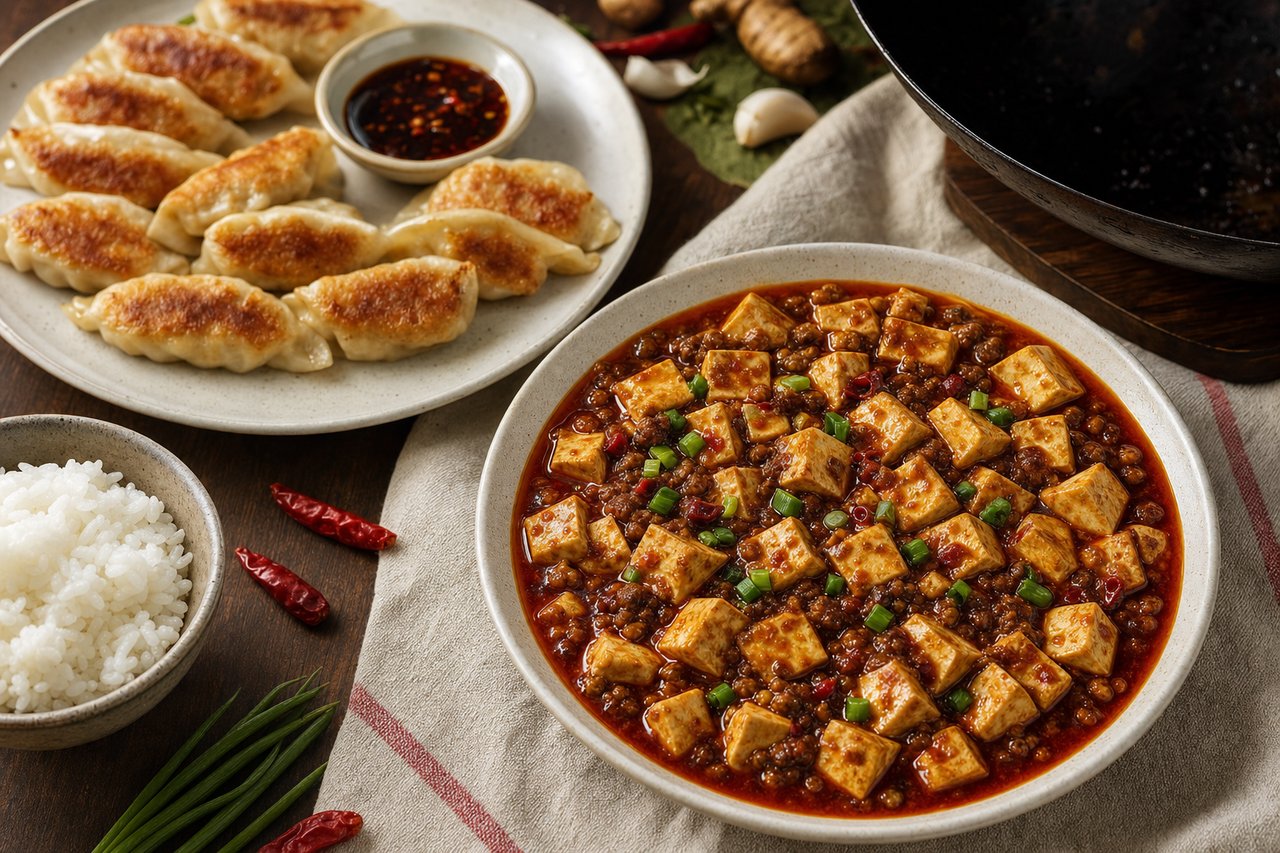
Chinese home cooking is often imagined as either impossibly elaborate banquet food or the heavy takeaway version served abroad. The reality at the family table is quieter and far more practical: quick stir-fries, a pot of rice, a simple soup, and a few balanced dishes shared in the middle of the table. Most of it rests on a compact pantry, a single hot pan, and a handful of techniques that repay a little practice many times over.
This guide walks through the parts that matter most for a home cook: the pantry that does the heavy lifting, how the wok actually works and how to chase wok hei on a domestic stove, the velveting trick behind restaurant-tender meat, the regional styles that give the food its enormous range, and the rice, noodles and dumplings that anchor a meal. None of it is mysterious once it is broken down, and a handful of staple recipes will carry a cook a long way.
The pantry that does the work
The backbone of Chinese seasoning is a small group of sauces and aromatics. Light soy sauce provides salt and a clean savoury edge; it is the everyday seasoning, not to be confused with dark soy sauce, which is thicker, less salty and used mainly for colour and a faint molasses depth in braises and fried rice. Shaoxing wine is the workhorse rice wine that rounds off raw edges and adds fragrance, much as sake does in Japanese cooking. Oyster sauce brings a glossy, savoury body to greens and stir-fries, while toasted sesame oil is a finishing oil, drizzled at the end for aroma rather than cooked in.
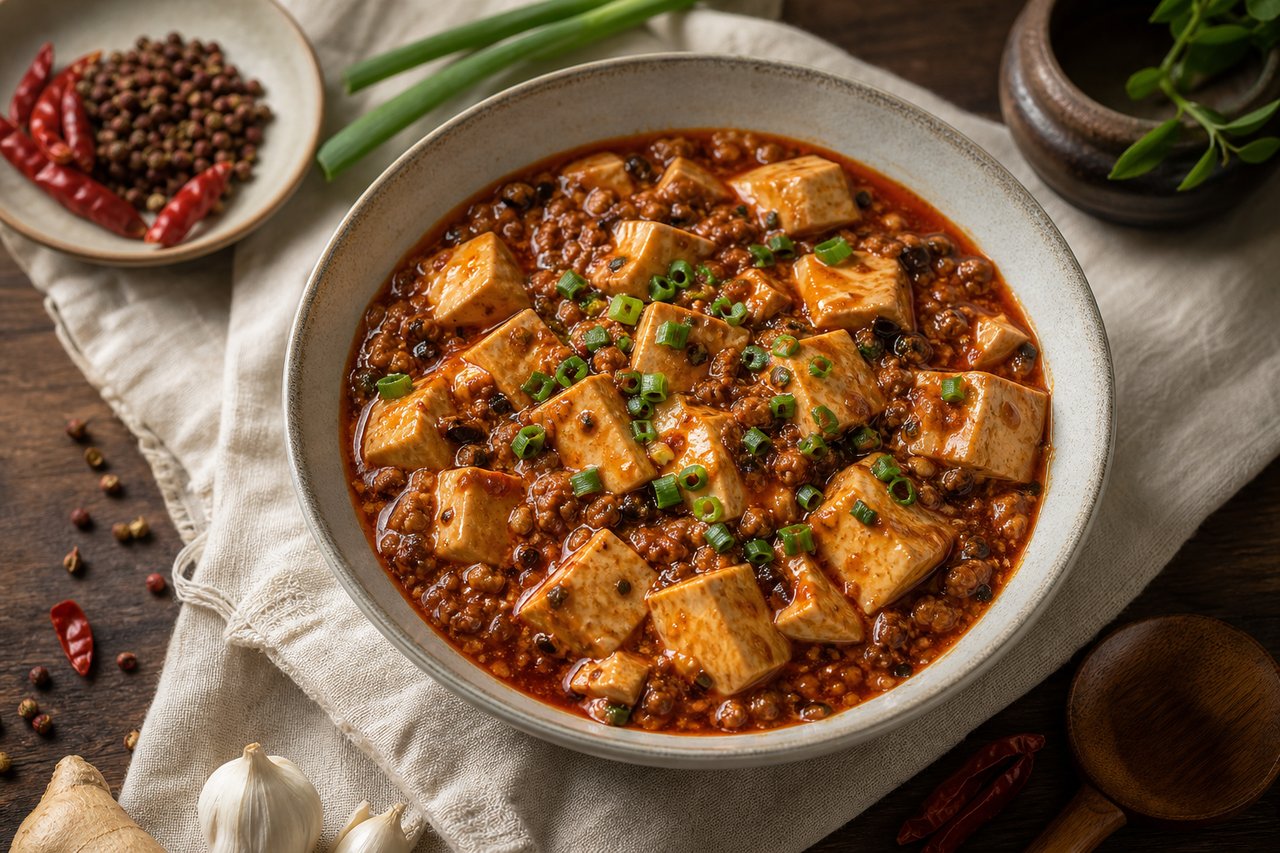
For the heat and complexity of western China, two ingredients matter most. Doubanjiang, the fermented chilli-bean paste of Sichuan, is salty, funky and deeply savoury, the foundation of dishes like Mapo Tofu. Sichuan peppercorn is not chilli at all but a citrusy spice that produces a distinctive tingling numbness on the tongue, the ma in the famous mala (numbing-hot) flavour. Toasted and ground, it transforms a dish in a way nothing else can imitate. Round out the shelf with cornstarch, ginger, garlic, spring onions and dried chillies, and a vast range of recipes becomes possible.
The pantry in detail
It is worth knowing each of these ingredients a little better, because the difference between flat and vivid Chinese food usually lives in how they are used rather than whether they are present.
- Soy sauces. Keep both light and dark on hand and treat them as separate tools. Light soy is the salt of the kitchen and goes in early; dark soy is used in small amounts for colour and a rounded sweetness, especially in braises and fried rice. Using dark soy where light soy belongs makes a dish muddy and over-coloured.
- Shaoxing wine. Added at the start of a stir-fry, splashed down the hot side of the wok, it flashes off and leaves behind a savoury depth. A dry sherry is the closest substitute if Shaoxing is unavailable.
- Oyster sauce. Thick, glossy and intensely savoury, it dresses blanched greens beautifully and adds body to brown sauces. A vegetarian “mushroom stir-fry sauce” stands in well.
- Black vinegar. Chinkiang black vinegar is malty and mellow, less sharp than Western vinegars, and finishes northern and Sichuan dishes with a fragrant tang. A few drops at the end wake up a heavy sauce.
- Fermented pastes and beans. Beyond doubanjiang, fermented black beans (douchi) and sweet bean sauce add funk and umami; a little goes a long way.
- Aromatics. Ginger, garlic and the white parts of spring onion form the “holy trinity” that begins most stir-fries, hitting the hot oil first to perfume it. The green tops are saved to finish.
- Starch and oil. Cornstarch does double duty for velveting and for the thin slurry that gives a sauce its clinging gloss. For cooking, use a neutral high-smoke-point oil; reserve sesame oil for the final drizzle.
A shelf with these in it, refreshed as it runs low, is the difference between cooking Chinese food on a whim and only when a special trip to the shop allows it. The full list, with notes on substitutes and storage, lives in the pantry guide.
The wok and wok hei
The wok is built for one thing above all: fast cooking over fierce heat. Its sloped sides let food be tossed and returned to the hot centre, and its shape concentrates a small flame into a searing surface. The prize of wok cooking is wok hei, sometimes translated as “the breath of the wok” — the elusive smoky, faintly charred aroma that comes from food searing while traces of oil flare against metal.
Genuine wok hei is difficult on a home stove, which simply cannot match the roaring output of a professional range. The path to getting close is the same in every kitchen: heat the wok until it is genuinely smoking before any oil goes in, dry the ingredients so they sear rather than steam, and above all work in small batches. Crowding the pan is the most common home mistake; it crashes the temperature, releases moisture, and turns what should be a quick sear into a slow braise. Have everything chopped and within reach before the heat goes on, because a stir-fry is over in minutes.
Choosing and seasoning a wok
For a domestic stove a flat-bottomed carbon-steel wok is the sensible choice. It sits flat and makes solid contact with a gas flame or an electric coil, where a traditional round-bottomed wok rocks uselessly without a dedicated burner. Carbon steel is thin and responsive, heats fast, cools fast, and develops a naturally slick, near-non-stick patina with use. Avoid heavy stainless or coated non-stick pans for stir-frying; neither tolerates the heat the technique demands.
A new carbon-steel wok must be seasoned before use: scrub off the factory coating, dry it, then heat it with a thin film of oil until it darkens, repeating until the surface turns even and bronze. After each cook, rinse with hot water, wipe dry, and warm it briefly on the stove so it never sits damp and rusts. A well-kept wok improves for years.
The order of a stir-fry
A stir-fry has a rhythm that rarely changes. Heat the dry wok until it smokes, add oil and swirl it up the sides, then start the aromatics — ginger and garlic first, for a few seconds only, until fragrant but not browned. Velveted meat goes in next, spread out and left to sear before being tossed, then removed once just cooked. Firmer vegetables follow, then quicker ones, with a splash of Shaoxing wine down the hot side of the pan. The meat returns, the sauce goes in and is tossed until it clings, and a final drizzle of sesame oil and a scatter of spring onion finish it. The whole thing takes minutes, which is exactly why every component must be prepped in advance. The detailed mechanics, from heat control to the toss itself, are covered in the wok skills and wok hei guide.
Velveting: the restaurant texture secret
If wok hei is the aroma, velveting is the texture. It is the marinating step that gives stir-fried chicken, beef and pork that famously silky, tender bite. Thin slices are tossed with a little cornstarch, often egg white or a splash of Shaoxing wine, and sometimes a pinch of baking soda for beef. The starch and protein form a thin protective coat that shields the meat from the direct heat of the wok and seals in moisture.
The velveted meat is then briefly cooked — either flash-fried in oil or blanched in barely simmering water — until just set, removed, and added back near the end. The result is meat that stays juicy and slippery-tender even after a turn over a high flame. It is the clearest single reason a restaurant stir-fry feels different from a home one, and it costs almost nothing to do.
How to velvet, meat by meat
The basic method is consistent, but the marinade shifts with the protein:
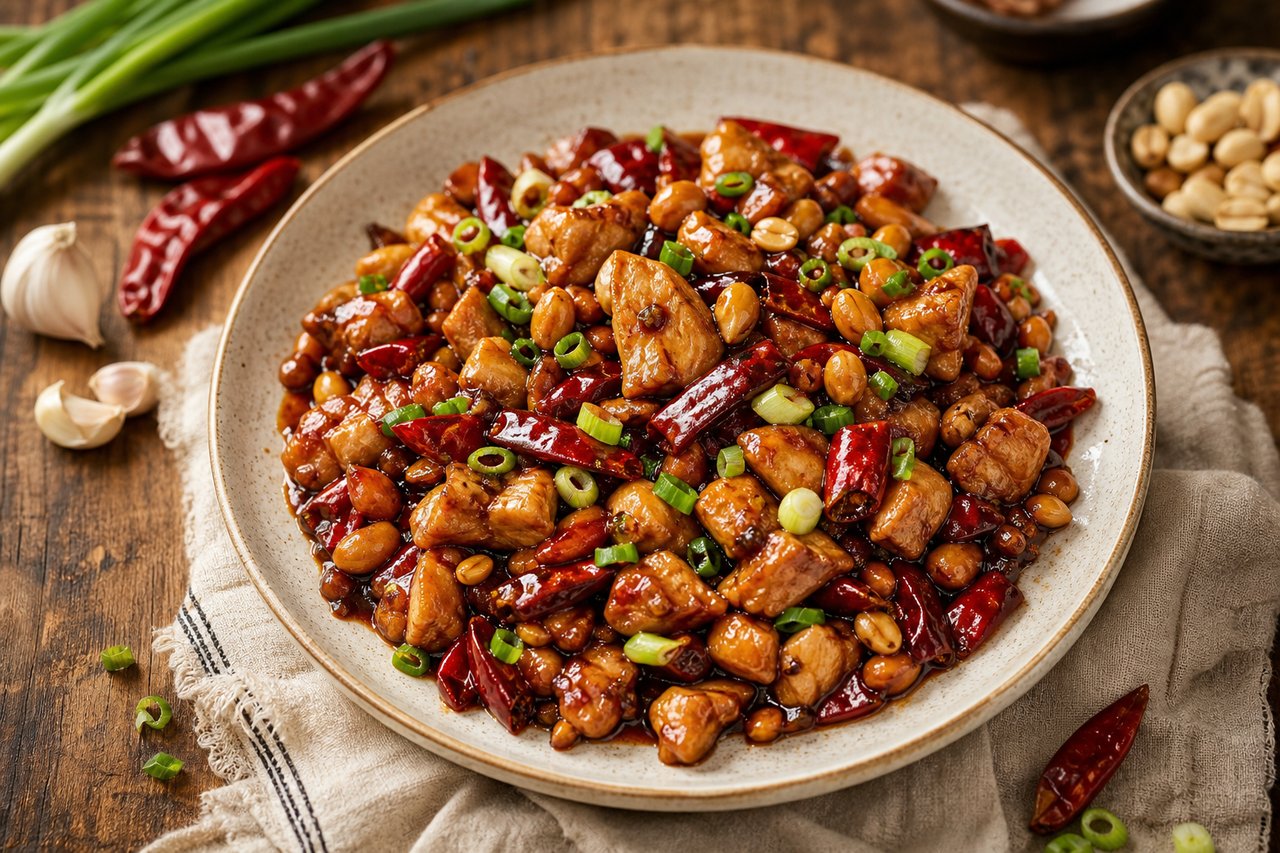
- Chicken. Slice across the grain, then toss with a little egg white, cornstarch, a pinch of salt and a splash of Shaoxing wine. Rest for fifteen to thirty minutes. This is the silky breast meat behind dishes like Kung Pao Chicken.
- Beef. Tougher cuts benefit from a small pinch of baking soda alongside the cornstarch and soy; the alkalinity loosens the protein and produces that characteristically tender, almost slippery stir-fried beef. Use a light hand, rinse if heavily treated, and do not overdo the baking soda or the texture turns spongy and the flavour soapy.
- Pork. Treat much like chicken, with cornstarch, soy and wine. Velveted pork is the tender thread running through many home stir-fries and noodle dishes.
A short rest lets the coating bond to the surface. The payoff is meat that stays moist over fierce heat, the single most transferable trick from restaurant kitchens to home ones.
Regional breadth: from Cantonese to Sichuan and beyond
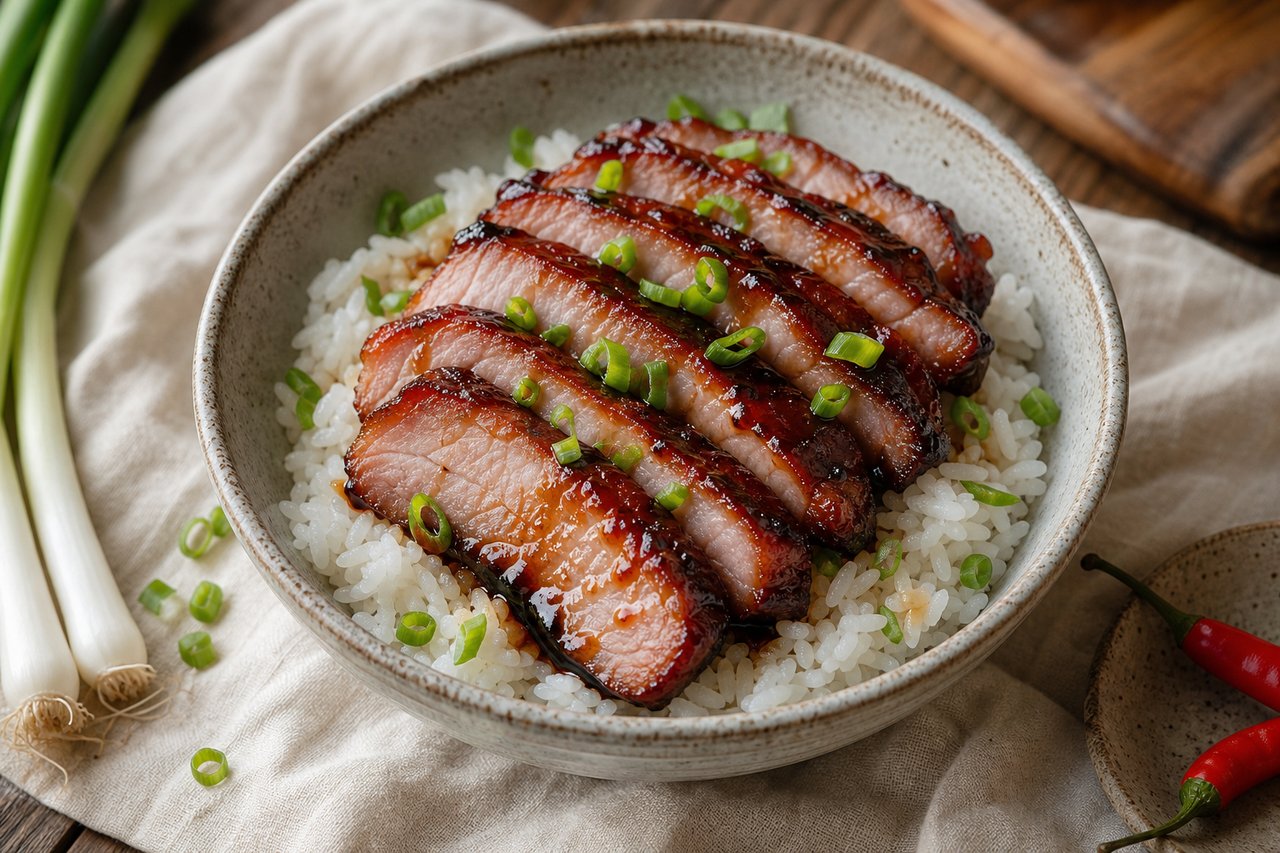
It is misleading to speak of one Chinese cuisine. The country holds many distinct regional traditions, and two make a useful contrast. Cantonese cooking, from the south around Guangdong, prizes freshness and restraint. Its aim is to show off the natural flavour of an ingredient rather than bury it, so seasoning is gentle, steaming and quick stir-frying are common, and seafood and vegetables are treated with a light hand. The Cantonese kitchen also gave the world dim sum and the art of clear, slow-simmered soups, along with the lacquered, sweet-savoury roast meats of which Char Siu is the best-loved example.
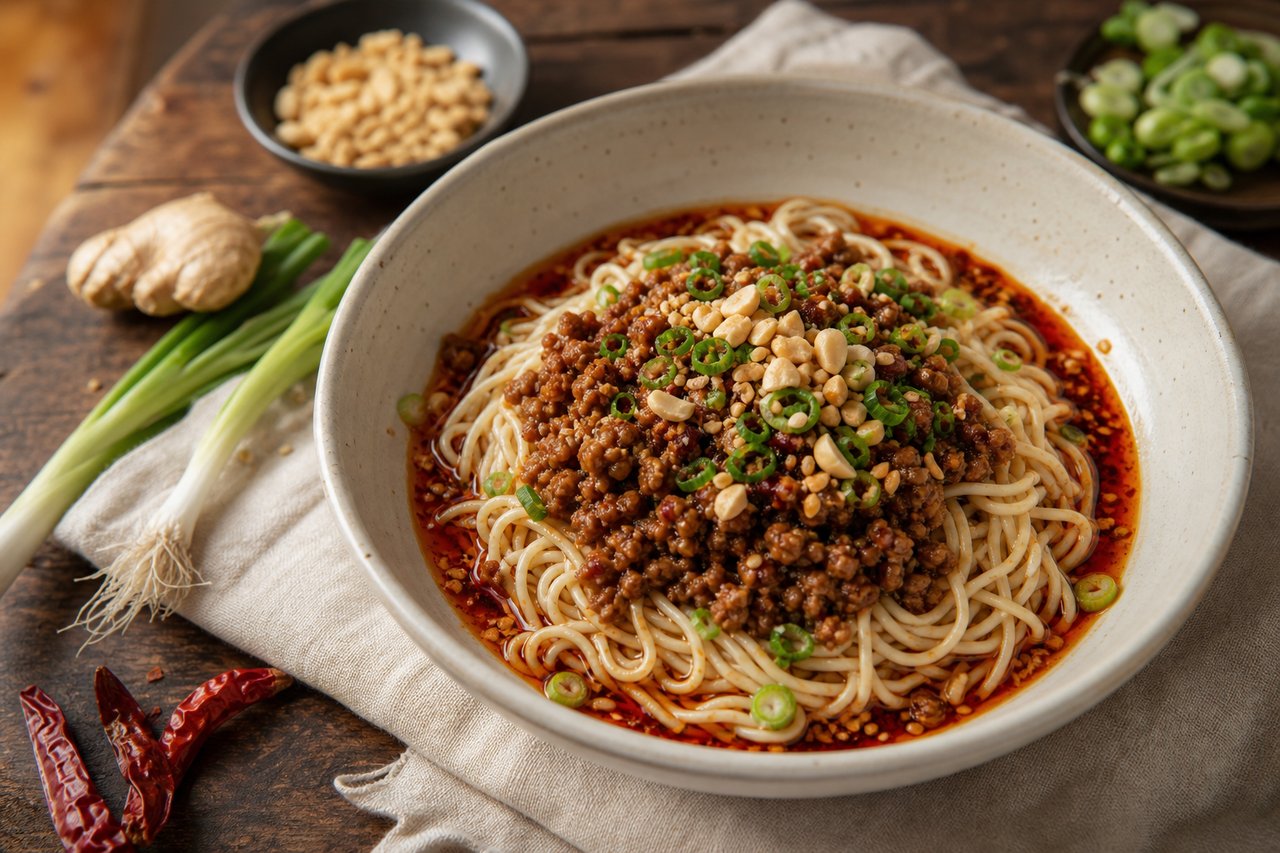
Sichuan cooking, from the southwest, sits at the opposite pole. It is built on bold layering and the signature mala sensation — the marriage of chilli heat and the numbing tingle of Sichuan peppercorn. Fermented pastes, pickled chillies, garlic and ginger give Sichuan dishes their depth and pungency. The cuisine is far more than raw heat, though; it is prized for its complex layering of flavours, of which “fish-fragrant” and “strange-flavour” sauces are famous examples. The chilli-slicked, sesame-rich Dan Dan Noodles and the silky, fiery Mapo Tofu both come from this tradition.
Between these two poles sit other major styles worth knowing:
- Northern / Shandong and Beijing. Wheat country, where noodles, dumplings and steamed breads dominate over rice. Vinegar, garlic and wheat flour define the table, and the cooking runs from hearty braises to the crisp roast duck of the capital.
- Eastern / Jiangsu and Shanghai. Famous for “red-cooking” — slow soy-and-sugar braises that turn meat glossy and deep mahogany — and for a gentle sweetness in the seasoning. Delicate knife work and refined presentation mark this region.
- Hunan. Often hotter than Sichuan but in a different key: a dry, sharp, sour-and-spicy heat from fresh and pickled chillies rather than the numbing tingle of peppercorn.
Tasting across these styles is the quickest way to understand how varied “Chinese food” really is, and how little of it resembles the single sweet-and-heavy idiom of the takeaway counter.
Rice and noodles
Carbohydrate choice tends to follow geography. In the rice-growing south, plain steamed long-grain rice is the default companion at almost every meal, a neutral backdrop that lets the seasoned dishes shine. Getting it right is mostly about rinsing the grains until the water runs clear, removing the surface starch that would otherwise turn the rice gummy, then cooking it with a steady, gentle heat under a tight lid and letting it rest off the heat to finish steaming.
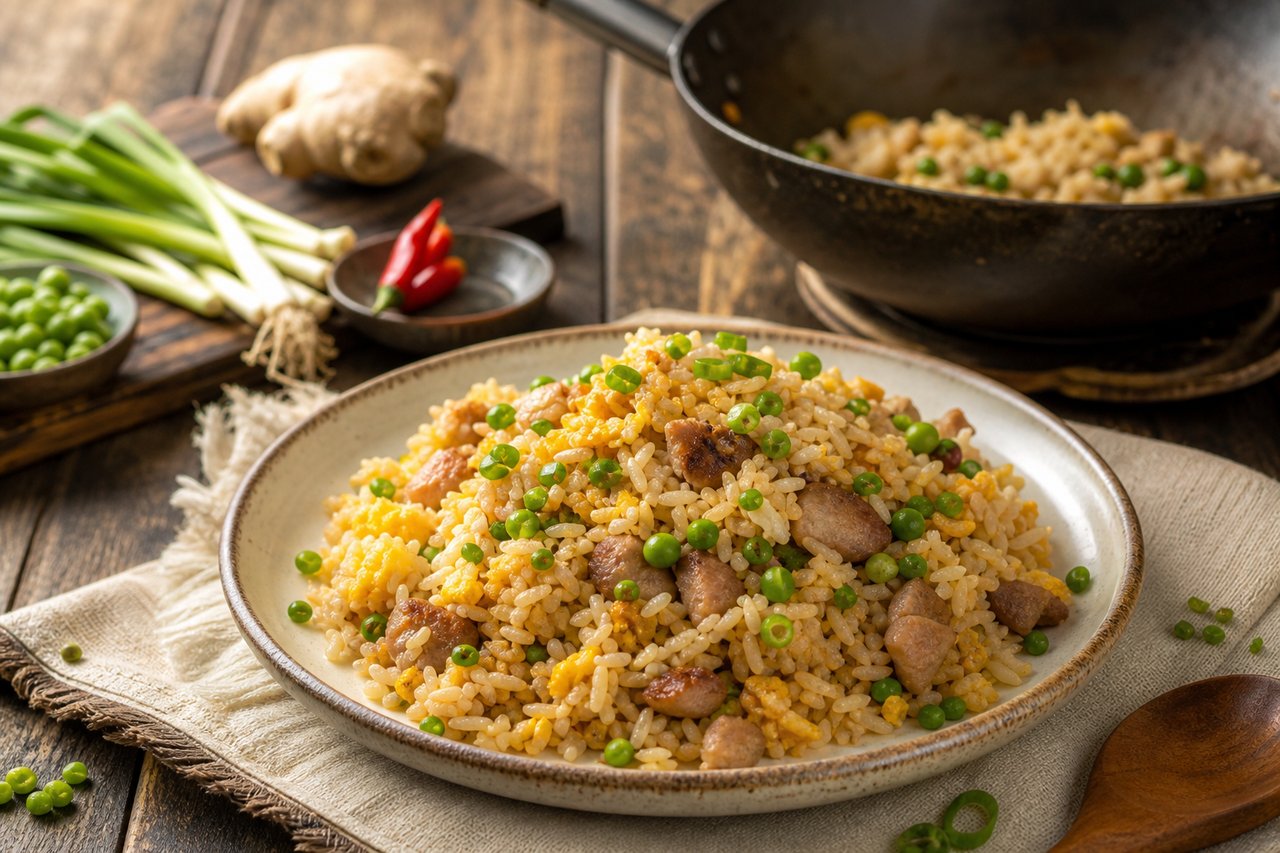
Leftover rice, dried out overnight in the fridge, is also the proper starting point for Pork Fried Rice — fresh rice clumps and steams, while day-old grains have lost enough surface moisture to fry up separate and toothsome. Fried rice is a study in high heat and a hot wok: the grains should leap and crackle, never stew, and the egg should be cooked fast so it coats rather than scrambles into wet lumps.
In the wheat-growing north, noodles take the lead. They come fresh or dried, wide or thin, hand-pulled or knife-cut, and carry everything from rich braised sauces to the chilli-and-sesame slick of Dan Dan Noodles. The key with noodles is to cook them just to a springy bite, drain them well, and toss them quickly with the sauce while everything is hot so the sauce coats each strand rather than pooling at the bottom of the bowl. A bowl of well-sauced noodles is among the fastest and most satisfying meals in the whole repertoire.
Dumplings and the shared table
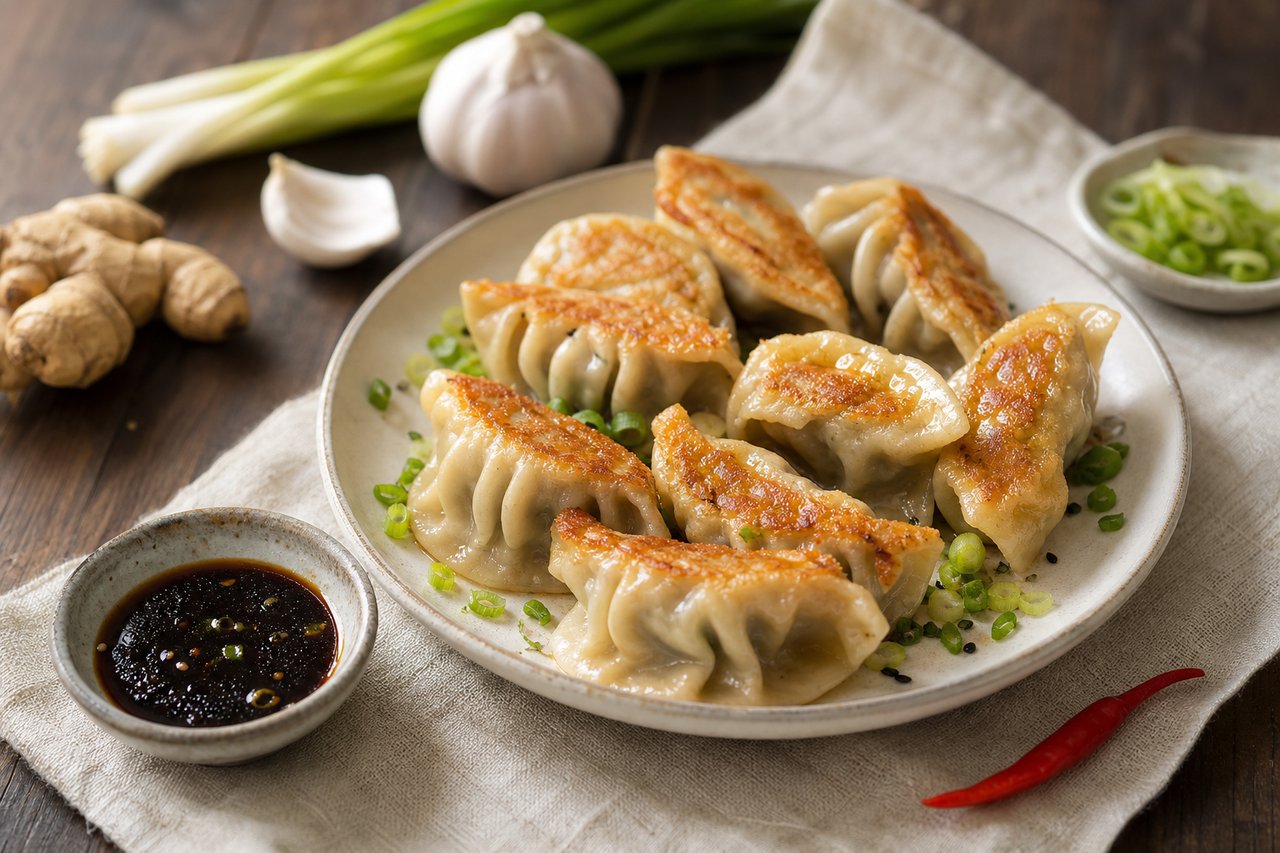
Dumplings sit close to the heart of Chinese home cooking, both as everyday food and as a dish made together for celebrations. The basic idea is simple: a seasoned filling of minced meat and vegetables sealed inside a thin wheat wrapper, then boiled, steamed, or pan-fried. The filling is usually loosened with a little stock or water and seasoned with soy, ginger and sesame oil so it stays juicy rather than dense.
Pan-fried potstickers are an ideal place to start. They are fried until the base is golden and crisp, then a splash of water and a quick lid steams the tops through, giving the contrast of crunchy bottom and tender top that defines the style; the Potstickers recipe walks through the whole sequence. The fiddly part is the pleating, which seals the dumpling and keeps the filling in; it looks daunting but becomes quick with practice, and the dumpling pleating guide breaks the folds down step by step. Making a big batch and freezing the surplus raw, on a tray so they do not stick, means a fast meal is always in the freezer.
Soups and balancing a meal
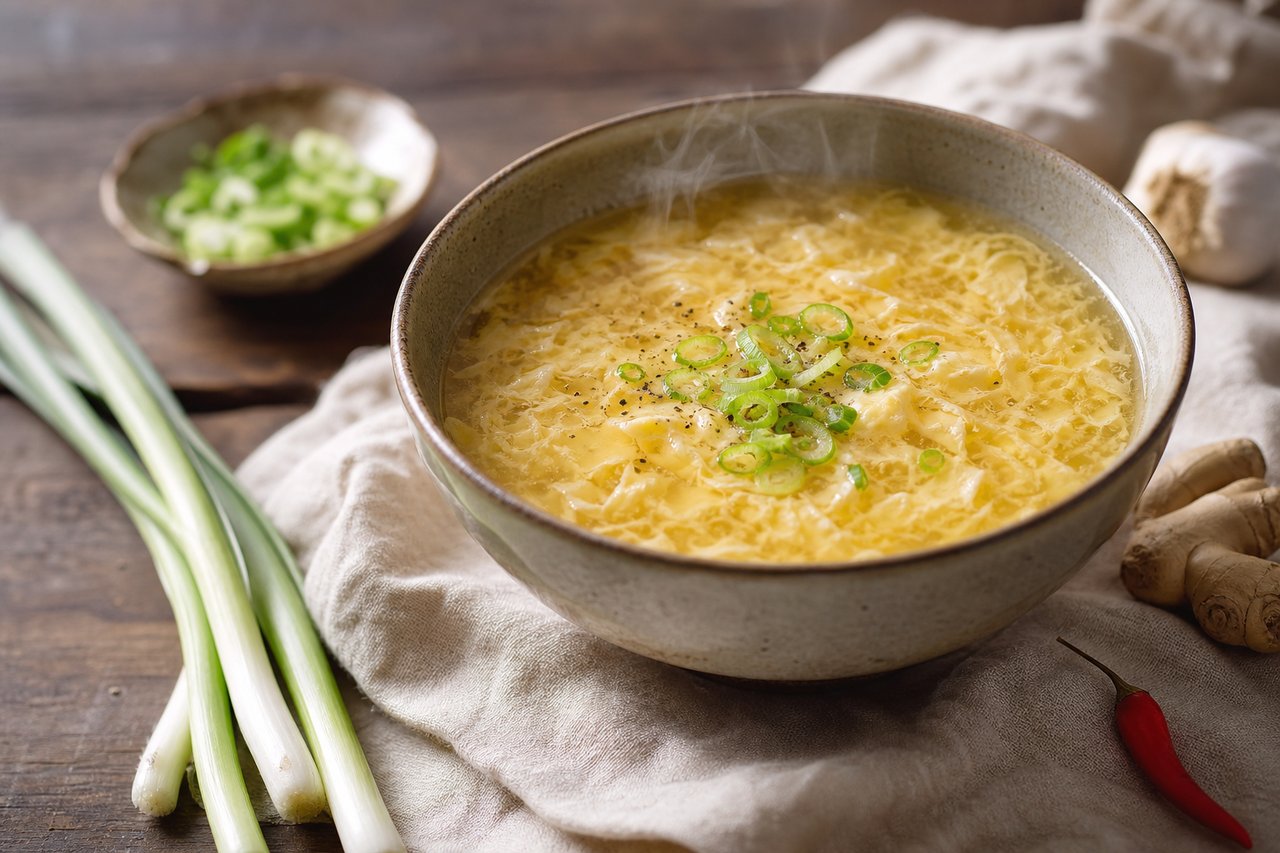
A Chinese home meal almost always includes a soup, and it is rarely a heavy starter. More often it is a clear, light broth served alongside the other dishes, sipped throughout the meal to cleanse the palate and round things out. A simple, comforting Egg Drop Soup — hot seasoned stock thickened lightly and finished with ribbons of beaten egg streamed in at the end — is one of the easiest and most rewarding to learn, and it shows the principle clearly: the soup supports the table rather than dominating it.
What ties everything together is the way the food is eaten. A home meal is not a sequence of individual plates but a set of shared dishes placed in the centre, balanced for variety and contrast. The aim is range across the table rather than abundance of any one thing: pair something rich or braised with something fresh and stir-fried, include a vegetable, add a soup, and bind it all with rice or noodles. Varying the cooking methods keeps the cook from being chained to the wok, and balancing the seasoning keeps the meal from being all salty, all spicy or all heavy.
Cook a few of the recipes here, keep the pantry stocked, and that balanced shared table stops being a special occasion and becomes an ordinary, achievable weeknight.