Pork Fried Rice
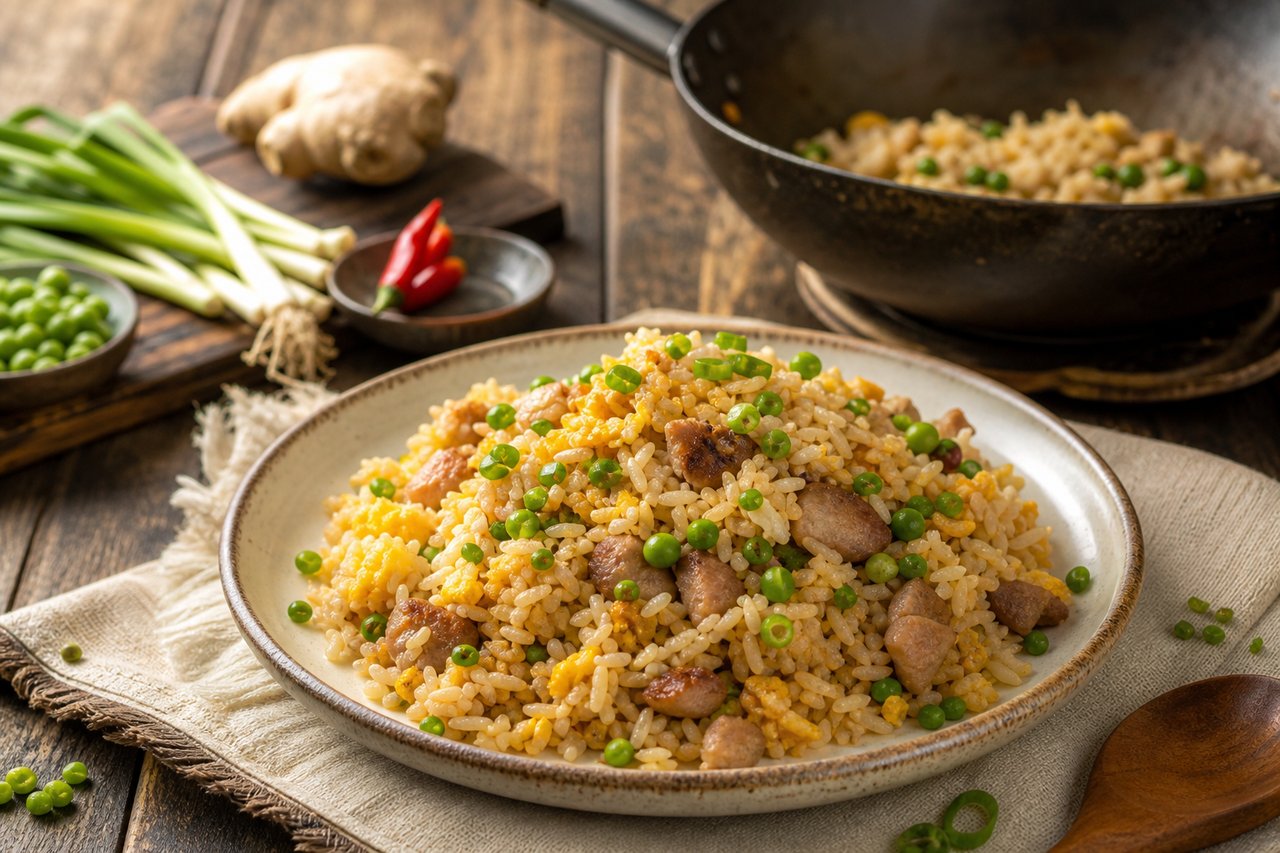
Day-old rice fried hot and fast with pork, egg and spring onion — the classic way to turn leftovers into a fast, savoury, restaurant-style one-wok meal.
- Prep
- 15 min
- Cook
- 10 min
- Serves
- 3 to 4
- Level
- Easy
By Maya Chen
Method
- 01
Break up the cold rice with your hands so there are no clumps. Cold, dry rice fries into separate grains, while fresh warm rice steams and turns sticky.
- 02
Heat 1 tbsp oil in a wok over high heat. Pour in the beaten egg, let it set briefly, then scramble into soft curds and scrape out onto a plate.
- 03
Add the remaining oil to the hot wok. Add the diced pork and stir-fry until cooked through and lightly browned. (If using leftover roast pork, just heat it through.)
- 04
Add the garlic and the white parts of the spring onion and stir for 20 seconds until fragrant.
- 05
Tip in the rice and toss continuously, pressing it against the hot wok to drive off moisture and let it take on a little colour, about 2–3 minutes.
- 06
Add the peas and carrots and the cooked egg, breaking the egg into smaller pieces as you toss.
- 07
Drizzle the light and dark soy down the side of the wok, add the white pepper, and toss hard so every grain is evenly coloured and seasoned.
- 08
Off the heat, stir through the sesame oil and the green spring onion tops. Taste, adjust the soy, and serve at once.
Fried rice is the great rescuer of leftovers and one of the most useful dishes a home cook can own. Made well, it turns yesterday’s rice and a few odds and ends into a fast, savoury meal with separate, glossy grains and little pockets of egg, pork and vegetable. Made carelessly, it slumps into a soggy heap — and the difference comes down to a couple of simple rules.
The first rule is the rice itself. Cold, day-old rice has dried out just enough that the grains fry up separate and toothsome; fresh warm rice carries too much moisture and steams into a sticky clump. If you have not planned ahead, spreading freshly cooked rice on a tray to cool and dry in the fridge for an hour is a reasonable shortcut.
Heat and speed
The second rule is heat. Fried rice is a fast, high-heat dish: everything should be prepped and within arm’s reach before the wok goes on, because the cooking is over in minutes. Toss the rice constantly and press it against the hot metal to drive off steam and pick up a little colour, and resist crowding the pan, which would cool it and steam the grains.
Season in layers
Use both soy sauces — light for salt, dark for colour — and add them down the side of the hot wok rather than straight onto the rice so they catch a faint toasted note. Finish off the heat with sesame oil and the green spring onion tops, taste, and adjust before serving.