Pork Potstickers
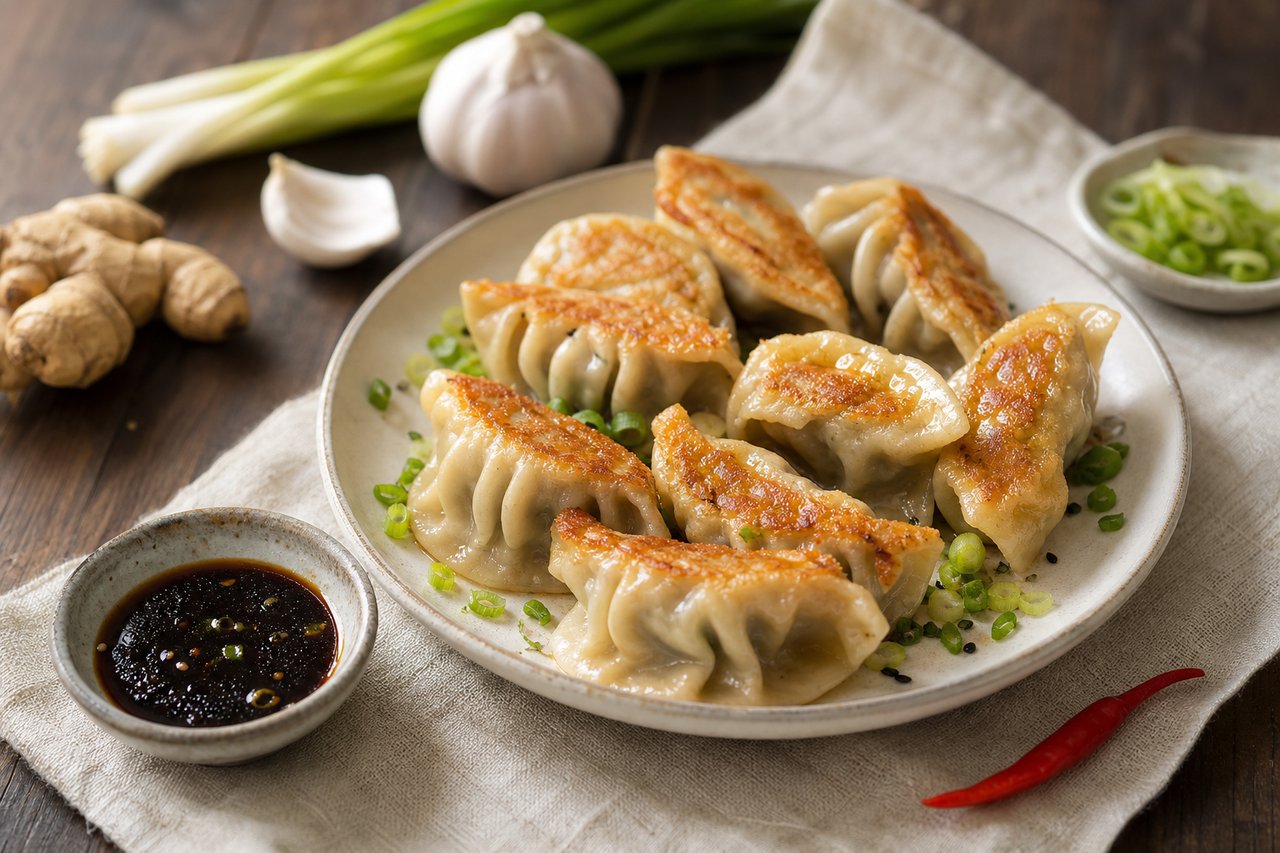
Juicy pork-and-cabbage dumplings pan-fried to a crisp golden base then steam-finished — the classic potsticker method, with a simple dipping sauce.
- Prep
- 45 min
- Cook
- 15 min
- Serves
- About 30 dumplings
- Level
- Medium
By Maya Chen
Method
- 01
Toss the chopped cabbage with the salt and leave for 10 minutes. Squeeze out as much water as you can in a clean towel — wet filling makes dumplings burst and steam poorly.
- 02
Mix the squeezed cabbage with the pork, spring onion, ginger, garlic, soy, Shaoxing wine, sesame oil and white pepper. Stir vigorously in one direction for a minute until the filling turns slightly sticky and cohesive.
- 03
Lay a wrapper in your palm and place a heaped teaspoon of filling in the centre. Wet the edge with a finger dipped in water.
- 04
Fold the wrapper into a half-moon and pleat one side over to the other, pressing each pleat firmly to seal. Stand the dumpling on its base to flatten it slightly. Repeat with the rest.
- 05
Heat 1 tbsp oil in a non-stick or heavy frying pan over medium-high heat. Arrange the dumplings flat-side down in a single layer and fry undisturbed for 2–3 minutes until the bases are golden brown.
- 06
Carefully pour in about 60 ml water and immediately cover with a lid — it will steam vigorously. Cook covered for 6–7 minutes until the water has evaporated and the wrappers are translucent and cooked through.
- 07
Uncover and let the bases re-crisp for a final minute until they release from the pan.
- 08
Mix the dipping sauce ingredients. Serve the potstickers crisp-side up, hot from the pan, with the dip alongside.
Potstickers are the gateway to Chinese dumplings: a juicy pork-and-cabbage filling sealed in a thin wheat wrapper, then cooked by the clever two-stage method that gives them their name. The bases are first fried to a deep golden crust, then water is added and the pan covered so the dumplings steam through, leaving them crisp underneath and tender on top.
Folding dumplings takes a little practice, and the first few are always the ugliest — this is normal, and they taste exactly the same. Many cooks treat a batch as a relaxed group activity precisely because the pleating gets noticeably better as the tray fills up. A simple half-moon with a few pleats on one side is all you need.
Keep the filling dry
The most common failure is a watery filling, which makes dumplings split and refuse to crisp. Salting the cabbage to draw out its moisture and then squeezing it firmly is the fix. Stirring the filling vigorously in one direction afterwards binds it into a cohesive, slightly sticky mass that holds together and stays juicy.
The fry-steam-fry rhythm
The cooking is a quick sequence: fry the bases dry until golden, add water and clamp on a lid to steam the dumplings through, then uncover and let the bases re-crisp once the water has gone. Stand back when the water hits the hot pan, as it spits, and resist lifting the lid early so the steam can do its work.