Mapo Tofu
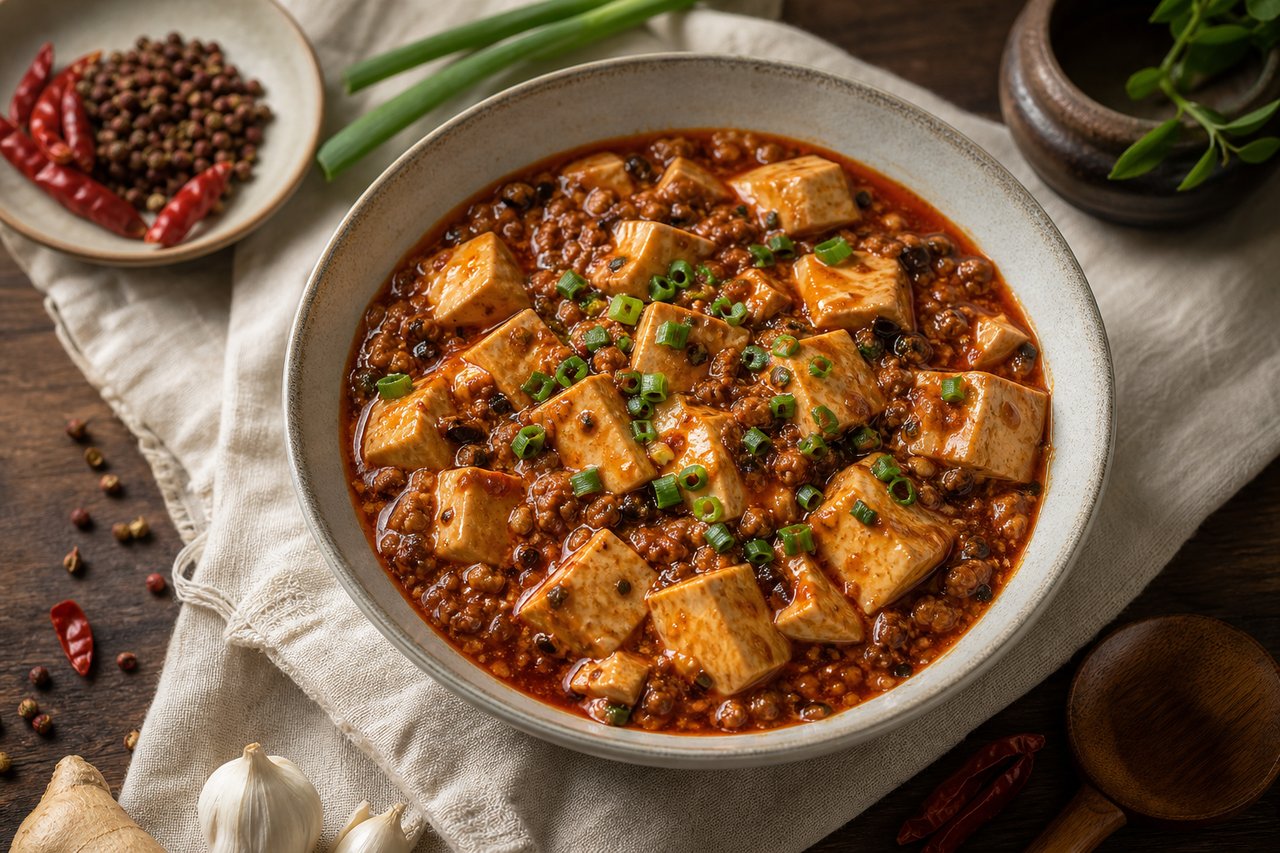
Silky tofu and minced pork in a glossy, numbing-hot Sichuan sauce built on doubanjiang and ground Sichuan peppercorn — a fast, deeply savoury weeknight classic.
- Prep
- 15 min
- Cook
- 15 min
- Serves
- 4 with rice
- Level
- Medium
By Maya Chen
Method
- 01
Gently slide the tofu cubes into a pan of barely simmering lightly salted water and hold for 2–3 minutes. This firms the tofu so it holds together later. Drain carefully and set aside.
- 02
Heat the oil in a wok over medium-high heat. Add the minced pork and fry, breaking it up, until it loses its raw colour and starts to crisp at the edges.
- 03
Lower the heat to medium and add the doubanjiang. Fry it in the oil for about a minute until the oil turns deep red and smells fragrant — this step is what gives the dish its colour and depth.
- 04
Add the garlic, ginger, black beans and chilli flakes and stir for 30 seconds until aromatic.
- 05
Pour in the stock and soy sauce and bring to a gentle simmer. Slide in the drained tofu and nudge it through the sauce rather than stirring hard, so the cubes stay intact.
- 06
Simmer for 3–4 minutes to let the tofu absorb flavour. Stir the cornstarch slurry again and add it in two stages, swirling the pan, until the sauce turns glossy and coats a spoon.
- 07
Stir in the white parts of the spring onion. Take off the heat and scatter over the ground Sichuan peppercorn and the green spring onion tops.
- 08
Serve immediately over steamed rice, while the sauce is still glossy and the tofu hot.
Mapo tofu is one of Sichuan’s most famous dishes and a model of how that cuisine layers flavour. Silky cubes of tofu sit in a glossy, brick-red sauce that is at once savoury, spicy and gently numbing — the classic mala combination of chilli heat and Sichuan peppercorn. Despite its restaurant reputation, it comes together in well under half an hour and asks for only one specialist purchase.
The dish lives or dies on its two anchor ingredients: doubanjiang, the fermented chilli-bean paste that provides colour, salt and funky depth, and Sichuan peppercorn, which delivers the tingling numbness that nothing else can replace. Both keep for a long time, so a single trip to an Asian grocer sets you up for many dishes beyond this one.
Frying the paste is the key step
The most important moment is frying the doubanjiang in oil over moderate heat until the oil stains deep red and turns fragrant. Rushing this step, or skipping it by adding the paste with the liquid, leaves the sauce flat and the flavour underdeveloped. Give it the minute it needs.
Treat the tofu gently
Soft tofu is fragile, so a brief blanch in salted water firms it just enough to survive the pan. Once it is in the sauce, nudge and fold rather than stir, and finish the dish the moment the cornstarch turns it glossy. Scatter the ground Sichuan peppercorn on at the very end so its aroma stays bright.