Cuisine guide
Japanese Home Cooking & Ramen: A Cook's Guide
How Japanese home cooking actually works — dashi, rice, the ramen bowl and the everyday dishes — with the techniques that make each one reliable.
By Maya Chen
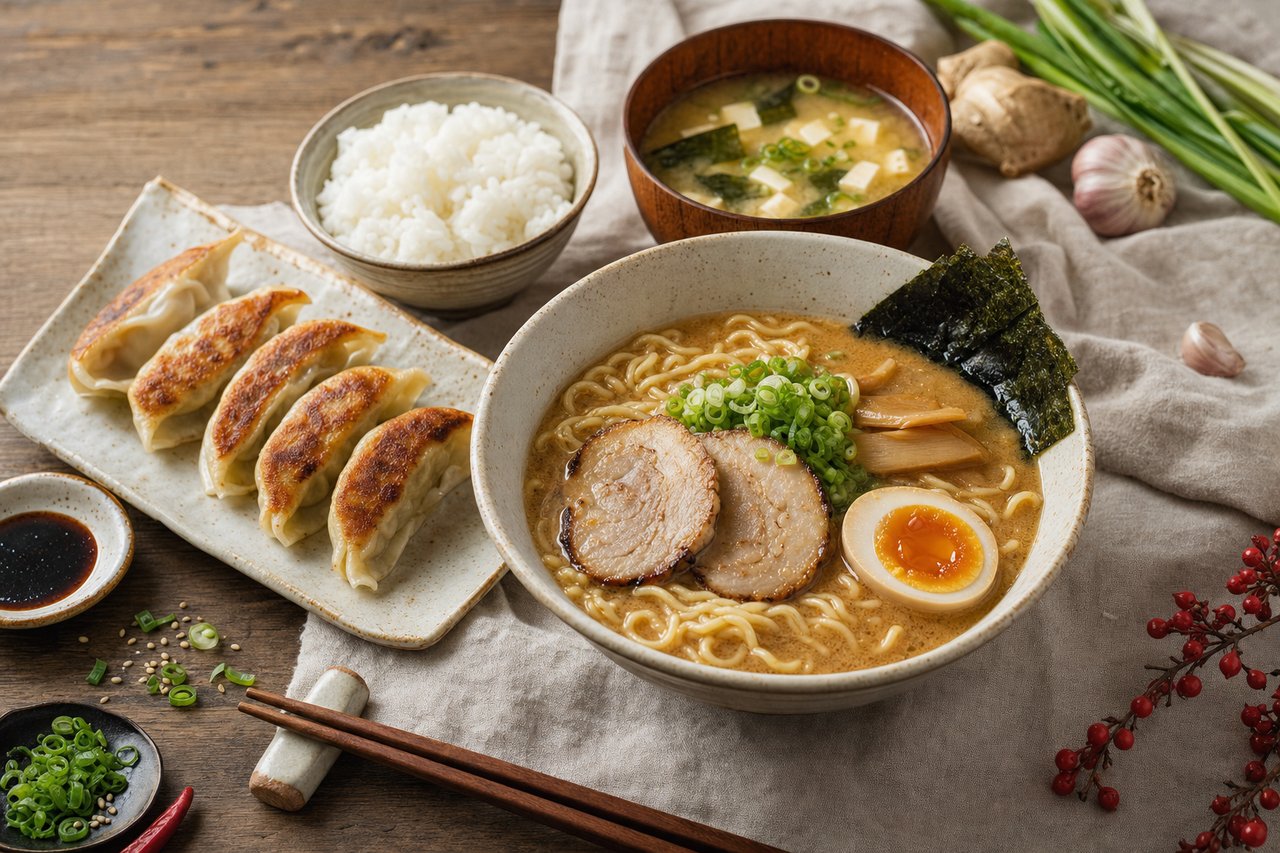
Japanese home cooking is often misunderstood as fussy or unattainable. In practice it is one of the most forgiving cuisines to cook well, because so much of it rests on a small number of foundational techniques and a tight, savoury pantry. Master a clean dashi, a pot of properly cooked rice and a balanced seasoning of soy, mirin and sake, and a huge range of dishes opens up.
What unites the cuisine is not a single flavour but a way of building flavour. Where some kitchens lean on long-cooked sauces or heavy spicing, Japanese cooking layers gentle, savoury notes — the marine depth of dashi, the salt of soy, the quiet sweetness of mirin — and trusts good ingredients to carry the dish. That restraint is exactly what makes it approachable at home: fewer moving parts, and a small set of skills that pay off across hundreds of dishes.
The principle behind the flavour: umami and balance
The taste that makes Japanese food feel distinct is umami, the savoury fifth taste that comes from glutamates and related compounds in ingredients like kombu, dried bonito, soy, miso and dried mushrooms. The genius of the cuisine is that it stacks several umami sources so they amplify one another — kombu and katsuobushi together in dashi, or dashi plus miso plus soy in a single bowl of soup — producing a depth that no one ingredient delivers alone.
Around that savoury core, a good dish balances five elements that recur again and again: salty, sweet, sour, bitter and umami, often described alongside five cooking methods and five colours on the plate. A cook does not need to count these formally, but the habit of asking “is this balanced?” — a little sweetness against the salt, brightness against richness, a green vegetable beside the brown of grilled fish — is the single most useful instinct to develop.
The pantry that does the work
The flavour signature of Japanese cooking comes less from spice than from layered umami. Seven ingredients carry most of it: soy sauce for salt and depth, mirin for gentle sweetness and shine, sake to round and de-funk, miso for fermented richness, rice vinegar for brightness, and kombu and katsuobushi for dashi. Stock those and you can season almost anything in the repertoire.
It helps to understand what each one actually does. Soy sauce is fermented from soybeans and wheat; the common dark variety seasons most dishes, while a lighter, saltier type is used where the cook wants flavour without colour. Mirin is a sweet rice wine that adds shine and a rounded sweetness — the proper brewed kind is worth seeking out over the sweetened-syrup imitations. Sake loosens and deepens flavours and helps remove strong smells from fish and meat. Miso ranges from pale, sweet white pastes to dark, assertive red ones, and the choice changes the character of a soup or marinade completely. Rice vinegar is milder and rounder than Western vinegars, ideal for sushi rice and quick pickles. A few extras — short-grain rice, panko, toasted sesame oil and seeds, nori, and dried shiitake — round out a kitchen that can handle the bulk of the home repertoire. The full set of staples, with notes on what to buy and how to store it, lives in the Asian pantry guide.
Dashi: the five-minute stock that changes everything
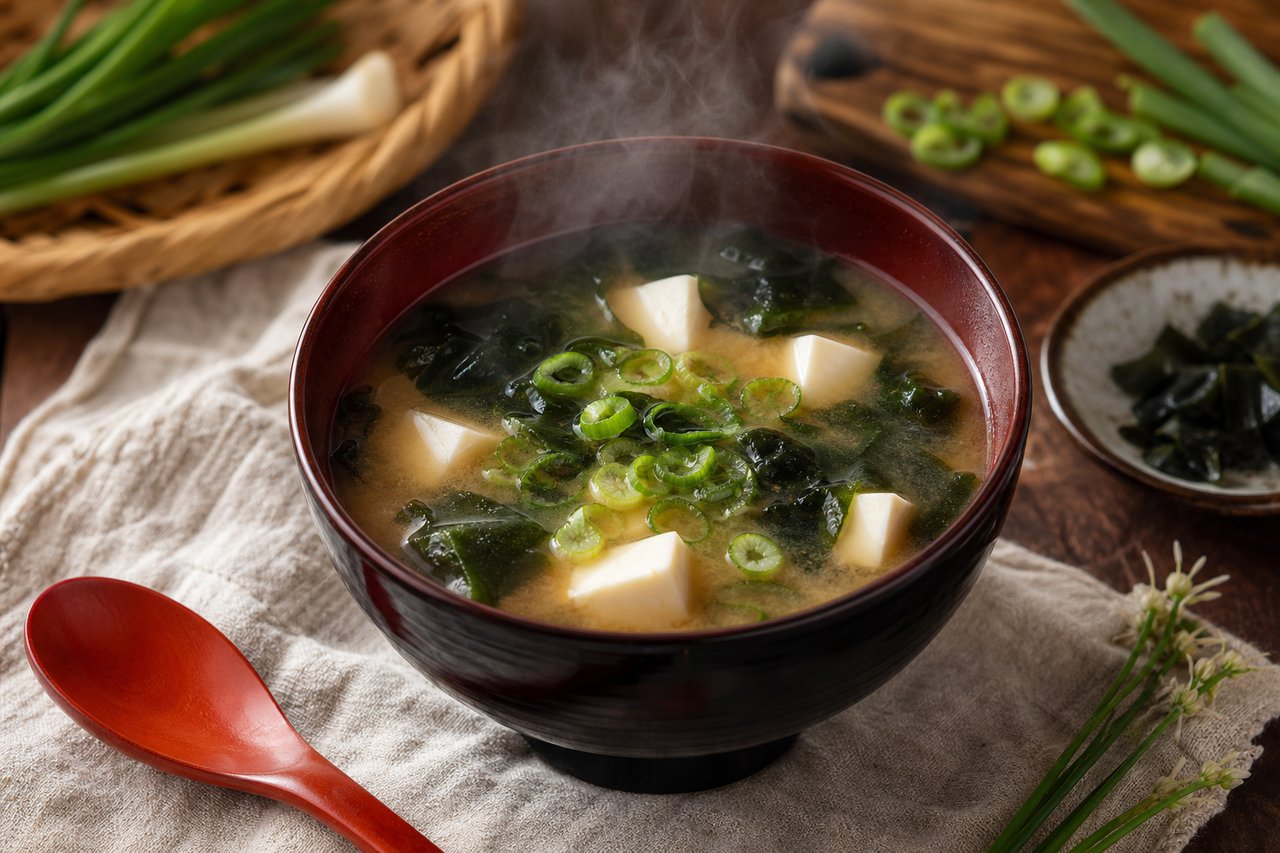
If you learn one thing, learn dashi. Steep a strip of kombu in cold water, bring it slowly toward a simmer, pull the kombu just before boiling, then add a handful of katsuobushi and let it steep off the heat for a few minutes before straining. The result is a fragrant, clean stock that becomes miso soup, the simmering liquid for vegetables, the base of noodle broths and the backbone of countless sauces. A full walk-through, including a vegetarian version, is in the guide on how to make dashi.
A few details separate a clean dashi from a muddy one. The kombu must never boil — at a rolling boil it releases a slick, slightly bitter sliminess, so it is pulled the moment fine bubbles climb the sides of the pot. The katsuobushi steeps rather than simmers; boiling it hard makes the stock fishy and harsh. And the strained stock should not be squeezed through the flakes, which presses out the same bitterness. Once the basic kombu-and-bonito version is comfortable, variations follow naturally: a vegetarian dashi from kombu and dried shiitake, a heartier niboshi dashi from dried sardines for robust noodle broths, or a quick weeknight version using dashi powder when time is short. The leftover kombu and bonito need not be wasted either — simmered with soy and mirin they become a thrifty side dish called furikake or tsukudani.
Rice, done properly
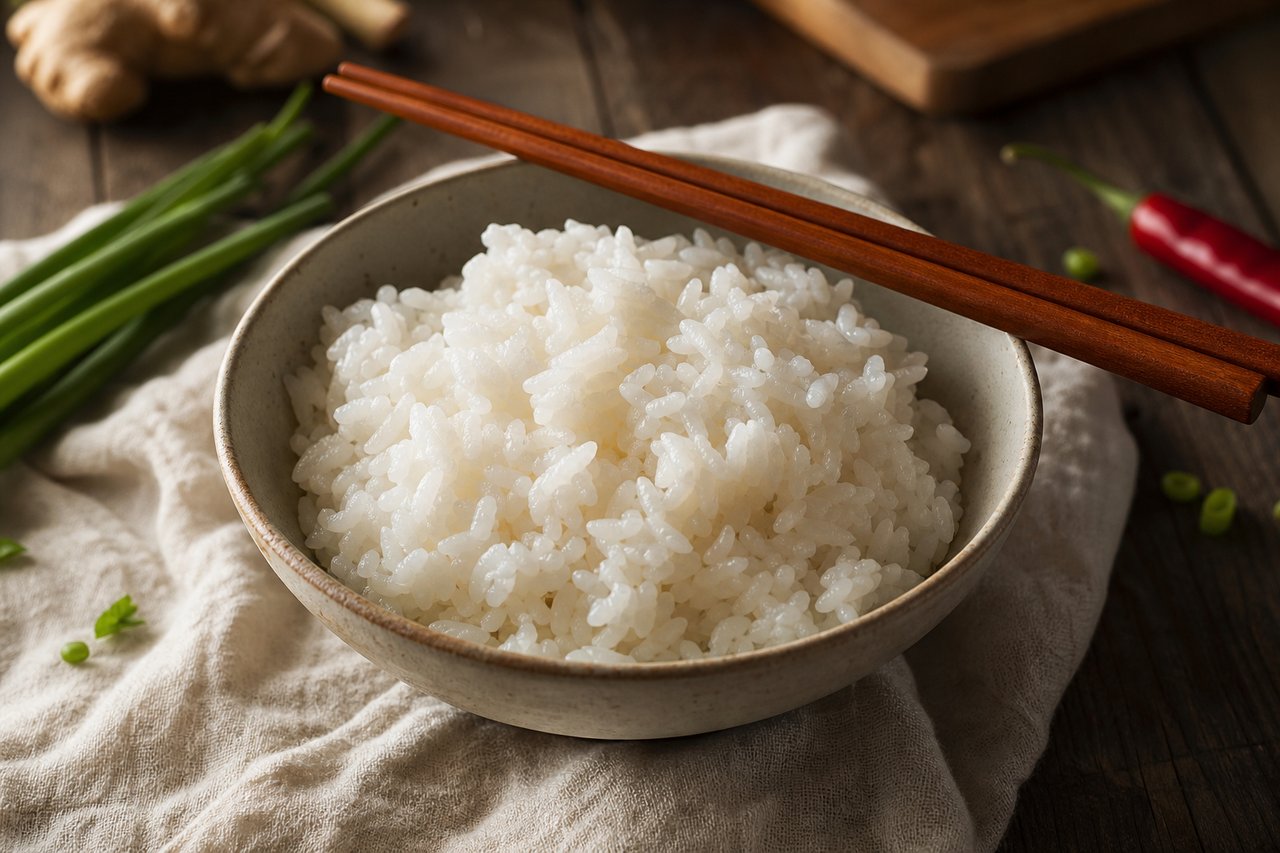
Short-grain Japanese rice is meant to be slightly sticky and glossy. The single most important step is rinsing — swirl the grains in cold water and pour it off several times until it runs nearly clear, removing surface starch that would otherwise turn the rice gluey. Cook it with roughly equal volumes of rice and water, and always let it rest, covered, off the heat so the steam finishes the grains evenly.
The detailed method, from rinsing to resting, is set out in the guide on how to cook Japanese rice, but a few principles are worth holding onto. Soaking the rinsed grains for twenty to thirty minutes before cooking lets them hydrate evenly so the centre cooks through without the outside turning mushy. The lid stays on from the moment the pot comes to a boil until the rest is finished — lifting it releases the steam that does the final cooking. After the heat goes off, a ten-minute rest is not optional; it is when the grains firm up and separate. Finally, the rice is fluffed gently with a cutting-and-folding motion rather than stirred, which would crush the grains and make them sticky in the wrong way.
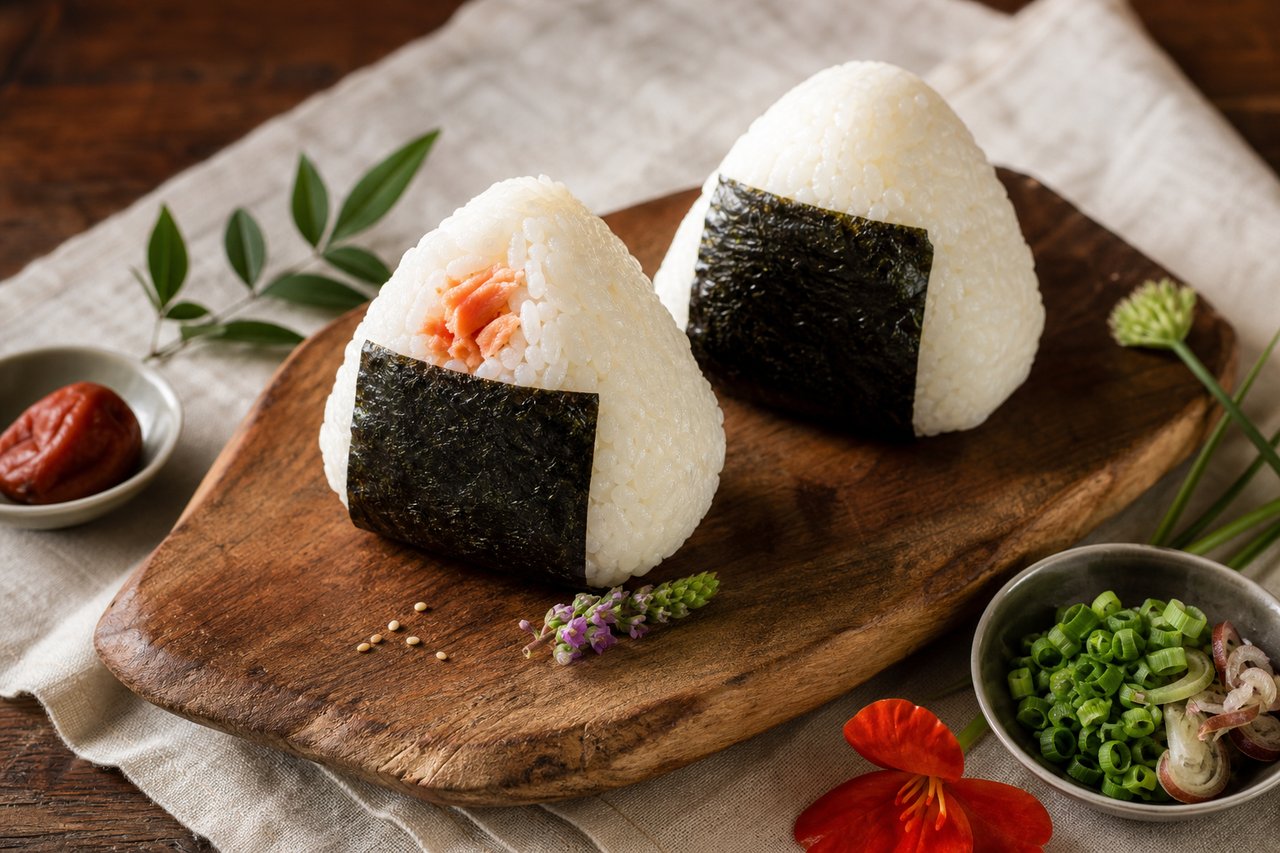
Plain steamed rice is the foundation, but it is also the building block for much else: pressed and wrapped into onigiri for lunch, seasoned with vinegar for sushi, or topped with a glaze and protein for a donburi rice bowl. A reliable pot of steamed rice is the quiet centre of the whole table.
Core techniques worth practising
Beyond dashi and rice, a handful of methods recur across the cuisine, and getting comfortable with them unlocks far more than any single recipe.
Simmering (nimono)
Many of the gentlest home dishes are simmered slowly in a seasoned dashi — root vegetables, tofu, fish or chicken cooked until tender and infused with flavour. The classic move is to add seasonings in a particular order, sugar before salt and soy, because sugar penetrates more slowly. A drop-lid, or otoshibuta, rests directly on the food to keep it submerged and basted while using little liquid.
Grilling and glazing (yakimono)
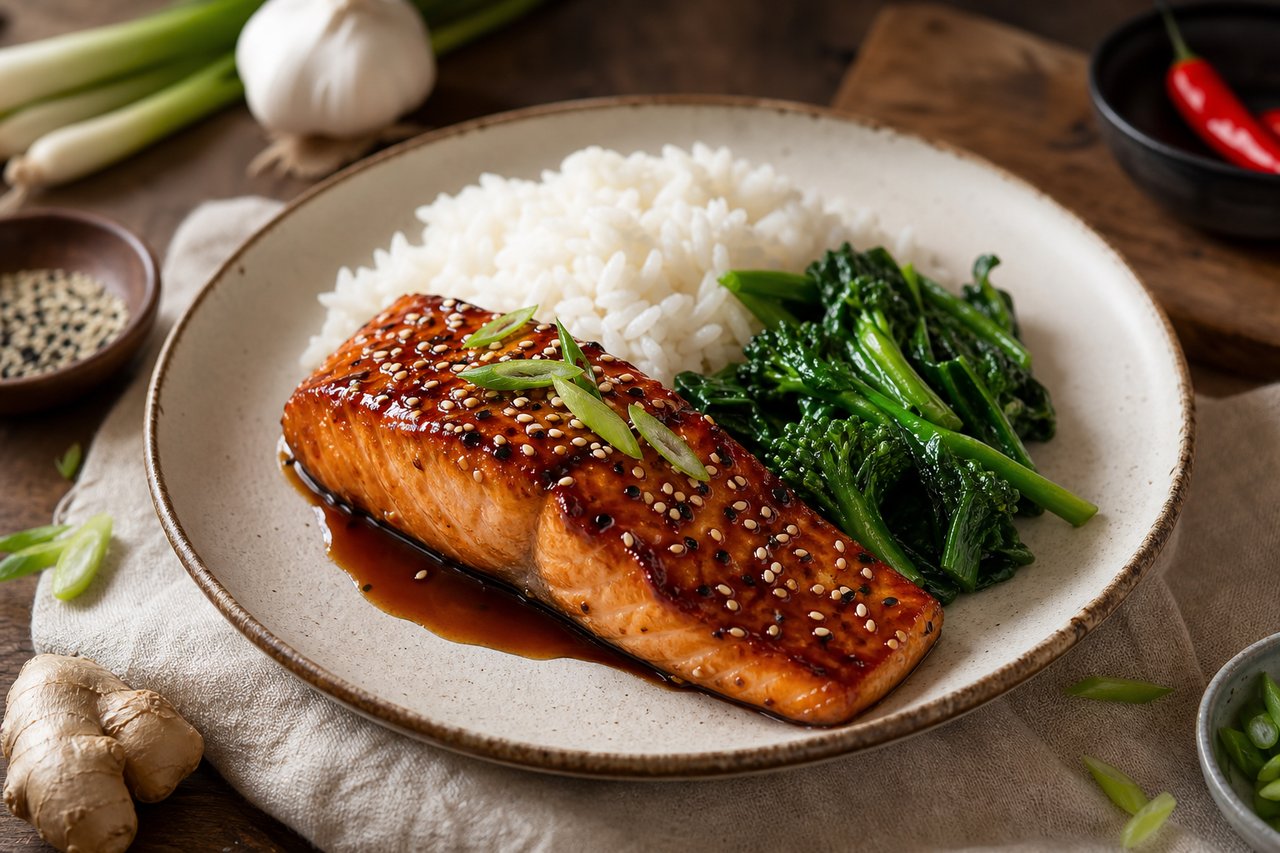
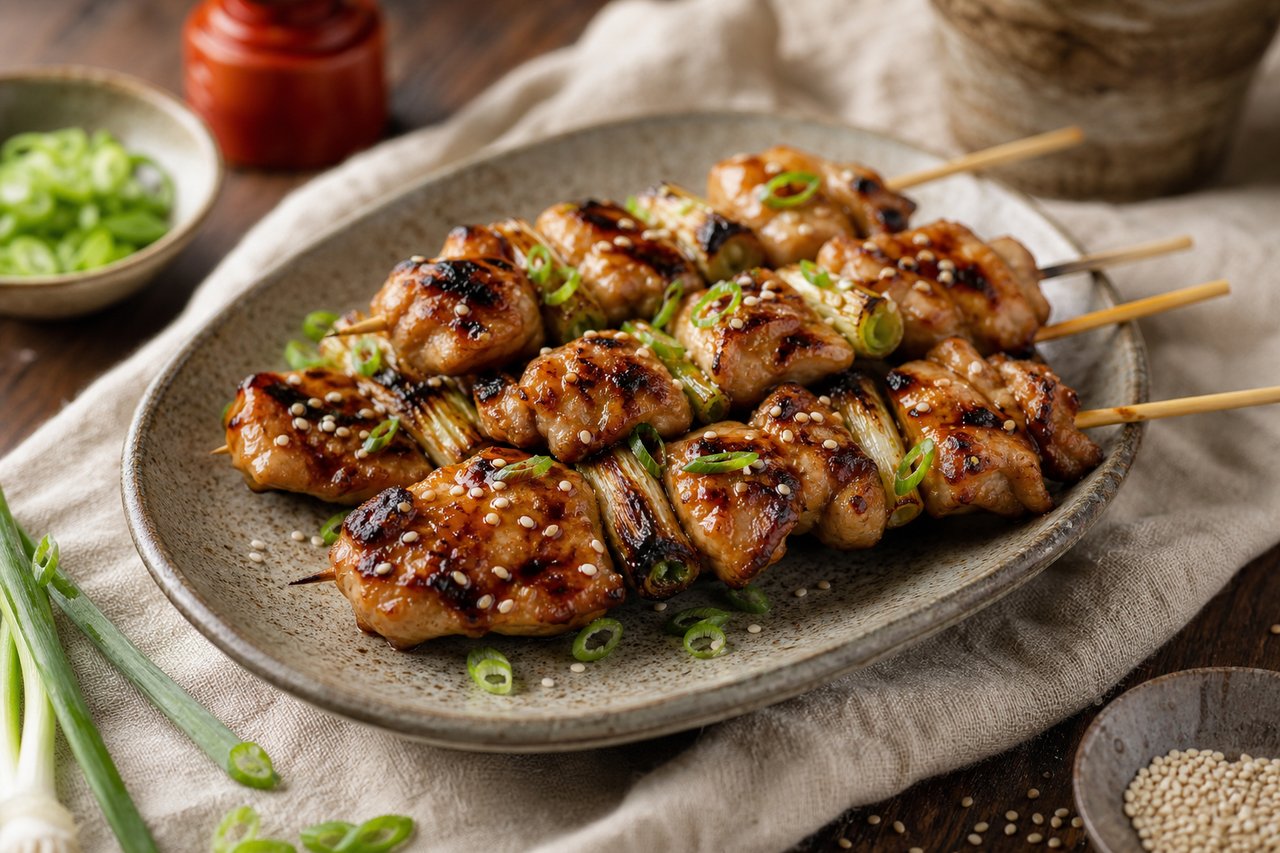
Fish and chicken are often grilled and finished with a glaze. The teriyaki salmon technique is representative: the fish is cooked through, then a reduced soy-mirin-sake sauce is spooned over and let to bubble into a lacquer. The same logic drives yakitori, skewered chicken grilled over high heat and either salted simply or brushed with tare between turns.
Deep-frying (agemono)
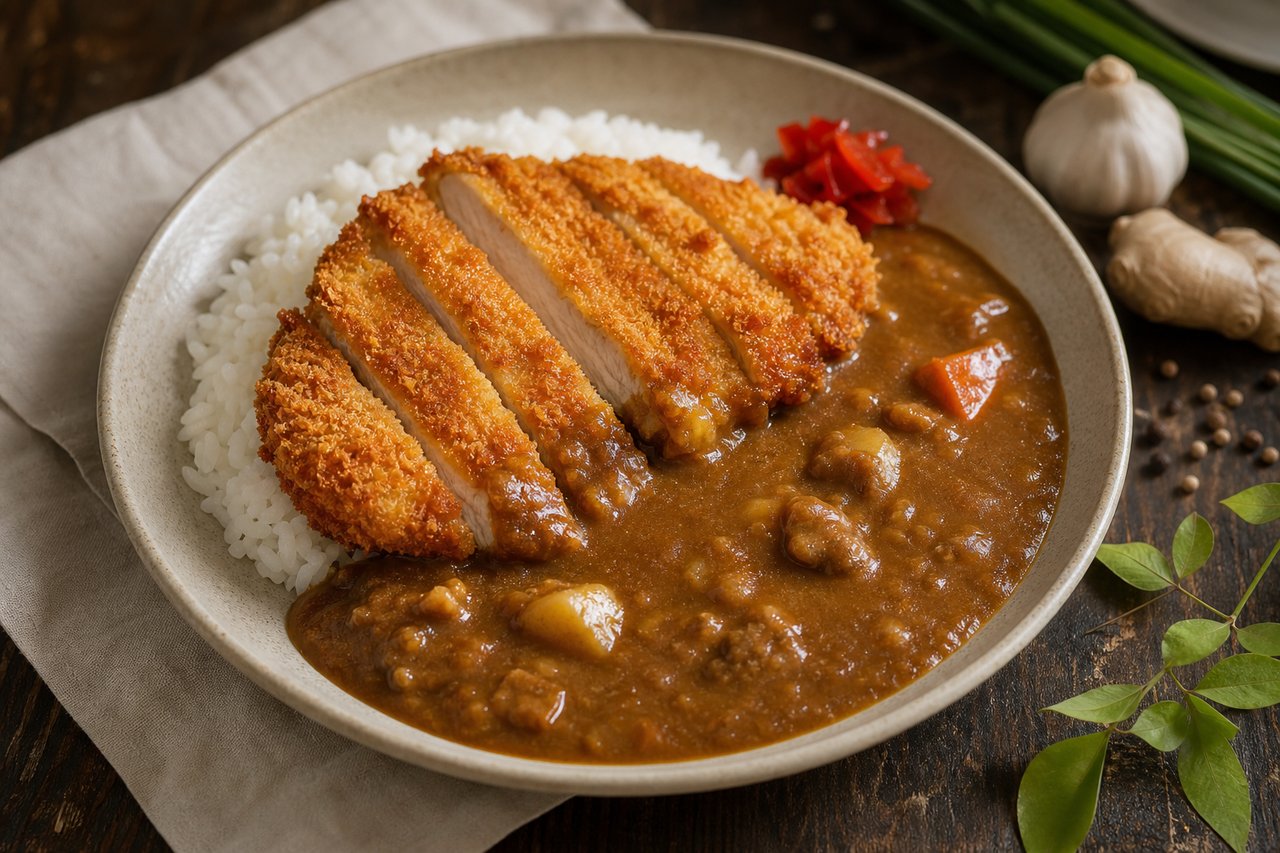
Frying done the Japanese way is light rather than heavy. Panko, the coarse Japanese breadcrumb, fries up airier and crunchier than fine crumbs, which is why a chicken katsu curry stays crisp under its sauce. The keys are oil at a steady temperature, not crowding the pan, and draining on a rack so steam escapes instead of softening the crust.
Folding and pleating
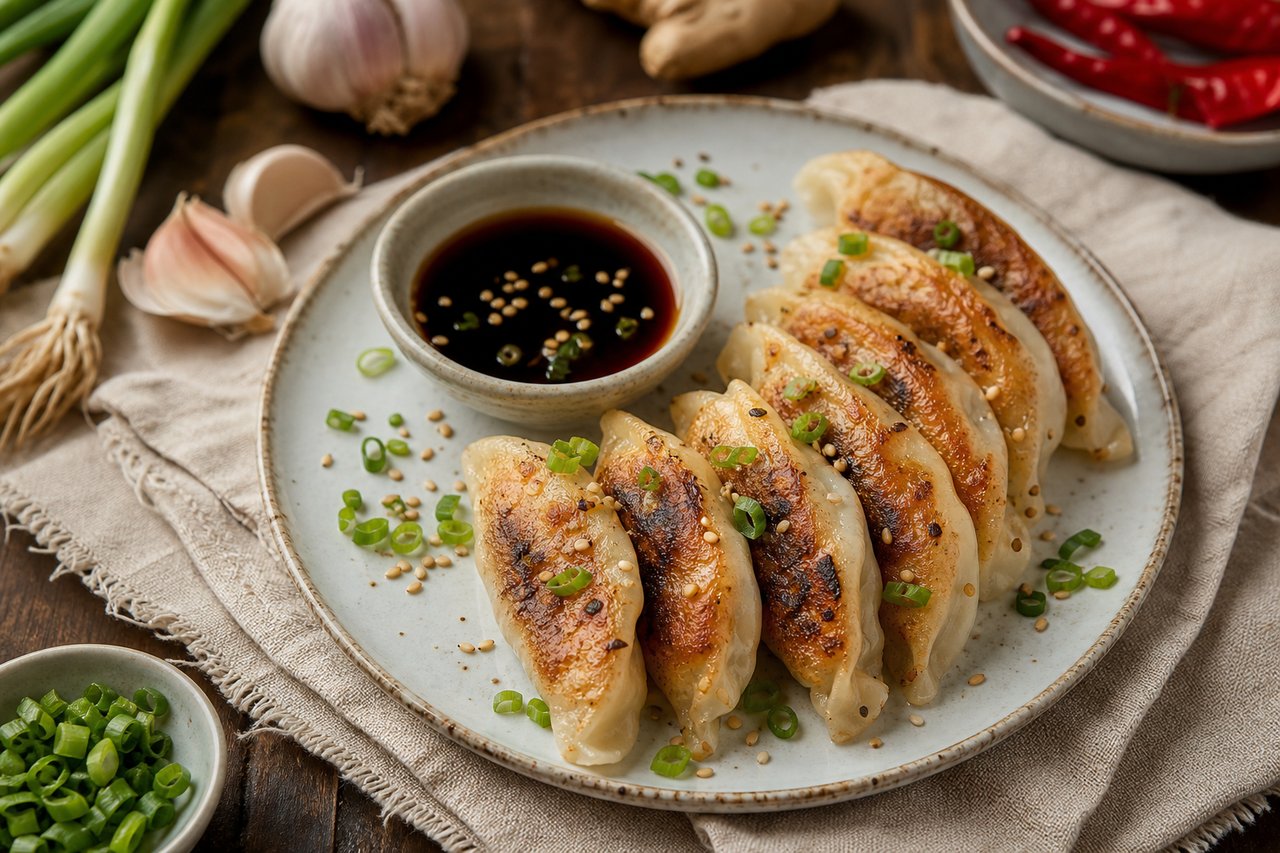
Dumplings are where many cooks first practise the patient, decorative side of the cuisine. The pleated seal on pork gyoza is both functional and attractive, trapping juices while giving the dumpling its signature crescent shape; the dedicated guide on how to pleat dumplings breaks the motion down step by step. Gyoza are then pan-fried and steamed in the same pan to get the crisp-bottomed, tender-topped contrast that defines them.
The ramen bowl, demystified
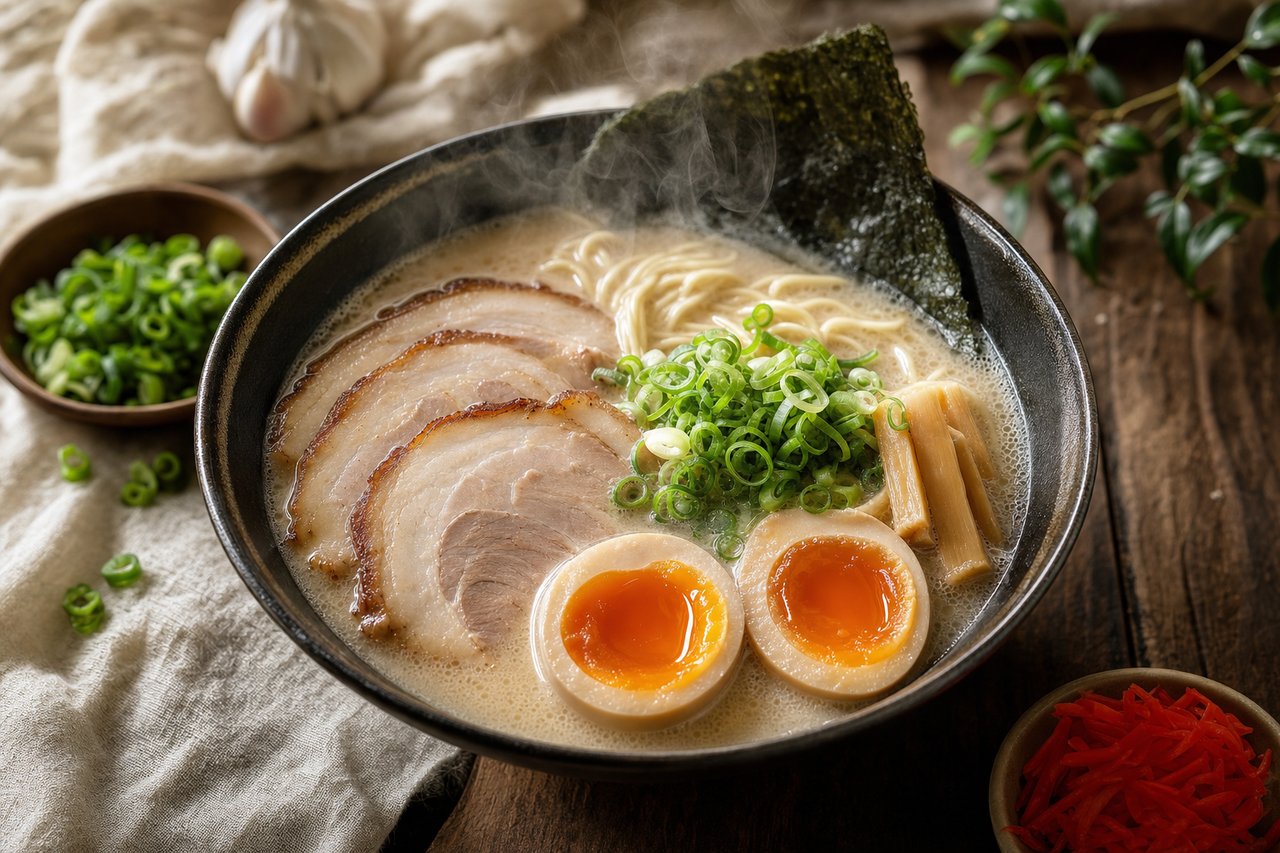
Ramen looks intimidating because a great bowl has several components, but each is simple on its own. A bowl is built from four parts: tare (the concentrated seasoning spooned in first), broth (the body), noodles (the texture), and toppings (the contrast). The broth gets the headlines — and the tonkotsu recipe shows how a long, hard boil turns pork bones milky — but you can make a deeply satisfying shoyu bowl on a quick chicken-and-kombu broth in an afternoon. Get the tare right and even a weeknight bowl sings.
It helps to think of the styles by their seasoning rather than their region. Shio (salt) ramen is the lightest and cleanest, letting the broth speak. Shoyu (soy) ramen is the everyday classic, amber and savoury. Miso ramen is heartier and faintly sweet, a northern style that suits a richer broth. Tonkotsu refers to the pork-bone broth itself — milky, collagen-rich and the most time-consuming to make. Layered over any of these are the toppings that give contrast: a marinated soft-boiled egg, sliced chashu pork, scallion, nori, bamboo shoots, a swirl of chilli or sesame. Assembling a bowl in the right order matters more than novices expect — tare first, then hot broth poured over to dissolve it, then the freshly boiled noodles, then toppings arranged on top so they stay distinct rather than sinking into the soup.
Regional character
Although home cooking shares a common foundation, Japan’s regions lend it real variety. The cooking of Kansai, around Osaka and Kyoto, leans toward lighter, kombu-forward dashi and a delicate hand with seasoning. Kanto, around Tokyo, traditionally favours a darker, bonito-driven stock and saltier soy. The cold north, Hokkaido and Tohoku, gave rise to richer, warming dishes — miso ramen, hearty hotpots and generous use of seafood and dairy. The southern islands, by contrast, show a tropical streak and distinct local specialities. A home cook need not master regional distinctions to cook well, but knowing they exist explains why two recipes for the “same” dish can differ so much, and gives licence to adjust a dish toward the lighter or heartier end of the spectrum to taste.
Key ingredients in detail
A few ingredients reward a closer look, because understanding them changes how confidently a cook uses them.
Miso is not one thing but a spectrum. Pale shiro (white) miso is fermented for a shorter time and is mild, sweet and well suited to delicate soups and dressings. Darker aka (red) miso is fermented longer and is saltier, deeper and more assertive, better for hearty soups and marinades. Many cooks blend the two. Whatever the type, miso should be stirred into a soup off the boil and never boiled hard, which dulls its aroma and kills the live cultures that give it life.
Soy sauce repays buying a properly brewed bottle rather than a chemically hydrolysed one; the difference in depth and aroma is immediate. Beyond the standard dark soy, a lighter usukuchi adds salt and savour without darkening a pale broth, useful when colour matters.
Rice for the daily bowl should be a Japanese short-grain variety, often labelled sushi rice; its higher starch content gives the characteristic gentle stickiness that lets it be eaten with chopsticks. Long-grain rice will not behave the same way no matter how it is cooked.
Katsuobushi and kombu are the soul of dashi, but they also have second lives — kombu can be sliced and added to simmered dishes, and bonito flakes scatter over vegetables and rice as a savoury finish. Both keep almost indefinitely in a sealed, dry container, which makes them excellent value despite the upfront cost.
Panko deserves its own mention: these coarse, jagged Japanese breadcrumbs fry up dramatically lighter and crunchier than fine crumbs, and they are the reason a Japanese cutlet has its signature airy crust. They are now widely available and worth keeping on hand for anything breaded.
Seasonality and the rhythm of the year
Japanese cooking is closely attuned to the seasons, an idea captured in the term shun — the moment when an ingredient is at its peak. The instinct is not merely aesthetic; produce eaten in season is cheaper, more flavourful and needs less intervention to taste good. Spring brings tender shoots and young vegetables; summer favours cooling dishes, chilled noodles and light grilling; autumn is the season of mushrooms, root vegetables and richer flavours; winter calls for warming hotpots and simmered dishes that gather the table around a single pot. A home cook far from Japan can still borrow the instinct: cook lighter and cooler in the heat, heartier and warmer in the cold, and lean on whatever is freshest rather than forcing a dish out of season.
Equipment: less than you think
Japanese home cooking rewards a small, well-chosen kit rather than a drawer of gadgets. A heavy pot with a tight lid cooks rice beautifully, so a rice cooker is a convenience rather than a requirement. A good knife and a steady cutting board handle the precise slicing the cuisine favours. A wide non-stick or carbon-steel pan covers grilling, glazing and pan-frying gyoza. Beyond those, a few inexpensive items earn their place: a fine-mesh strainer for dashi, a drop-lid (or a circle of baking paper as a stand-in) for simmering, a rice paddle, and a small grater for ginger and daikon. None is essential to begin, and most kitchens already hold workable substitutes.
Common mistakes to avoid
A handful of errors account for most disappointing results, and all are easy to fix once named. Boiling dashi turns it bitter and cloudy, so the kombu comes out before the boil and the bonito only steeps. Under-rinsing rice leaves it gluey, while over-handling cooked rice crushes the grains. Using imitation sweetened mirin instead of the brewed kind flattens the balance of glazes and sauces. Crowding the pan when frying drops the oil temperature and produces greasy, pale results. And reaching for too much seasoning at once works against the cuisine’s logic — flavours are built in layers and tasted as they go, not dumped in and corrected later. Restraint, and tasting often, is the through-line.
How dishes fit a meal
A Japanese meal is assembled rather than plated as a single course. The everyday template is one soup and three dishes around a central bowl of rice — but the spirit, not the count, is what matters. In practice the constants are rice and a bowl of miso soup, joined by a grilled or simmered main and one or two small sides. Pickles and a few make-ahead items fill out the table without extra cooking. The aim is balance across the spread: something warm and something fresh, something savoury and something bright, a variety of colours and textures rather than a single large portion. Understood this way, a weeknight dinner becomes a flexible kit — a pot of rice, a fast soup, one main and whatever sides are on hand — rather than a fixed recipe to execute end to end.
Everyday dishes worth knowing
Beyond ramen, the heart of Japanese home cooking is quiet and quick: a bowl of miso soup, grilled fish glazed with teriyaki, a crisp chicken katsu curry, onigiri packed for lunch, gyoza pleated and pan-steamed for a weekend treat, or skewers of yakitori for a relaxed dinner. None requires special skill — only the foundations above and a little practice. Work through them and you build a repertoire you will cook for the rest of your life.