Tonkotsu Ramen from Scratch
A milky, collagen-rich pork-bone broth with springy noodles, chashu and a soft-set egg — the weekend ramen worth the wait.
- Prep
- 45 min
- Cook
- 12 h
- Serves
- 4 bowls
- Level
- Hard
By Maya Chen
Method
- 01
Blanch the bones: cover with cold water, bring to a rolling boil for 10 minutes, then drain and scrub off any dark scum. This is the single biggest factor in a clean, white broth.
- 02
Return the bones to a clean pot, cover generously with fresh water, and bring to a hard, rolling boil. Tonkotsu is emulsified by aggressive boiling, not a gentle simmer — keep it boiling for the whole cook.
- 03
After 2 hours, add the garlic, ginger and spring onion whites. Top up with boiling water whenever the level drops below the bones.
- 04
Boil hard for 10–12 hours total until the broth is opaque and milky and coats a spoon. Strain through a fine sieve.
- 05
Meanwhile braise the pork belly in the broth (or in soy, mirin and water) for 2 hours until tender; cool, then slice.
- 06
Season each serving bowl with 2–3 tbsp soy tare and a few drops of sesame oil. Add hot broth and stir.
- 07
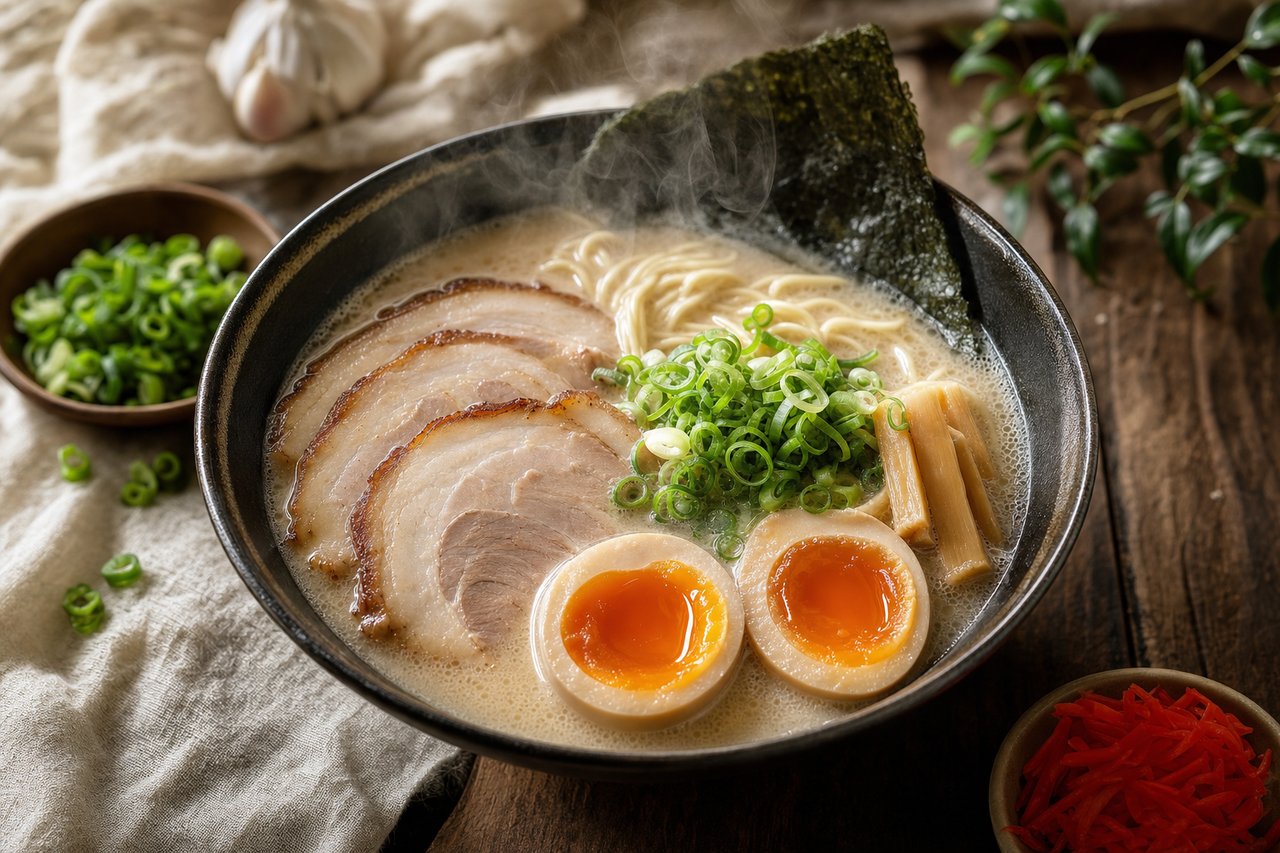
Cook the noodles to the second they turn springy, drain hard, and nest into the broth. Top with chashu, a halved egg, bamboo and spring onion.
Tonkotsu is the broth that separates a casual ramen cook from a serious one — not because it is technically difficult, but because it asks for patience. The reward is a bowl with the kind of milky, lip-coating body you usually only meet at a specialist shop.
The one rule that matters
Everything about tonkotsu comes down to a hard, rolling boil. A gentle simmer will give you a clean but thin stock; the violent agitation of a full boil is what emulsifies rendered fat and dissolved collagen into the opaque, almost creamy liquid that defines the style. Set aside a day when you can keep an eye on the pot and top it up.
Building the bowl
A finished bowl is assembled in layers: tare for seasoning, broth for body, noodles for texture, and toppings for contrast. Get each one right on its own and the bowl takes care of itself.