Cook with
Recipes with Spring Onion
Mild allium used both as an aromatic base and a fresh, raw garnish.
Spring onions are one of the quietest workhorses in the Asian kitchen — slim, long-stemmed alliums with a crisp white base and tender green tops that bridge the gap between the sharpness of a raw onion and the freshness of a herb. Mild yet aromatic, they appear at the start of a dish to build a savoury base and at the very end as a bright, grassy garnish, often within the same recipe.
What it is and how it tastes
A spring onion is a young onion harvested before the bulb swells, leaving a slender white stem that runs up into hollow green leaves. Raw, the white base carries a gentle onion punch while the green is grassy and almost sweet. Cooking calms the bite quickly, turning the white parts soft and savoury and wilting the greens into a delicate sweetness. Their mildness is the point: they add allium character and freshness without the heaviness of a full onion, which makes them endlessly useful as both seasoning and finishing touch.
How to prepare and cook it
Trim the roots and any tired outer layer, then rinse well, as grit hides between the layers near the base. Treat the two ends separately. Slice the firm white parts and add them early with garlic and ginger so they soften and release their flavour into the oil. Save the green tops for the final moments or for scattering raw over the finished plate, since they overcook in seconds and lose their colour. Cut on a sharp angle for an attractive garnish, or into longer batons for stir-fries where some texture is wanted.
Buying and storing
Choose bunches with firm, unblemished white bases and perky, deep-green tops that show no sliminess or yellowing. Limp or wet leaves signal age. At home, standing them in a little water in the fridge keeps them crisp for well over a week, and they regrow from the root if left long enough. For cooking, sliced spring onion freezes well and can be used straight from frozen, though it loses the crunch needed for a raw garnish.
Where it shines
Spring onions are everywhere on the table: they crown a steaming bowl of tonkotsu ramen, perfume the savoury batter and dressing around japchae, and scatter over pork fried rice for a final lift. Chives can stand in for the green tops at a pinch, and a mild onion for the white base, but neither offers quite the same versatility. They keep so easily that a bunch belongs in every fridge; for more on the essentials, see the Asian pantry guide.
Spring Onion recipes (3)
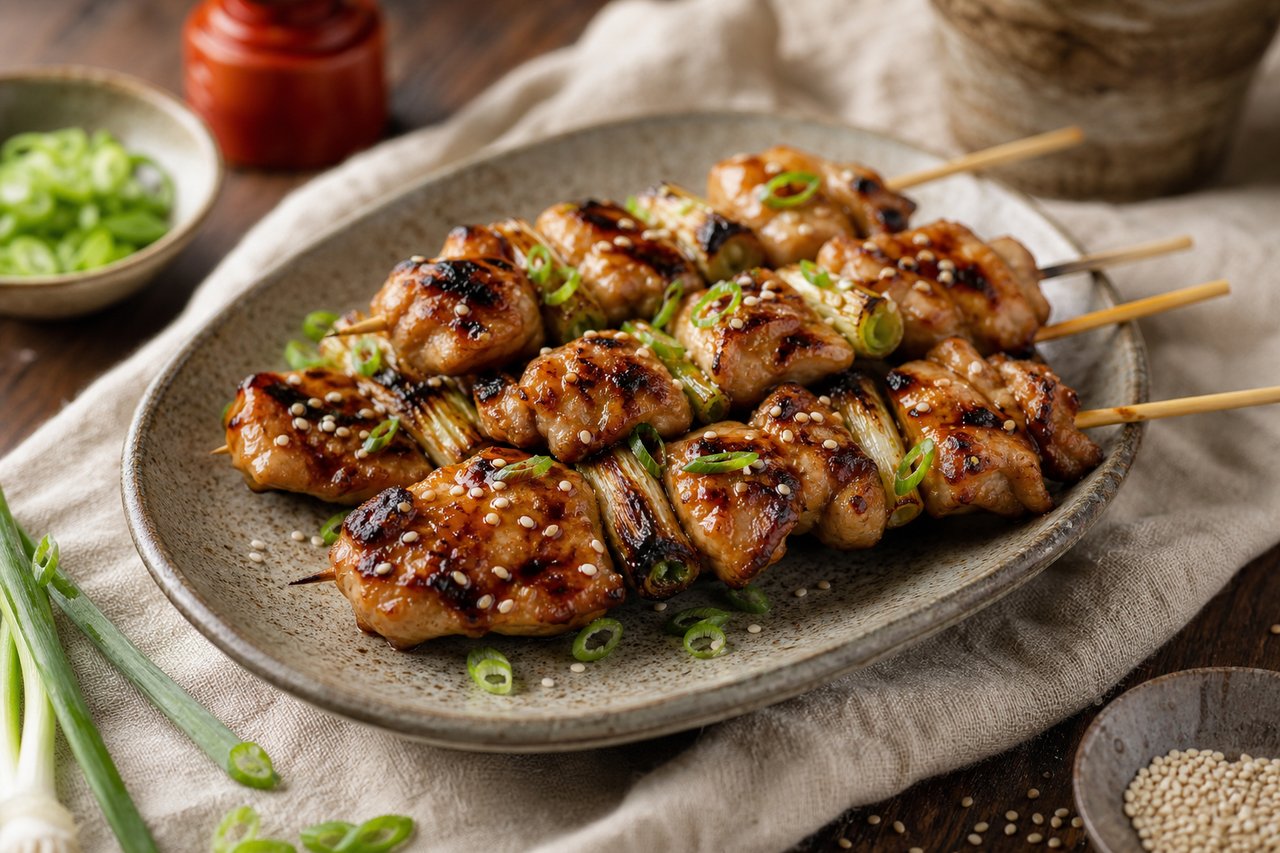
Japanese & Ramen
Yakitori — Japanese Grilled Chicken Skewers
Bite-sized chicken skewers grilled over high heat and lacquered with a sweet-savoury tare, plus a salt-only version for purists.
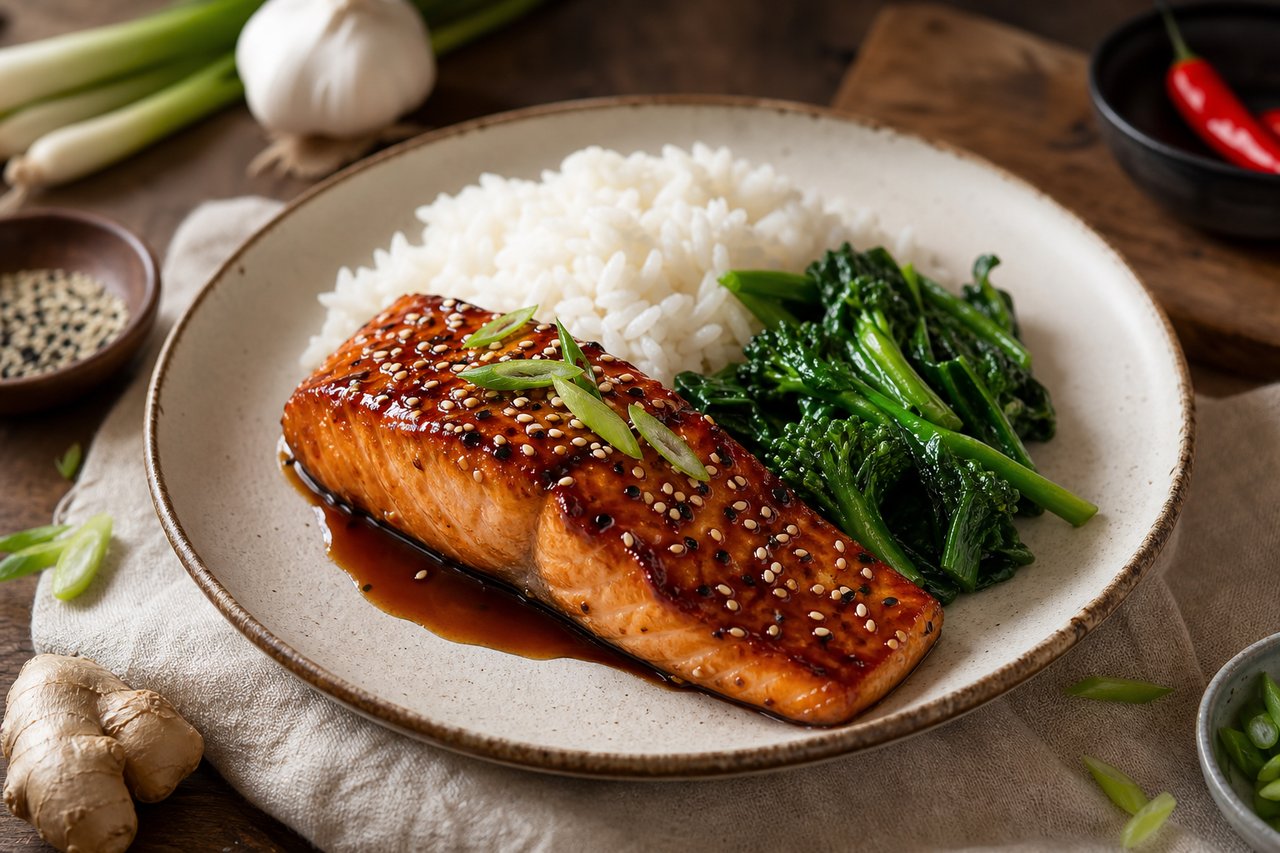
Japanese & Ramen
Teriyaki Salmon
Pan-seared salmon fillets glazed in a glossy four-ingredient teriyaki sauce reduced straight in the pan — a fast, weeknight-friendly main.
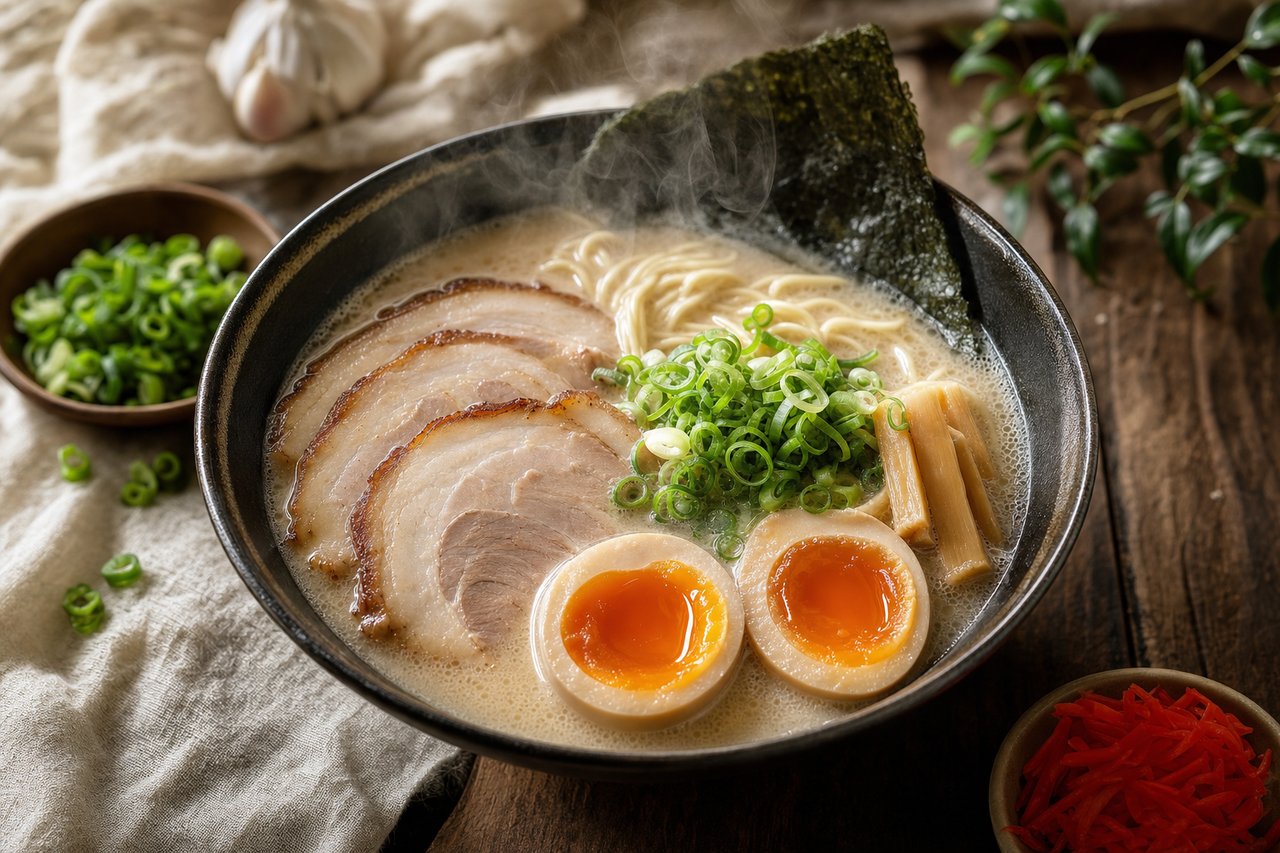
Japanese & Ramen
Tonkotsu Ramen from Scratch
A milky, collagen-rich pork-bone broth with springy noodles, chashu and a soft-set egg — the weekend ramen worth the wait.
See also the Asian pantry guide for more on stocking these ingredients.