Japchae
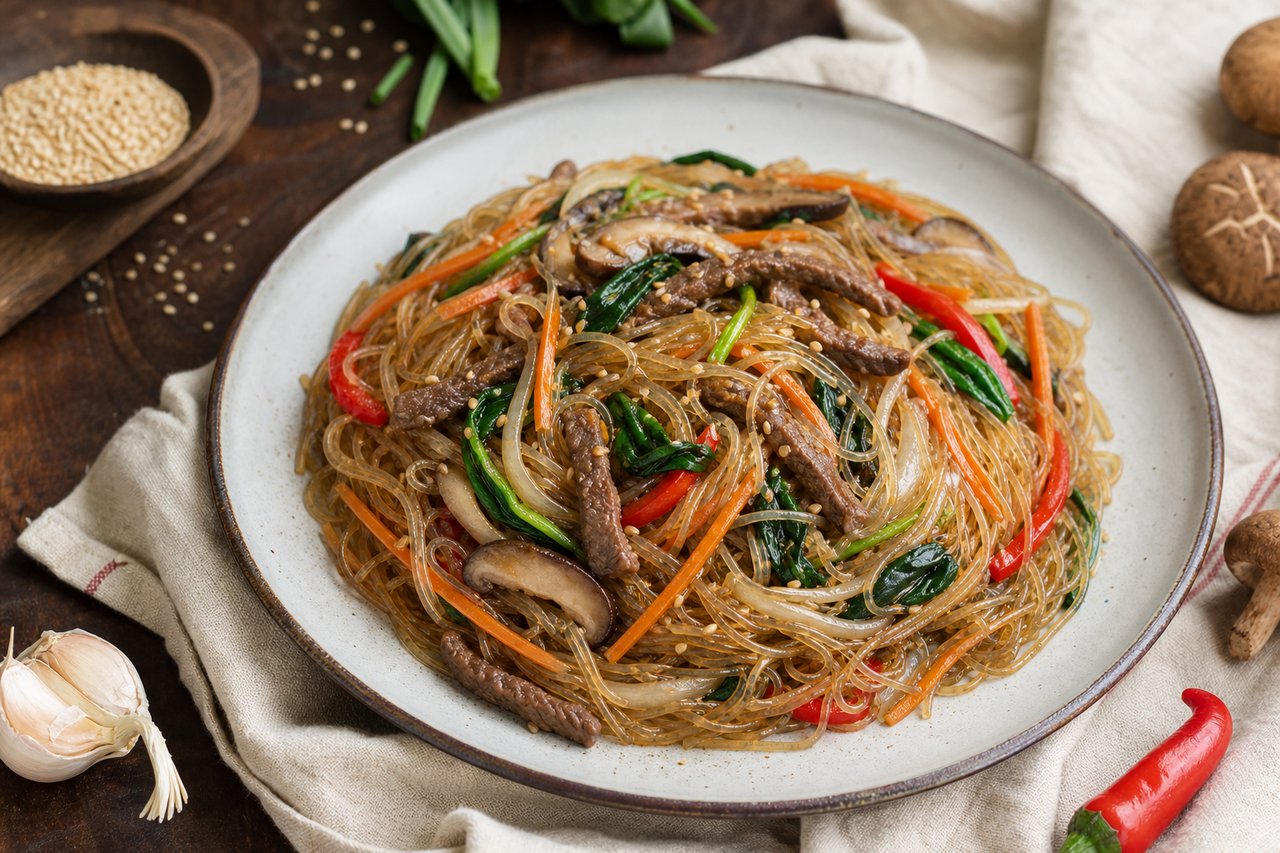
Glassy sweet-potato noodles tossed with beef and a rainbow of seasoned vegetables in a savoury-sweet soy and sesame dressing — Korea's beloved celebration
- Prep
- 30 min
- Cook
- 20 min
- Serves
- 4
- Level
- Medium
By Maya Chen
Method
- 01
Marinate the beef strips in 1 tbsp soy sauce, a little sugar, garlic and sesame oil for 15 minutes.
- 02
Boil the glass noodles for 6 to 7 minutes until soft and translucent, drain, rinse briefly, then cut a few times with scissors and toss with a splash of soy sauce and sesame oil so they do not clump.
- 03
Stir-fry each vegetable separately over high heat with a pinch of salt — onion, carrot, pepper and mushroom in turn — so each keeps its colour and bite. Set them aside together.
- 04
Stir-fry the marinated beef quickly until just cooked, then add to the vegetables.
- 05
Dress the blanched spinach with a little sesame oil and salt.
- 06
In a large bowl or wide pan, combine the noodles, beef and all the vegetables. Add the remaining soy sauce, sugar, sesame oil and garlic and toss thoroughly over low heat until everything is glossy and evenly seasoned.
- 07
Finish with the spring onions and sesame seeds. Serve warm or at room temperature.
Japchae is the dish that appears at Korean celebrations and holidays, equally at home on a festive table and in a weeknight lunchbox. The star is dangmyeon, glassy sweet-potato noodles that turn slippery and chewy when cooked, carrying a savoury-sweet dressing and a colourful tangle of vegetables.
Treat the vegetables one at a time
Japchae rewards patience in the same way bibimbap does. Stir-frying each vegetable separately over high heat keeps the carrot orange, the pepper red and the spinach green, with every one holding its own texture. Pile them together at the end and the finished dish looks and tastes vibrant rather than muddled.
Dress and toss while warm
The noodles drink up seasoning best while they are still warm, so do the final tossing over low heat with the soy, sugar and sesame oil all in the pan. Cut the noodles a few times with scissors first — they are long and slippery — and toss with your hands or tongs until every strand glistens. Japchae is happy served warm or at room temperature, which is part of why it travels so well.