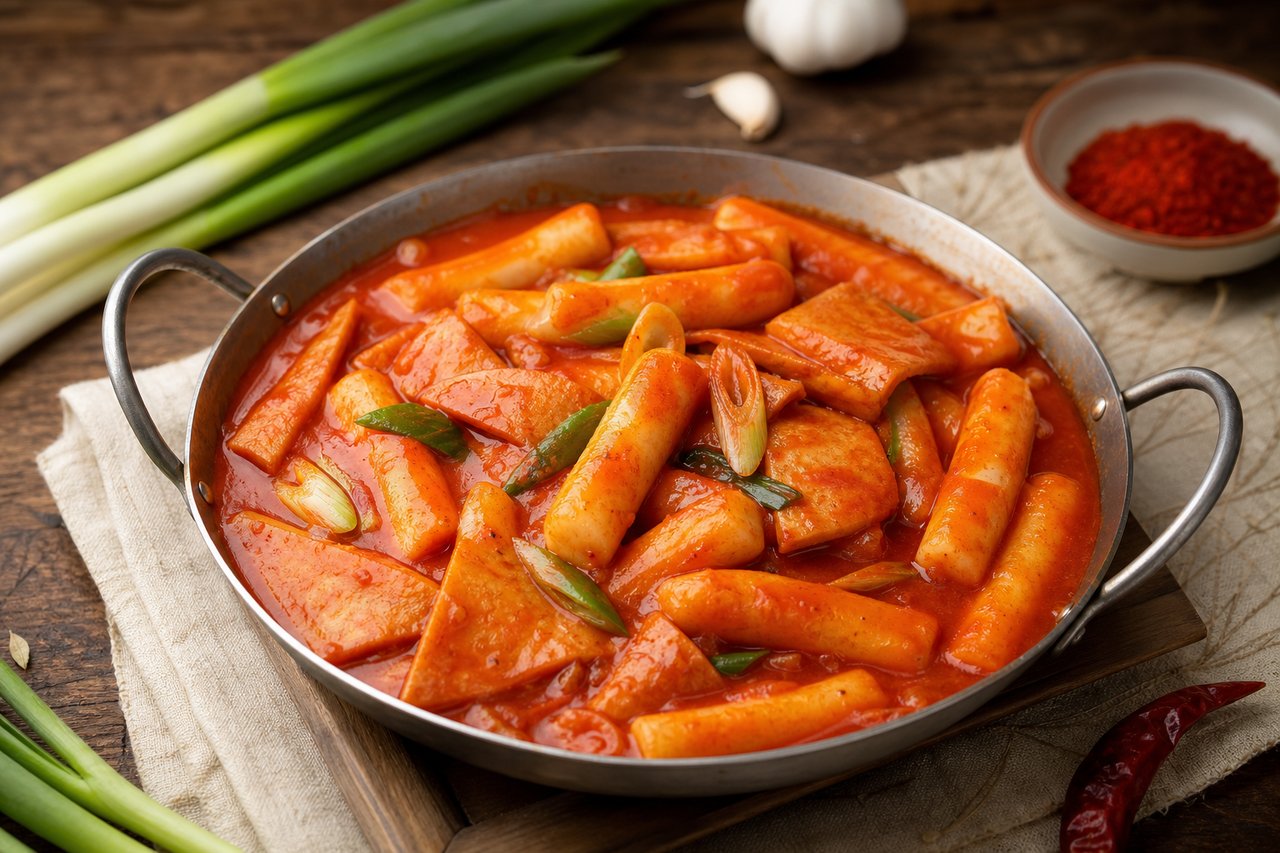
Tteokbokki
Chewy cylindrical rice cakes simmered in a glossy sweet-and-spicy gochujang sauce — Korea's most beloved street snack, ready in under half an hour.
- Prep
- 10 min
- Cook
- 20 min
- Serves
- 2 to 3
- Level
- Easy
By Maya Chen
Method
- 01
If the rice cakes are firm or refrigerated, soak them in warm water for 10 minutes so they soften and cook evenly.
- 02
In a wide pan, whisk the gochujang, gochugaru, soy sauce, sugar and garlic into the stock until smooth.
- 03
Bring to a boil over medium-high heat, then add the rice cakes and onion.
- 04
Simmer, stirring often so nothing sticks, for about 10 minutes until the rice cakes are soft and chewy.
- 05
Add the fish cakes, if using, and continue to simmer until the sauce reduces to a thick, glossy coating that clings to the rice cakes.
- 06
Stir in the spring onions and sesame oil in the last minute.
- 07
Scatter with sesame seeds and serve hot, straight from the pan.
Tteokbokki is the sound and smell of a Korean street market — chewy rice cakes bubbling away in a glossy red sauce, sweet and spicy and impossible to stop eating. It is also one of the easiest Korean dishes to make at home, asking for little more than a good chilli sauce and a few minutes of attention.
The sauce makes the dish
Everything hinges on the balance of the sauce. Gochujang brings fermented depth and body, gochugaru adds clean heat, sugar provides the trademark sweetness, and the stock ties it all together. Whisk it smooth before the rice cakes go in, then let it reduce until it clings — the finished sauce should coat each rice cake in a thick, shiny lacquer rather than pooling thinly in the pan.
Mind the rice cakes
Garaetteok turn soft and pleasantly chewy as they simmer, but they firm up the moment they cool, so tteokbokki is a dish to eat the instant it is ready. Soak firmer rice cakes before cooking, stir often so they do not stick to the pan, and keep enough sauce moving around them. Fish cakes and spring onion are the classic additions, but the rice cakes are the heart of it.