Cook with
Recipes with Gochugaru
Korean dried chilli flakes — fruity rather than fiercely hot.
Gochugaru is the soul of Korean cooking — sun-dried red chilli ground into vivid flakes that give the cuisine its glowing colour and its signature warm, fruity heat. It seasons everything from the fermented heart of kimchi to bubbling stews and grilled-meat marinades. What sets it apart from other chilli powders is its clean, sweet-edged flavour and its moderate heat, which lets it be used by the tablespoon rather than the pinch.
What it is and how it tastes
Made from Korean red peppers that are dried, de-seeded and crushed, gochugaru carries a layered flavour: a fruity sweetness, a faint smokiness, and a heat that builds gently rather than biting. Because the seeds are removed, the burn stays clean and the colour is a deep, true red. It comes in two grades — coarse flakes for kimchi, where texture matters, and a fine powder for smooth sauces and seasoning blends. The same chilli is the basis of gochujang paste, so the two share a family resemblance on the palate. That fruity backbone is also why gochugaru reads as savoury rather than merely hot, sitting comfortably alongside garlic, soy and fermented flavours instead of fighting them.
How to prepare and use it
Gochugaru needs no toasting or grinding; it is ready to use straight from the bag. For kimchi it is mixed with garlic, ginger and fish sauce into a paste that coats the vegetables. In stews it is often bloomed first in a little oil with garlic to deepen its colour and release the aroma before liquid is added, a step that rounds out the flavour. As a finishing seasoning it can simply be sprinkled in. Because brands differ in heat, add it in stages and taste, building the warmth gradually rather than committing it all at once.
Buying and storing
Choose flakes that are bright, deep red and slightly tacky to the touch, with a fresh, fruity smell; dull, dusty or brownish gochugaru has oxidised and lost its punch. Buy from a source that turns over stock quickly. Once opened, seal it tightly and keep it cool and dark, or store it in the fridge or freezer to lock in colour and aroma for many months. Coarse and fine grades are not always interchangeable, so check which a recipe wants before buying.
Where it shines and substitutes
Gochugaru is the defining heat in kimchi jjigae and gives the glossy red sauce of tteokbokki its character. It also seasons the spicy version of Korean fried chicken coatings and glazes. If none is available, a blend of sweet paprika and a little cayenne approximates the colour and mild warmth, though it misses the fruity sweetness. For more on stocking Korean staples, see the Asian pantry guide.
Gochugaru recipes (3)
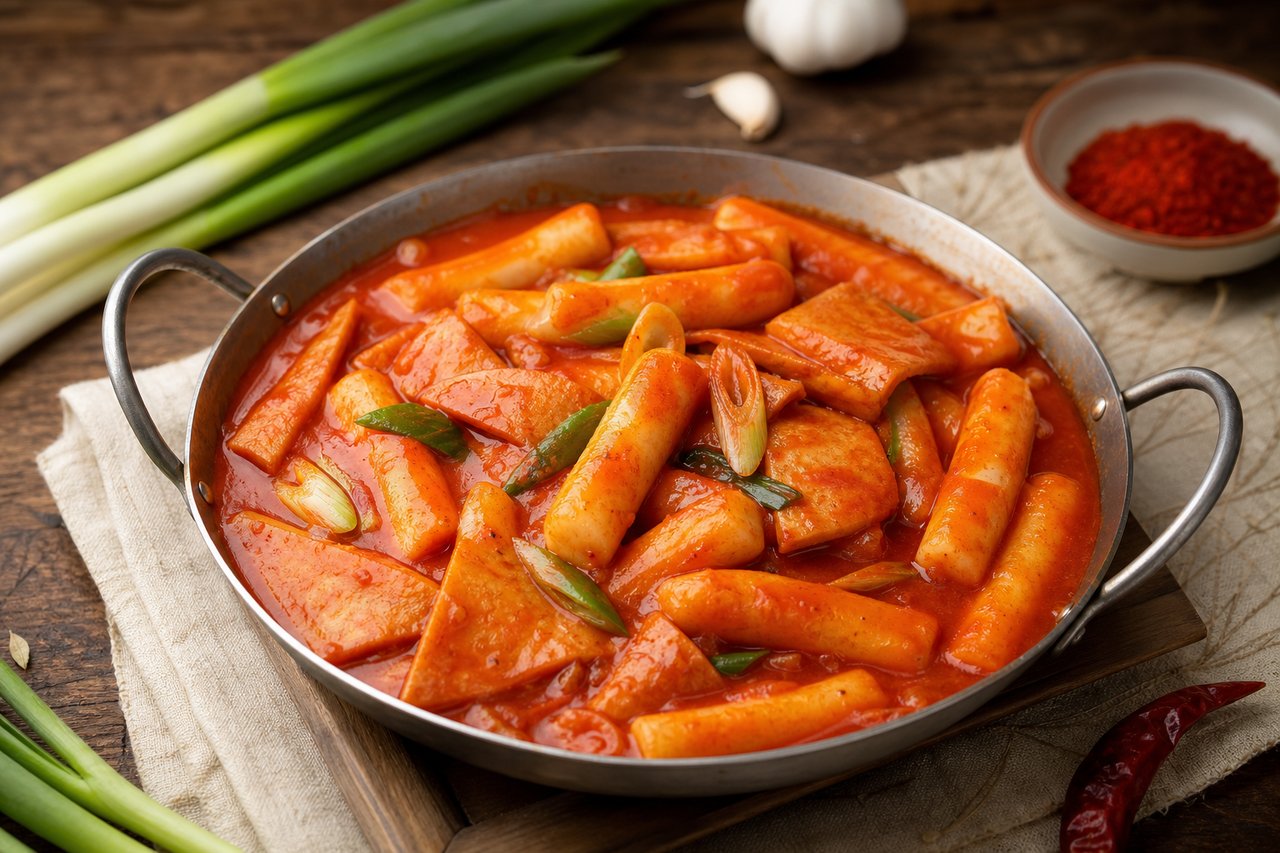
Korean
Tteokbokki
Chewy cylindrical rice cakes simmered in a glossy sweet-and-spicy gochujang sauce — Korea's most beloved street snack, ready in under half an hour.
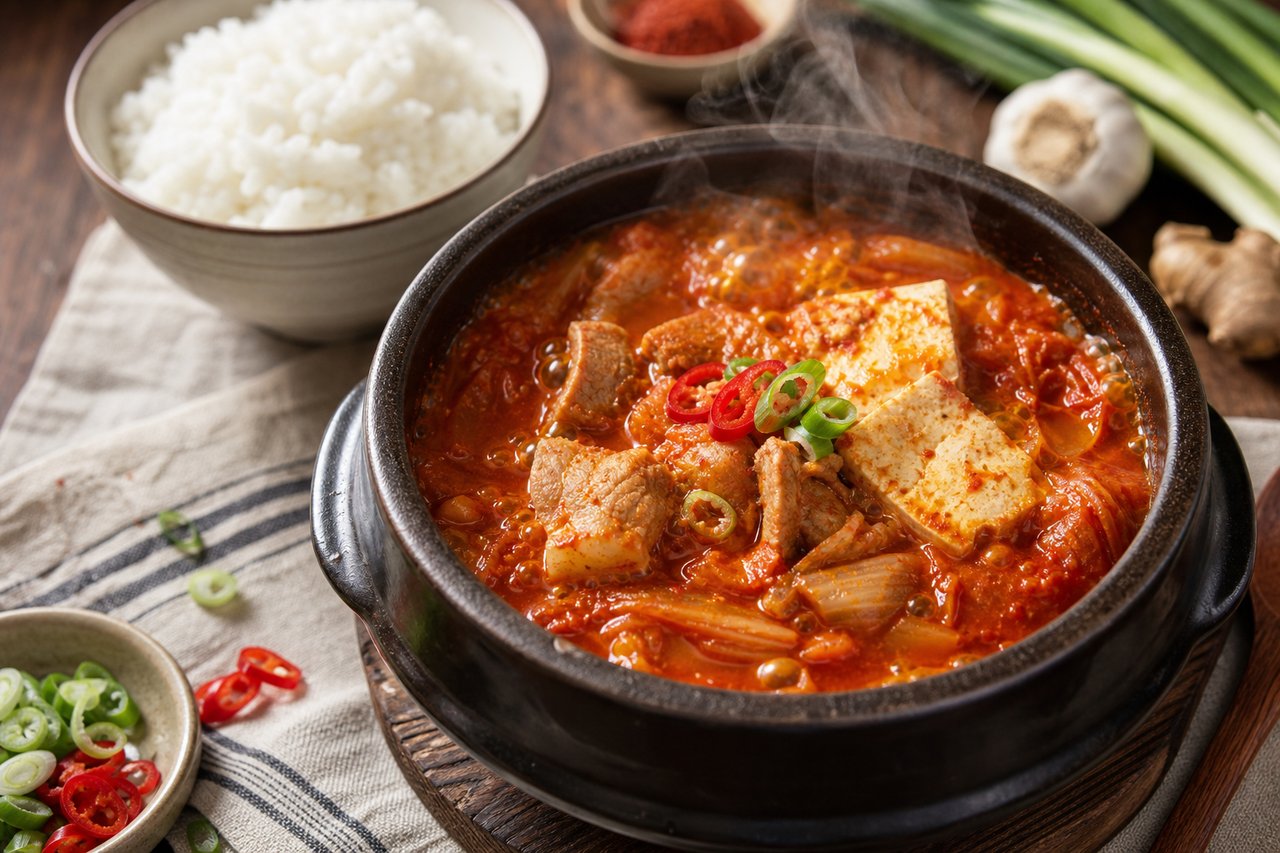
Korean
Kimchi Jjigae
The classic Korean kimchi stew — sour, aged kimchi simmered with pork, tofu and a deep gochugaru broth that tastes like it cooked all day but comes together
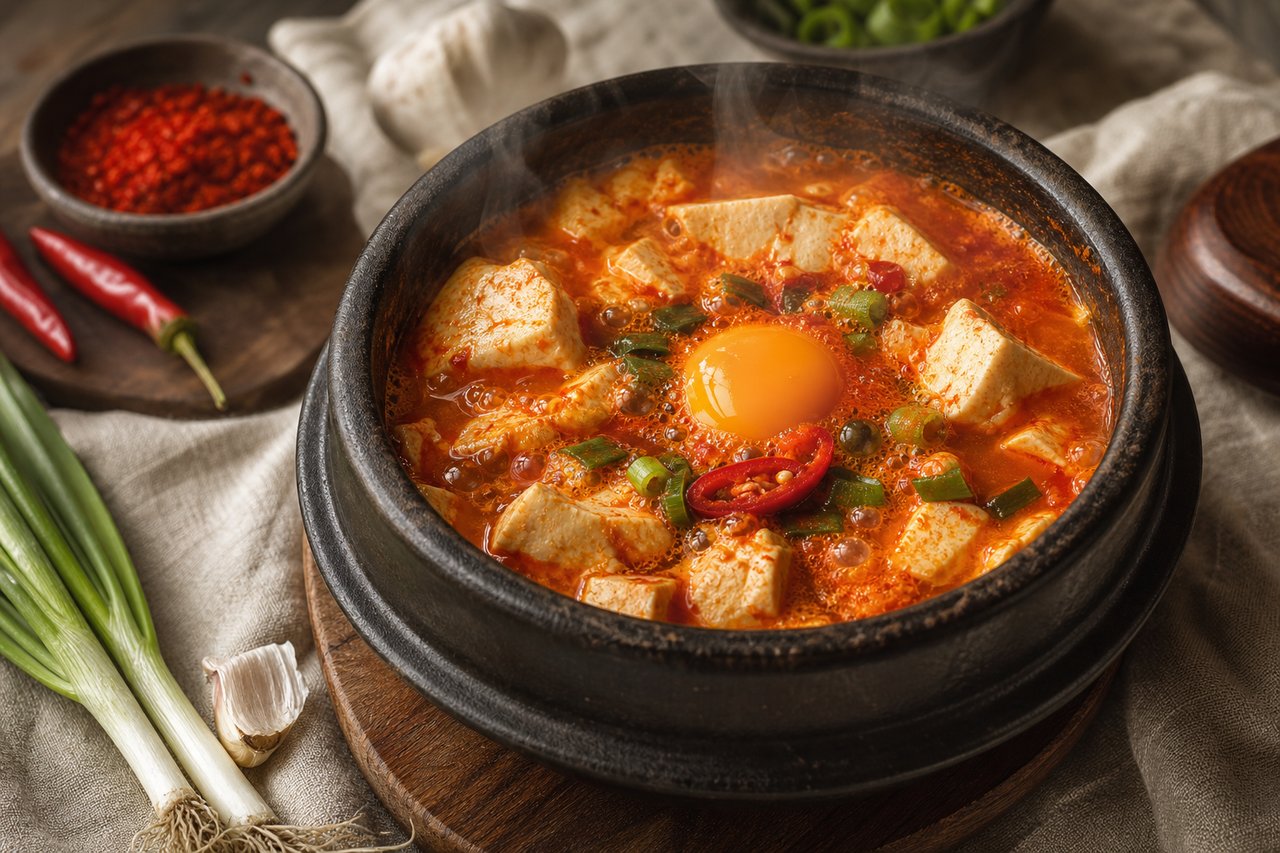
Korean
Sundubu Jjigae
A fiery, silky Korean soft-tofu stew built on a fragrant gochugaru-and-garlic chilli oil base, finished with uncurdled tofu and a raw egg cracked in at
See also the Asian pantry guide for more on stocking these ingredients.