Korean Fried Chicken
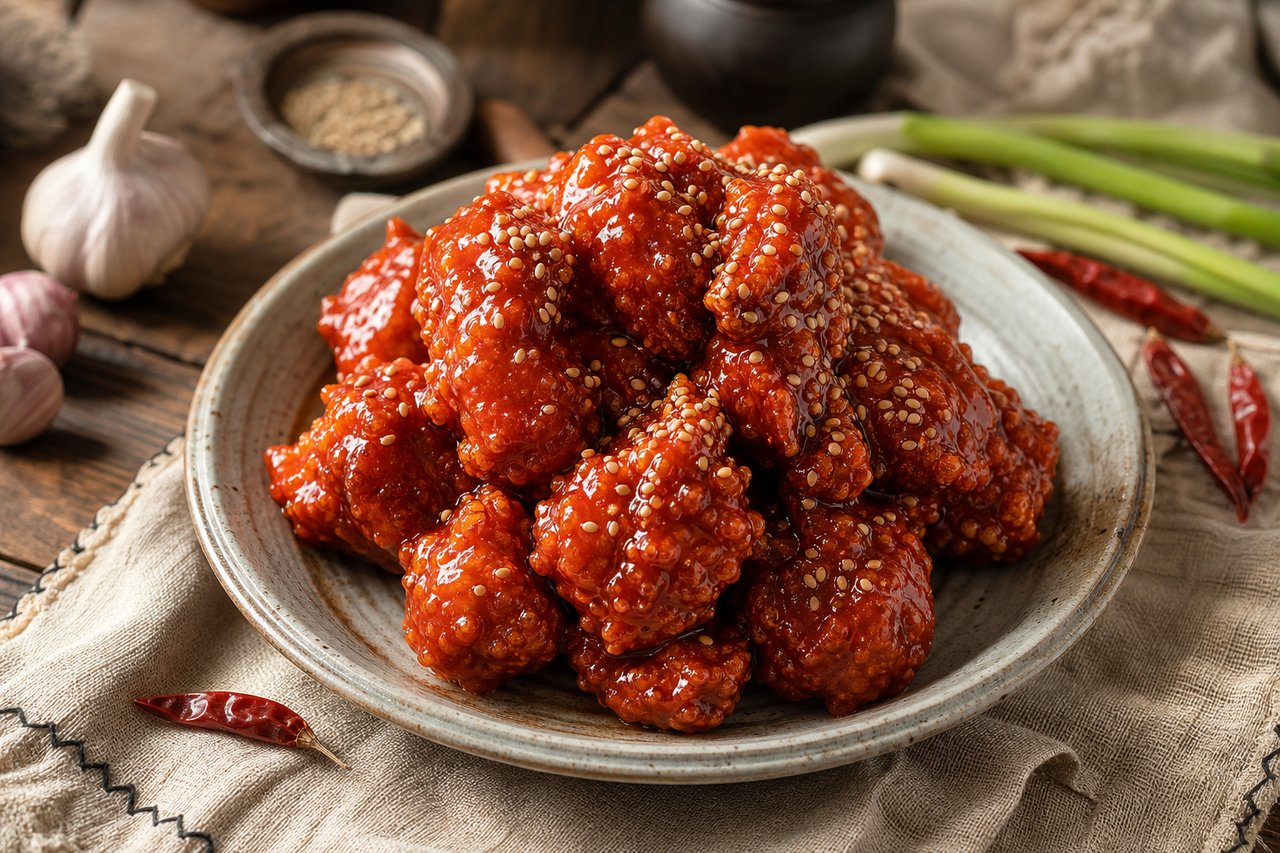
Double-fried for a shatteringly thin, glassy crust that stays crisp under a sticky-sweet gochujang glaze — the famous Korean take on fried chicken, made at
- Prep
- 25 min
- Cook
- 30 min
- Serves
- 4
- Level
- Medium
By Maya Chen
Method
- 01
Toss the dried chicken with the salt, pepper and grated ginger and leave for 15 minutes.
- 02
In a wide bowl, combine the potato starch and flour. Coat each piece of chicken thoroughly, pressing the starch on and shaking off the excess.
- 03
Heat oil to 160 C. Fry the chicken in batches for about 8 minutes until pale gold and cooked through, then lift out and rest on a rack for 5 minutes.
- 04
Raise the oil temperature to 190 C. Fry the chicken a second time for 3 to 4 minutes until deeply golden and audibly crisp. Drain on the rack.
- 05
Make the glaze: simmer the gochujang, soy sauce, honey, rice vinegar, garlic and sesame oil in a wide pan for 2 minutes until glossy and slightly thickened.
- 06
Add the hot fried chicken to the pan and toss quickly so every piece is lacquered in glaze.
- 07
Tip onto a platter, scatter with sesame seeds and serve at once while the crust is still crackling.
Korean fried chicken, often shortened to KFC by its devotees, is defined by its crust — paper-thin, glassy and so crisp it crackles, somehow staying that way even under a glossy, sticky glaze. The magic is in the technique rather than any single ingredient, which makes it very reproducible at home once you embrace the double fry.
The double fry is non-negotiable
Frying the chicken twice is what sets this style apart. The first, gentler fry cooks the meat and dries the surface; a rest in between lets steam escape; the second, hotter fry locks in a dehydrated, brittle shell. Skip a step and the crust simply will not survive contact with the glaze. Use plenty of oil, keep the temperatures honest with a thermometer, and work in batches so the oil never crashes.
A glaze that clings without softening
The glaze should be reduced until it is thick and glossy, then tossed with the hot chicken at the very last second. Gochujang brings heat and fermented depth, honey or rice syrup gives the lacquered shine, and a splash of vinegar keeps it from turning cloying. Move fast at this stage — the goal is to coat the crust, not to drown it.