Cook with
Recipes with Gochujang
Korean fermented chilli paste — sweet, savoury and slow-burning.
Gochujang is the deep red, glossy chilli paste at the centre of Korean cooking, a fermented blend of chilli powder, glutinous rice, soybeans and salt. Thick, sticky and slow to give up its secrets, it carries heat, sweetness and a profound savoury depth all at once. A single tablespoon transforms a sauce, marinade or stew, which is why it has become one of the most recognisable flavours in the Korean kitchen.
What it is and how it tastes
The paste is built on gochugaru, Korean chilli flakes, fermented over months with glutinous rice and soybeans until the harsh edges soften into something rounded and complex. The result is layered: chilli warmth up front, a malty sweetness from the rice, and a fermented savouriness underneath that lingers long after the heat fades. It is salty and concentrated, so it functions as a seasoning rather than a sauce on its own. The colour is a vivid brick red and the texture sticky and thick, enough to cling to a spoon and hold its shape, which is why it is almost always loosened before use.
How to use it
Gochujang shines when it is balanced. Whisk it with sesame oil, rice vinegar, sugar and garlic to dress a rice bowl, or thin it into a glaze for grilled meats and a glossy, lacquered coating for fried chicken. Stirred into a simmering stew it melts in, lending colour, heat and savoury depth all at once. It can be used raw in sauces or cooked into braises; in both cases a little goes a long way, since its flavour is so concentrated. Add it gradually and taste as you go, since brands vary considerably in both heat and saltiness, and what reads as mild in one tub may carry real warmth in another.
Buying and storing
Gochujang is sold in tubs and squeeze bottles; check the spice rating to match preference. Look for short ingredient lists built on chilli, rice and fermented soybeans. Once opened, keep it in the fridge with the surface covered, where it lasts for many months and only deepens.
Where it shines and substitutes
Gochujang is essential to the sauce of a vibrant bibimbap, to the sticky coating of Korean fried chicken, and to the spicy heat of tteokbokki. It also brings warmth and colour to many Korean braises and stews. There is no true substitute, though a mix of miso, chilli paste and a little sugar approximates its balance of salt, heat and sweetness reasonably well. Once it is in the fridge it tends to find its way into marinades and dressings far beyond Korean dishes. For more on the staples it works alongside, see the Asian pantry guide.
Gochujang recipes (4)
Korean
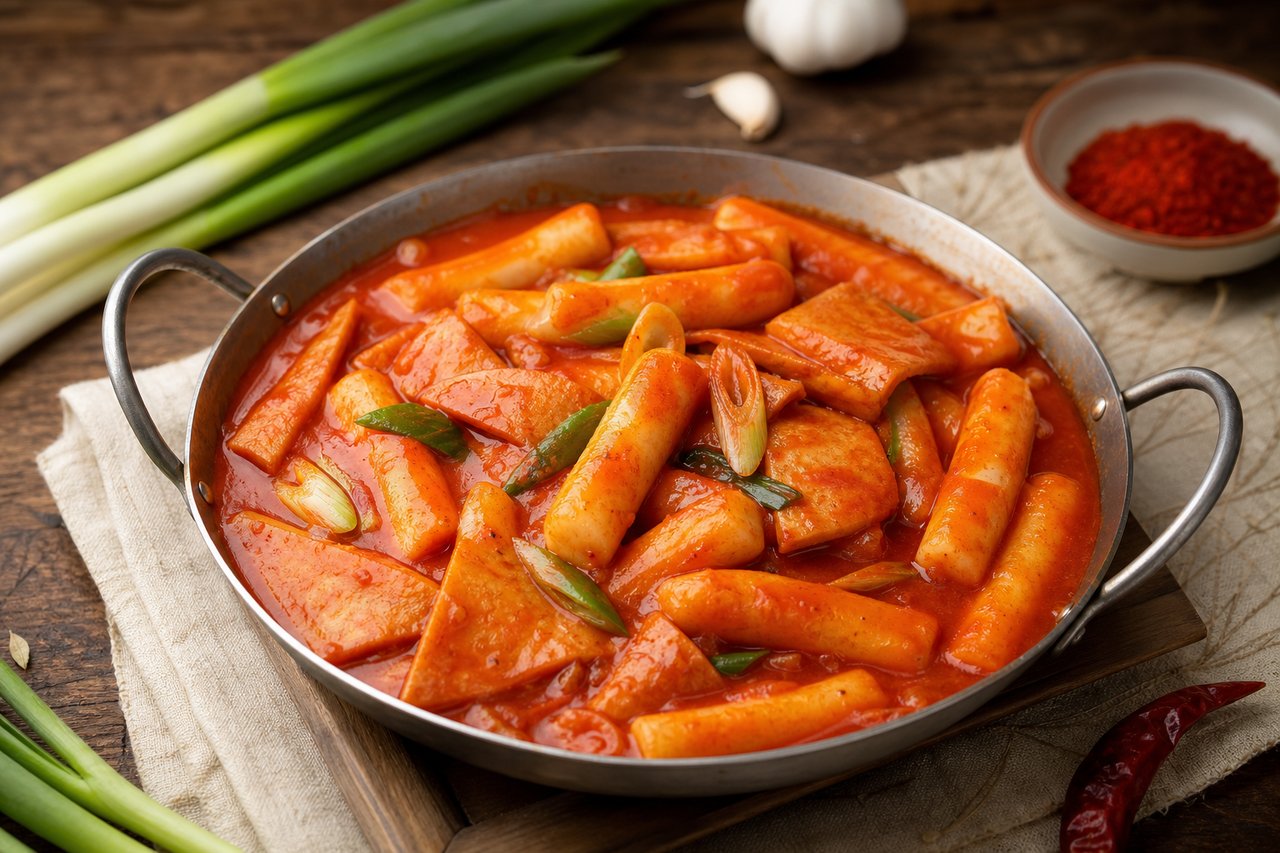
Tteokbokki
Chewy cylindrical rice cakes simmered in a glossy sweet-and-spicy gochujang sauce — Korea's most beloved street snack, ready in under half an hour.
Korean
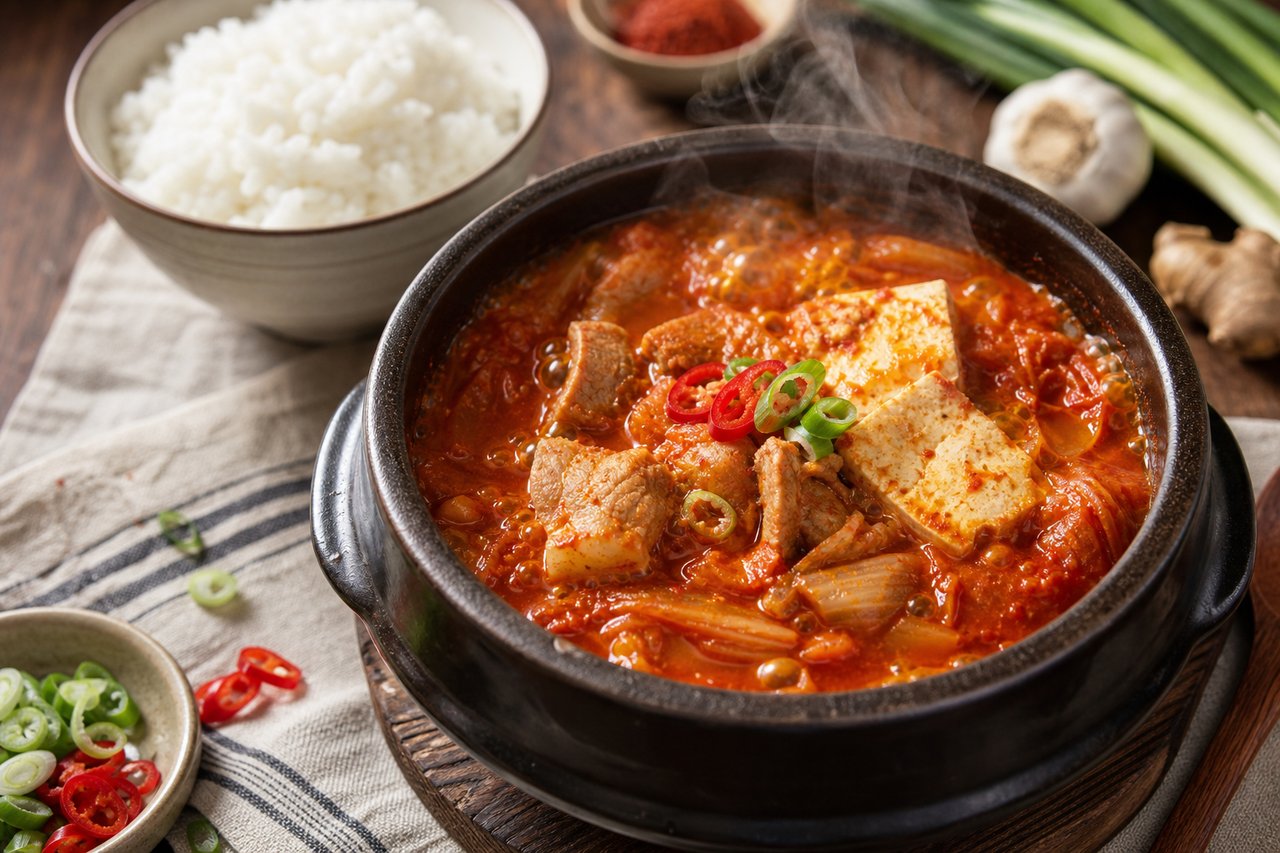
Kimchi Jjigae
The classic Korean kimchi stew — sour, aged kimchi simmered with pork, tofu and a deep gochugaru broth that tastes like it cooked all day but comes together
Korean
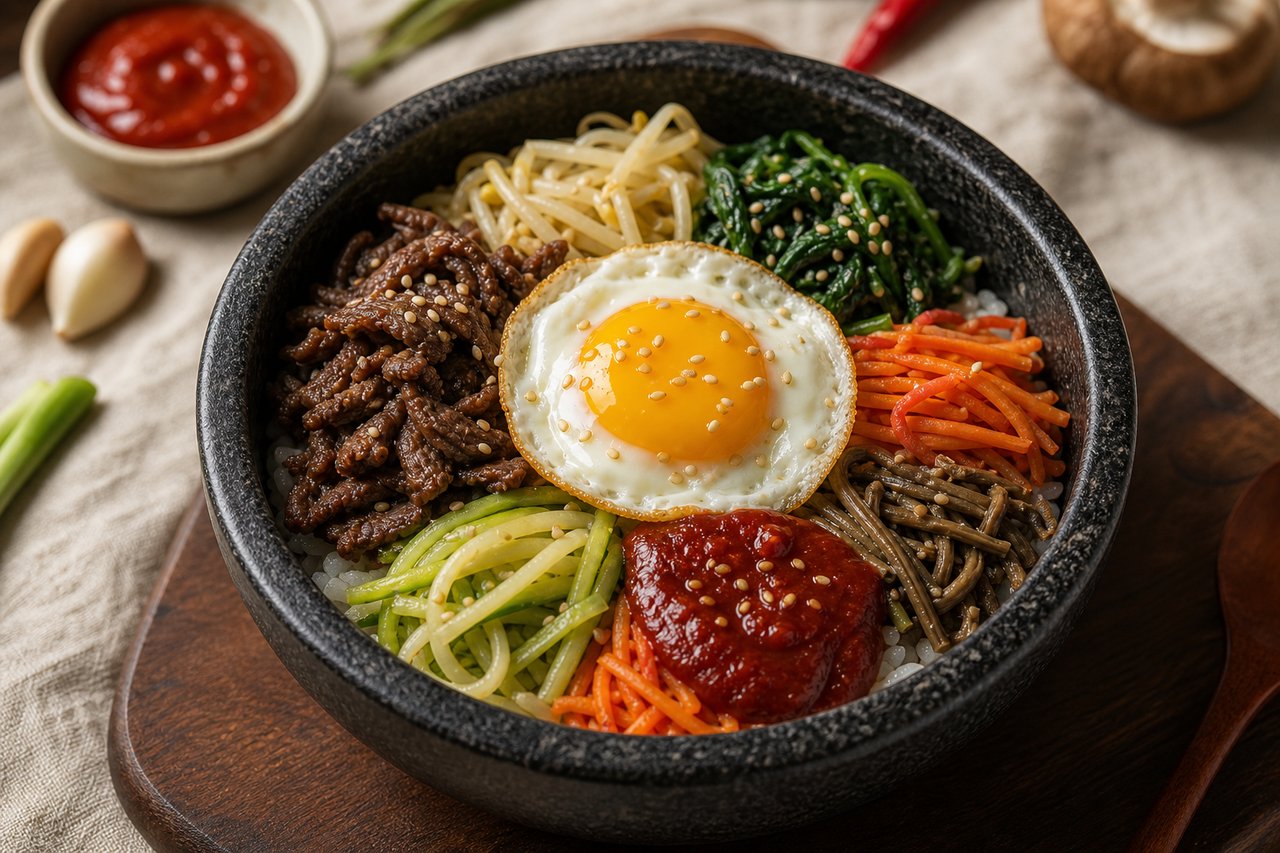
Bibimbap
A bowl of warm rice crowned with seasoned vegetables, beef and a fried egg, all bound together with a sweet-savoury gochujang sauce and a slick of sesame oil.
Korean
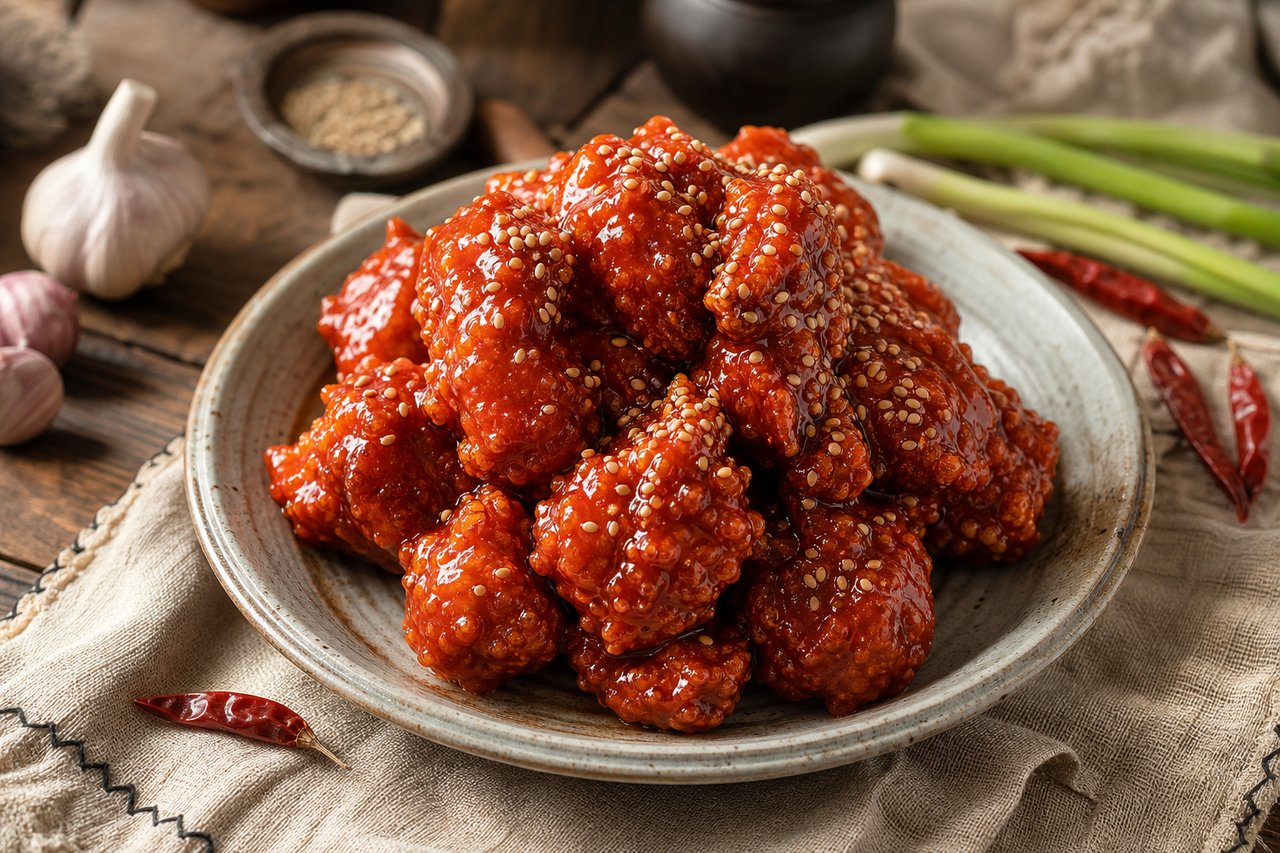
Korean Fried Chicken
Double-fried for a shatteringly thin, glassy crust that stays crisp under a sticky-sweet gochujang glaze — the famous Korean take on fried chicken, made at
See also the Asian pantry guide for more on stocking these ingredients.