Bibimbap
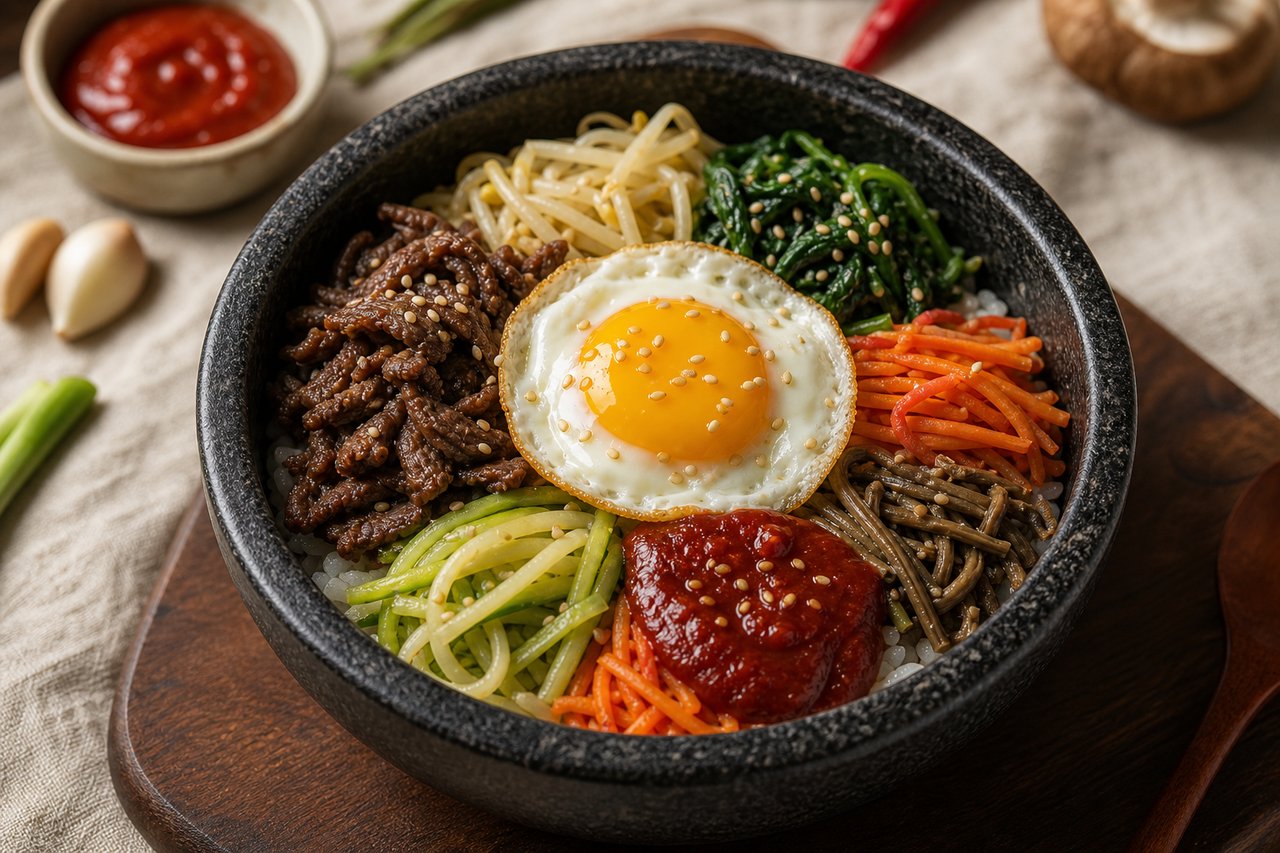
A bowl of warm rice crowned with seasoned vegetables, beef and a fried egg, all bound together with a sweet-savoury gochujang sauce and a slick of sesame oil.
- Prep
- 35 min
- Cook
- 15 min
- Serves
- 4
- Level
- Medium
By Maya Chen
Method
- 01
Make the sauce: stir together the gochujang, sugar, water, a teaspoon of sesame oil and a little minced garlic until smooth and pourable. Set aside.
- 02
Marinate the beef in soy sauce, a little sugar, garlic and sesame oil for 15 minutes, then stir-fry in a hot pan until just cooked. Set aside.
- 03
Season each vegetable separately: dress the blanched spinach and bean sprouts with sesame oil, salt and sesame seeds; stir-fry the carrot, courgette and mushrooms one at a time with a pinch of salt so each keeps its own character.
- 04
Fry the eggs sunny-side up, keeping the yolks runny.
- 05
Divide the warm rice between four bowls. Arrange the vegetables and beef in separate sections on top, like spokes of a wheel.
- 06
Slide a fried egg into the centre of each bowl and add a generous spoon of the gochujang sauce.
- 07
Bring to the table unmixed, then stir everything together hard just before eating so the yolk and sauce coat every grain.
Bibimbap is a masterclass in balance — a single bowl that holds warm rice, a spread of individually seasoned vegetables, a little beef, a fried egg and a bright chilli sauce. Eaten apart, each element is simple. Mixed together at the table, they become one of Korea’s most satisfying everyday meals.
Treat the vegetables individually
The temptation is to throw everything into one pan, but bibimbap is built on contrast. Blanch and dress the leafy greens and sprouts, then stir-fry the firmer vegetables one at a time, each with its own seasoning. The few extra minutes pay off in a bowl where carrot tastes sweet, spinach tastes nutty and mushroom tastes savoury, instead of everything tasting the same.
The sauce and the egg
A good gochujang sauce is what pulls the bowl together — thinned just enough to pour, sweetened just enough to round the heat. The runny yolk of a freshly fried egg does the same job from the other direction, coating the rice in richness as you mix. Stir hard, and only at the very last moment, so the sauce and yolk reach every grain.