Cook with
Recipes with Beef
Sliced thin for pho and bulgogi, or slow-cooked for massaman.
Beef plays a focused but memorable role across the Asian kitchen — less ubiquitous than pork or chicken, but unforgettable when it appears, whether as paper-thin slices seared over flame, tender ribbons in a fragrant curry, or the slow-built broth that defines a great bowl of noodle soup. Getting it right comes down to matching the cut to the method and respecting the grain.
Cuts and forms, and how they cook
Tender, quick-cooking cuts such as sirloin, flank and skirt are the stir-fry and grilling workhorses, sliced thin and cooked hot and fast. Tougher cuts — shin, brisket, chuck and short rib — carry the collagen that long braising turns to silk, so they belong in stews, curries and simmered soups. Bones, especially knuckle and marrow, are the basis of deeply savoury broths simmered for hours until rich and clear. Minced beef cooks quickly and takes seasoning readily, suiting noodle sauces and fillings. Thin-shaved beef, sold frozen in rolls for hot pots and bulgogi, cooks almost instantly and needs nothing more than a brief flash of heat. Reading what each cut wants is the whole craft of cooking beef well.
Velveting, grain and other techniques
The grain rules everything: always slice against it, and firm the beef briefly in the freezer to cut cleaner, thinner pieces. Velveting with cornflour, and often a short bicarbonate-of-soda treatment, gives stir-fried beef its tender, slippery bite. Marinating in soy, sugar, sesame and aromatics both seasons and softens, building the savoury-sweet character of grilled Korean beef. For braises, searing the meat first develops a deep crust before the liquid goes in, and patience is the only real technique — the connective tissue needs time, not heat, to surrender.
Buying, storing and food safety
Choose beef that is bright red to deep ruby with firm, white fat and no sour smell. Keep it cold and wrapped low in the fridge, using whole cuts within several days and mince within a day or two, or freeze it well sealed against freezer burn. Whole-muscle cuts can safely be served rare because bacteria live only on the surface and are seared away, but mince must be cooked through to 71°C. Thaw in the fridge, keep raw beef away from ready-to-eat food, and clean every surface it touches.
Where it shines
Beef carries some of the region’s great dishes. It is the marinated, char-edged slices of Korean bulgogi, the aromatic heart of a long-simmered Vietnamese pho bo, and the rich, gently spiced meat that defines a massaman curry. Whether seared in seconds or coaxed soft over hours, beef rewards a cook who reads the cut correctly. For the soy, sesame and spice that beef dishes lean on, see the Asian pantry guide.
Beef recipes (6)
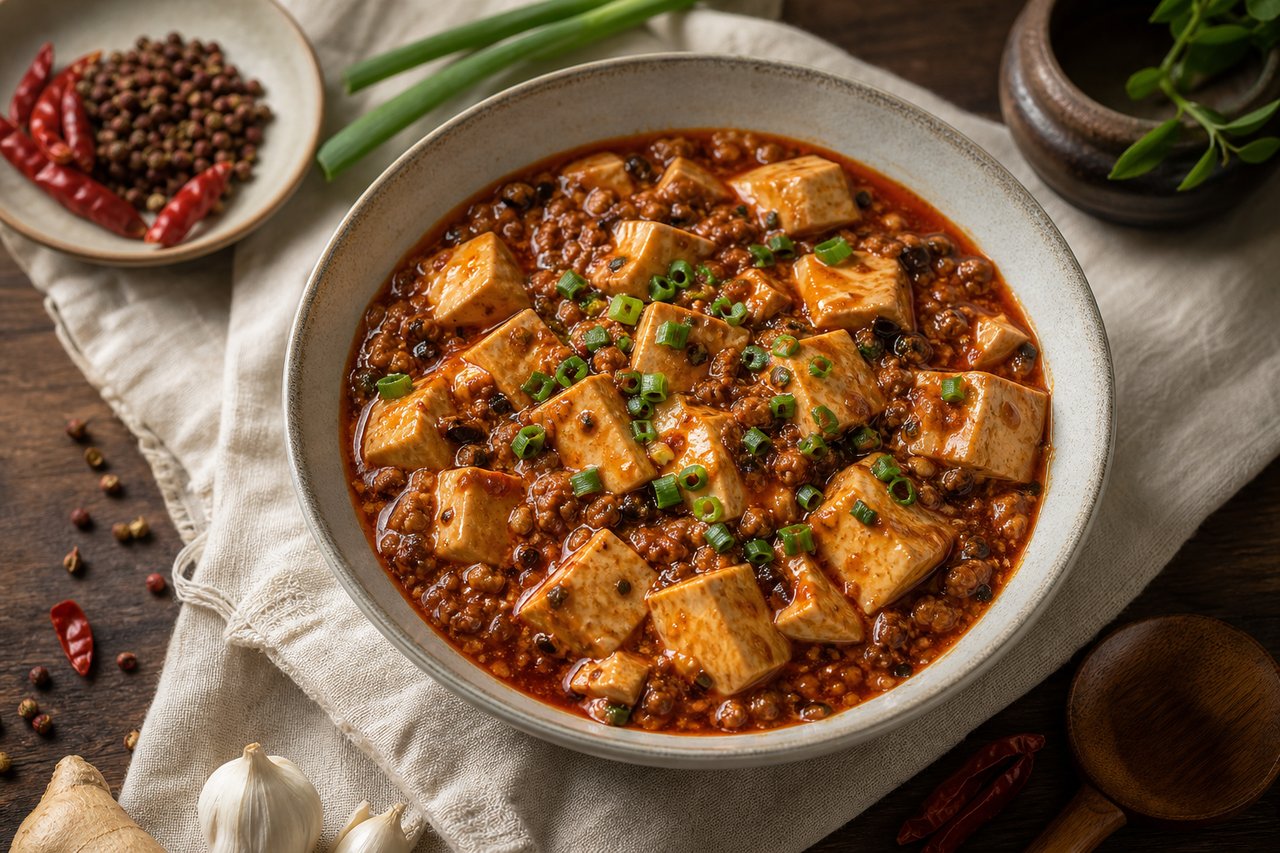
Chinese
Mapo Tofu
Silky tofu and minced pork in a glossy, numbing-hot Sichuan sauce built on doubanjiang and ground Sichuan peppercorn — a fast, deeply savoury weeknight classic.
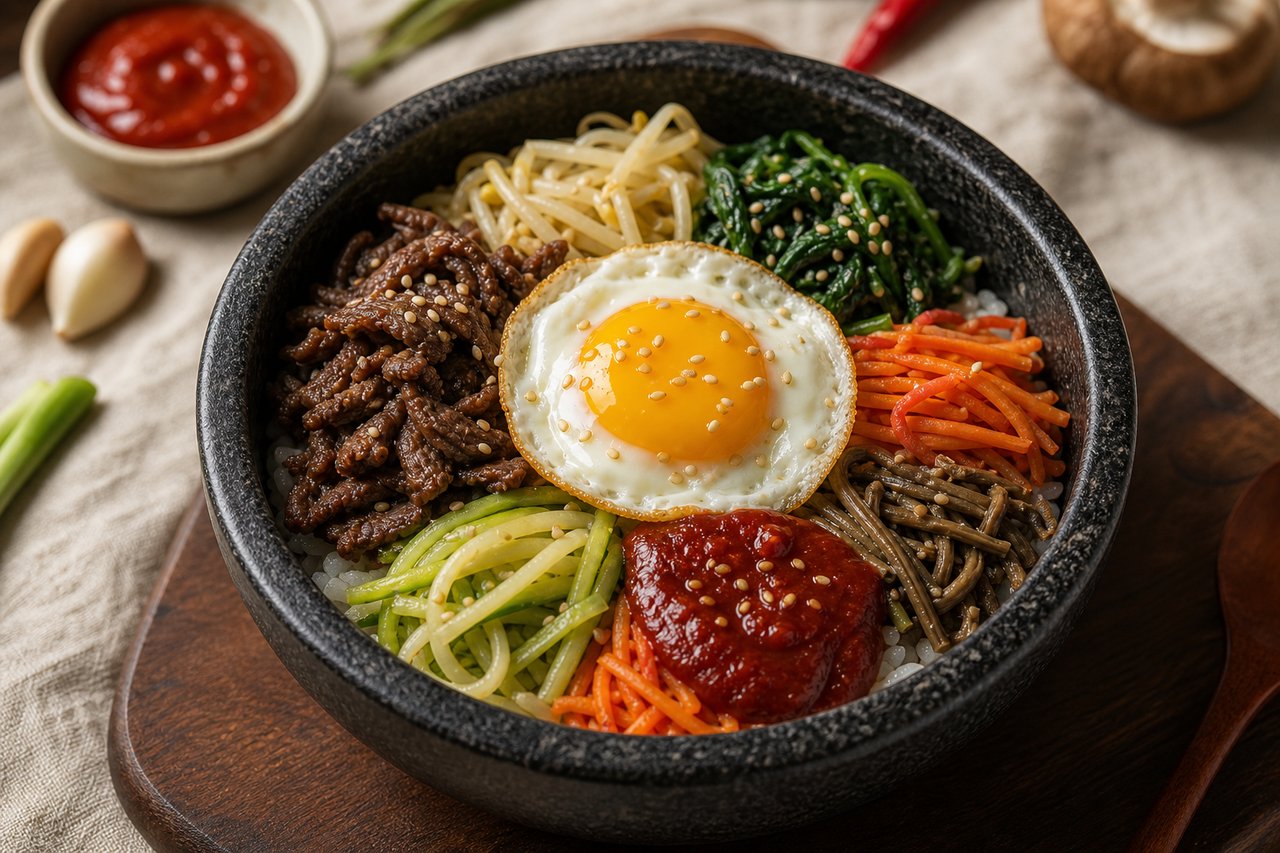
Korean
Bibimbap
A bowl of warm rice crowned with seasoned vegetables, beef and a fried egg, all bound together with a sweet-savoury gochujang sauce and a slick of sesame oil.
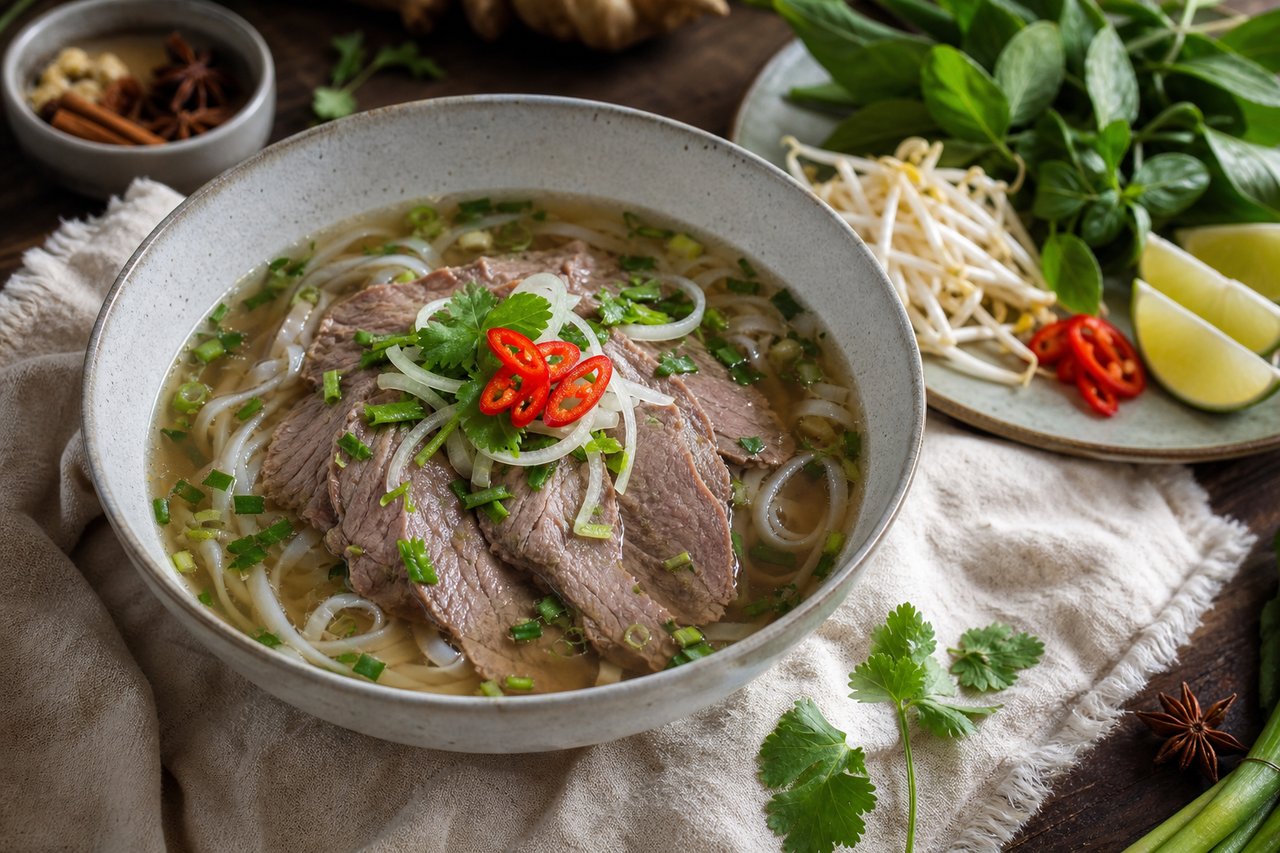
Vietnamese
Pho Bo (Vietnamese Beef Noodle Soup)
A clear, deeply aromatic beef broth scented with charred onion, ginger and toasted spice, poured over rice noodles and raw beef and finished with a plate
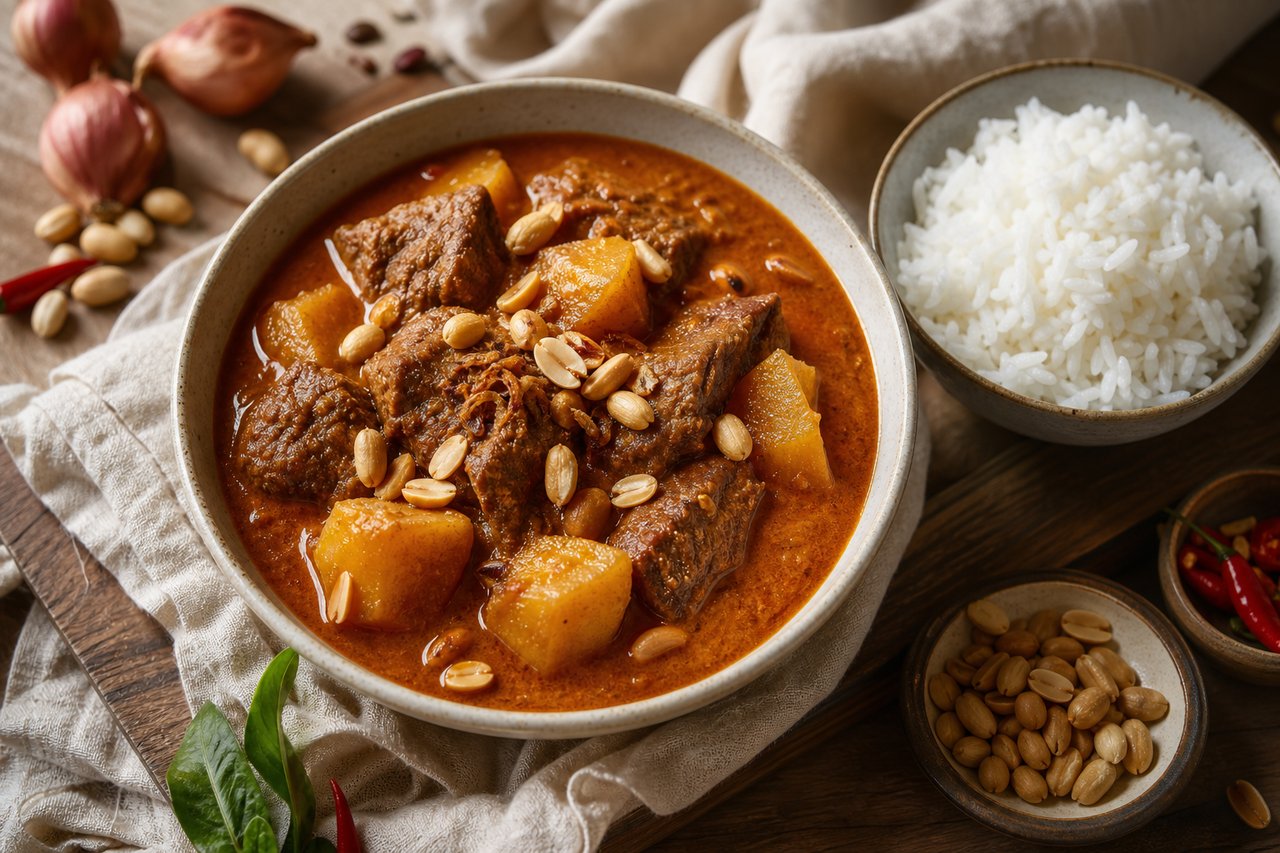
Thai
Massaman Curry
A mild, warmly spiced beef curry with potatoes and peanuts — slow-simmered in coconut milk with cardamom, cinnamon and tamarind for a rich, rounded depth.
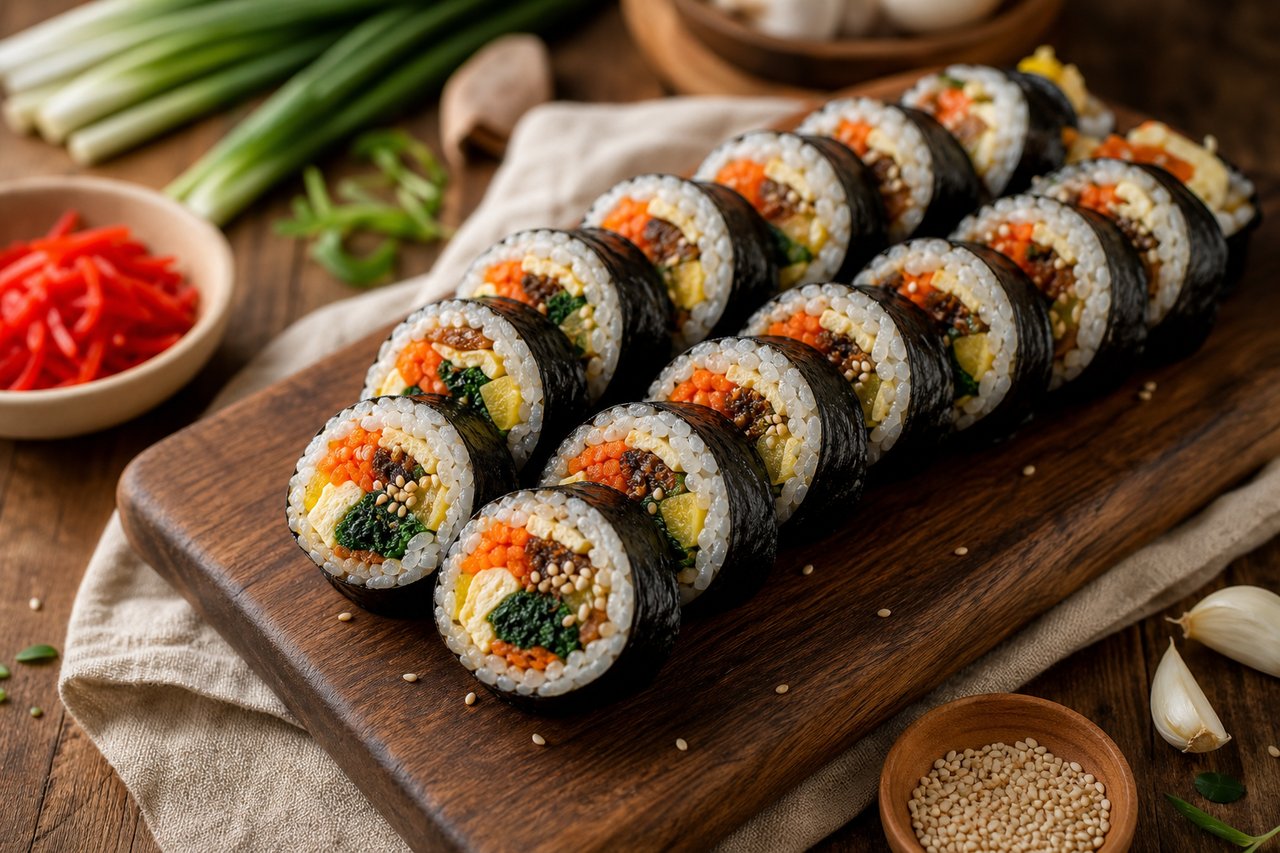
Korean
Kimbap — Korean Seaweed Rice Rolls
Seasoned rice and a row of bright fillings rolled in seaweed, sliced into neat rounds — Korea's classic picnic and lunchbox food.
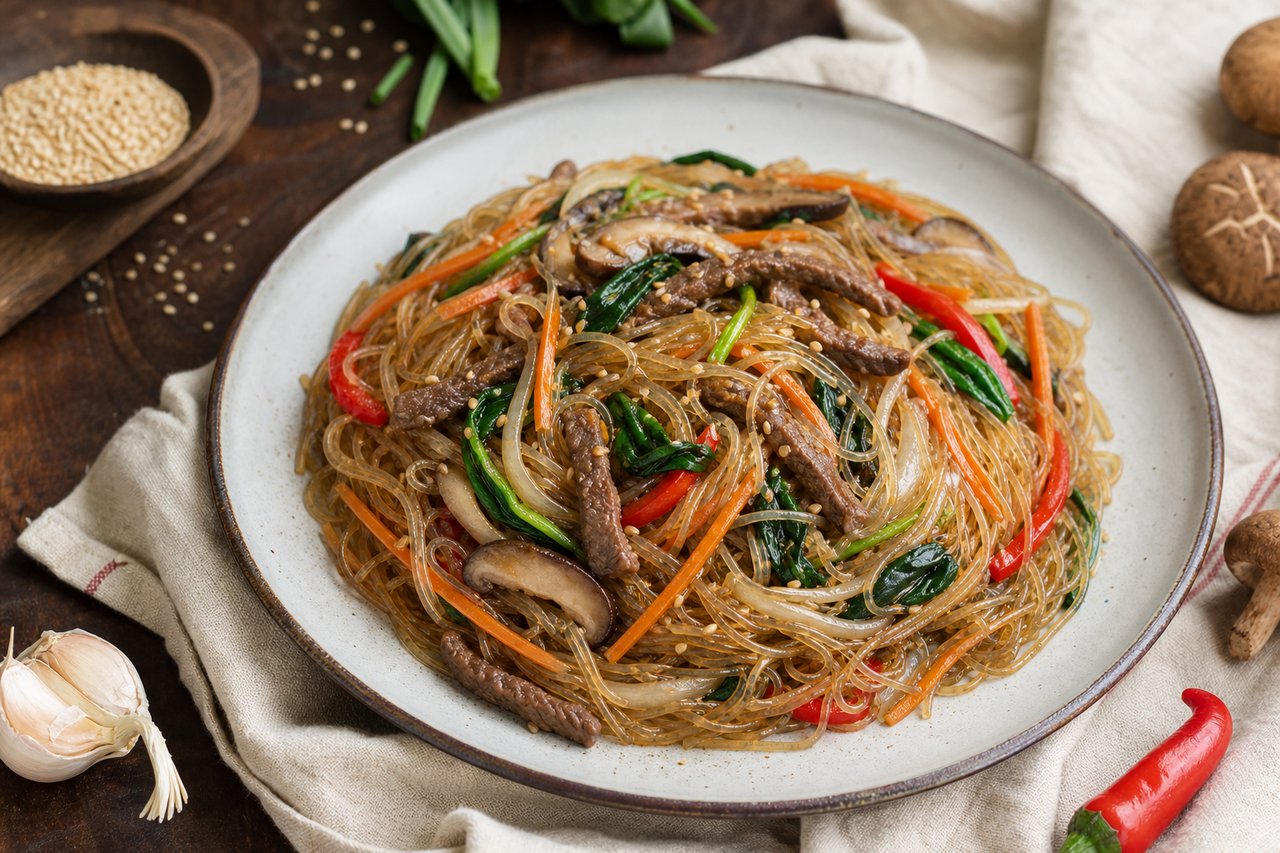
Korean
Japchae
Glassy sweet-potato noodles tossed with beef and a rainbow of seasoned vegetables in a savoury-sweet soy and sesame dressing — Korea's beloved celebration
See also the Asian pantry guide for more on stocking these ingredients.