Pho Bo (Vietnamese Beef Noodle Soup)
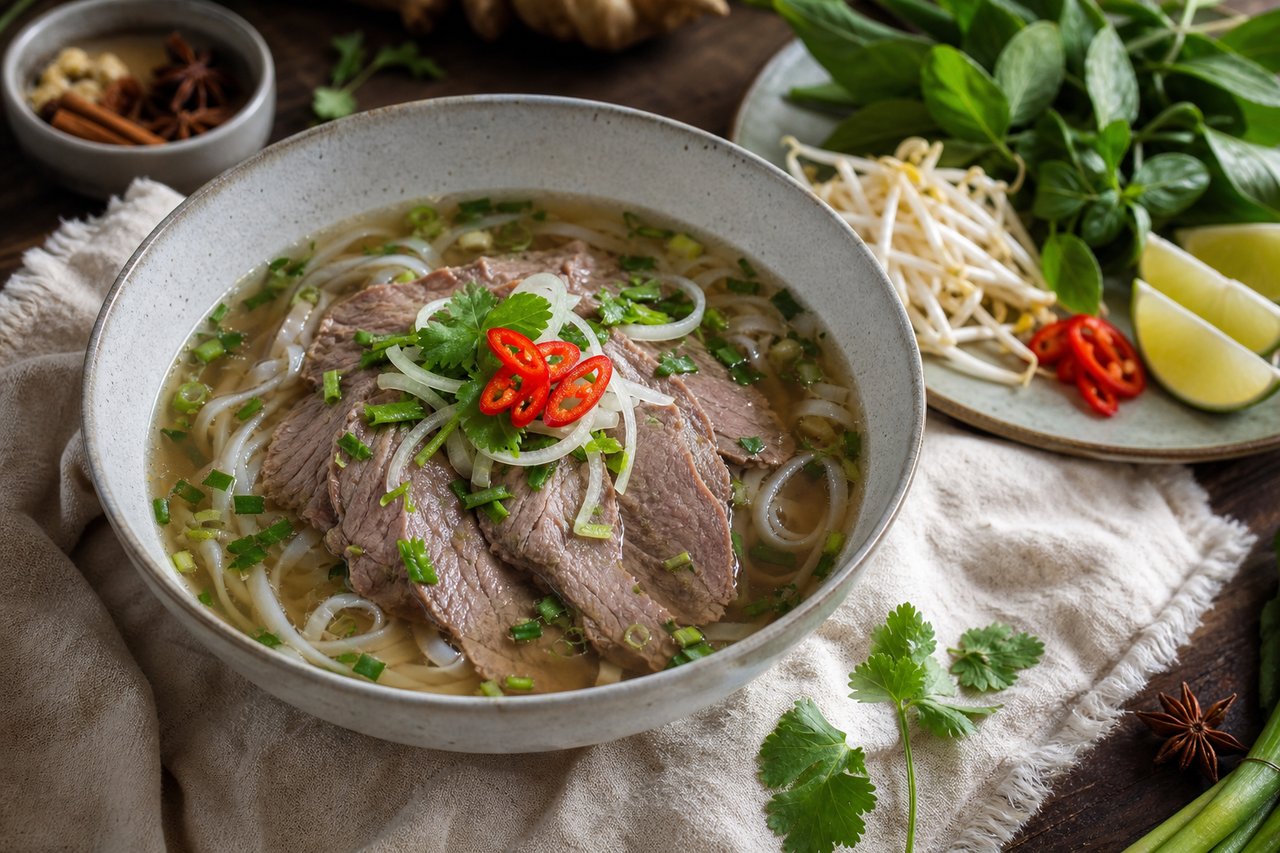
A clear, deeply aromatic beef broth scented with charred onion, ginger and toasted spice, poured over rice noodles and raw beef and finished with a plate
- Prep
- 30 min
- Cook
- 4 h
- Serves
- 4 bowls
- Level
- Medium
By Maya Chen
Method
- 01
Blanch the bones: cover with cold water, bring to a hard boil for 5 minutes, then drain and rinse the bones well. This is the key to a clean, clear broth.
- 02
Char the onions and ginger directly over a flame or under a hot grill until blackened in patches, then rinse off the loose char. This adds the smoky-sweet depth that defines pho.
- 03
Toast the star anise, cinnamon, cloves and coriander seeds in a dry pan until fragrant, about 2 minutes.
- 04
Return the bones and brisket to a clean pot, cover with about 4 litres fresh water, and bring to a gentle simmer. Skim off every bit of foam that rises — this keeps the broth clear.
- 05
Add the charred onion and ginger, the toasted spices, fish sauce and rock sugar. Simmer gently, uncovered, for 3 to 4 hours, skimming occasionally and never letting it reach a rolling boil.
- 06
Remove the brisket after about 1.5 hours once tender; cool and slice thinly. Strain the finished broth through a fine sieve and adjust with fish sauce and sugar until balanced.
- 07
Soak and cook the rice noodles per the packet, then divide between warmed bowls. Top with the raw sliced sirloin and the cooked brisket.
- 08
Pour the very hot broth over the bowls so it cooks the raw beef. Serve with the herb plate, bean sprouts, lime and chilli on the side.
Pho is the dish that best captures the Vietnamese love of a clean, aromatic broth finished with raw additions at the table. The broth does the slow work over several hours; everything else comes together in minutes at the bowl.
Building a clear broth
The clarity of pho is not an accident — it is the result of two disciplines. Blanching the bones before the real cook removes the impurities that would otherwise cloud the liquid, and keeping the pot at a gentle simmer rather than a boil prevents fat and scum from emulsifying back in. Skim patiently and often. A clear broth signals care, and it tastes cleaner for it.
Char and spice
Depth in pho comes from charred onion and ginger and a small, focused set of toasted spices — star anise, cinnamon, clove and coriander seed. Char the aromatics until blackened in patches, then rinse off the loose ash, and toast the spices dry just until fragrant. Added together to the simmering pot, they perfume the broth with the unmistakable warm, sweet aroma that announces pho before the first spoonful.
Assembly at the table
The bowl is finished raw. Thin slices of sirloin go in uncooked and the scalding broth poured over cooks them to a blush. The herb plate, bean sprouts, lime and chilli stay on the side so each diner can tune brightness and heat to taste — the long-cooked broth meeting fresh, raw additions in the same bowl.