Cha Gio — Crispy Vietnamese Fried Spring Rolls
Shatteringly crisp Vietnamese spring rolls with a pork and shrimp filling, wrapped in rice paper and served with herbs and nuoc cham.
- Prep
- 40 min
- Cook
- 20 min
- Serves
- 4 (about 16 rolls)
- Level
- Medium
By Maya Chen
Method
- 01
Combine the pork, shrimp, wood ear, glass noodles, carrot, shallots, garlic, egg, fish sauce and pepper in a bowl. Mix well and let it rest 15 minutes so the flavours meld.
- 02
Dip a rice paper sheet briefly in warm water until just pliable, then lay it flat. It will continue to soften as you work.
- 03
Place a tablespoon of filling near the lower edge, fold the bottom up over it, fold in the two sides, and roll up snugly into a tight cylinder.
- 04
Repeat with the remaining wrappers and filling, keeping the finished rolls apart so they do not stick.
- 05
Heat oil to 160 C. Frying at a moderate temperature first cooks the filling through without scorching the wrapper.
- 06
Fry the rolls in batches for 6 to 8 minutes, turning, until pale gold, then lift out and rest.
- 07
Just before serving, raise the oil to 180 C and fry the rolls a second time for 2 minutes until deeply golden and blistered crisp.
- 08
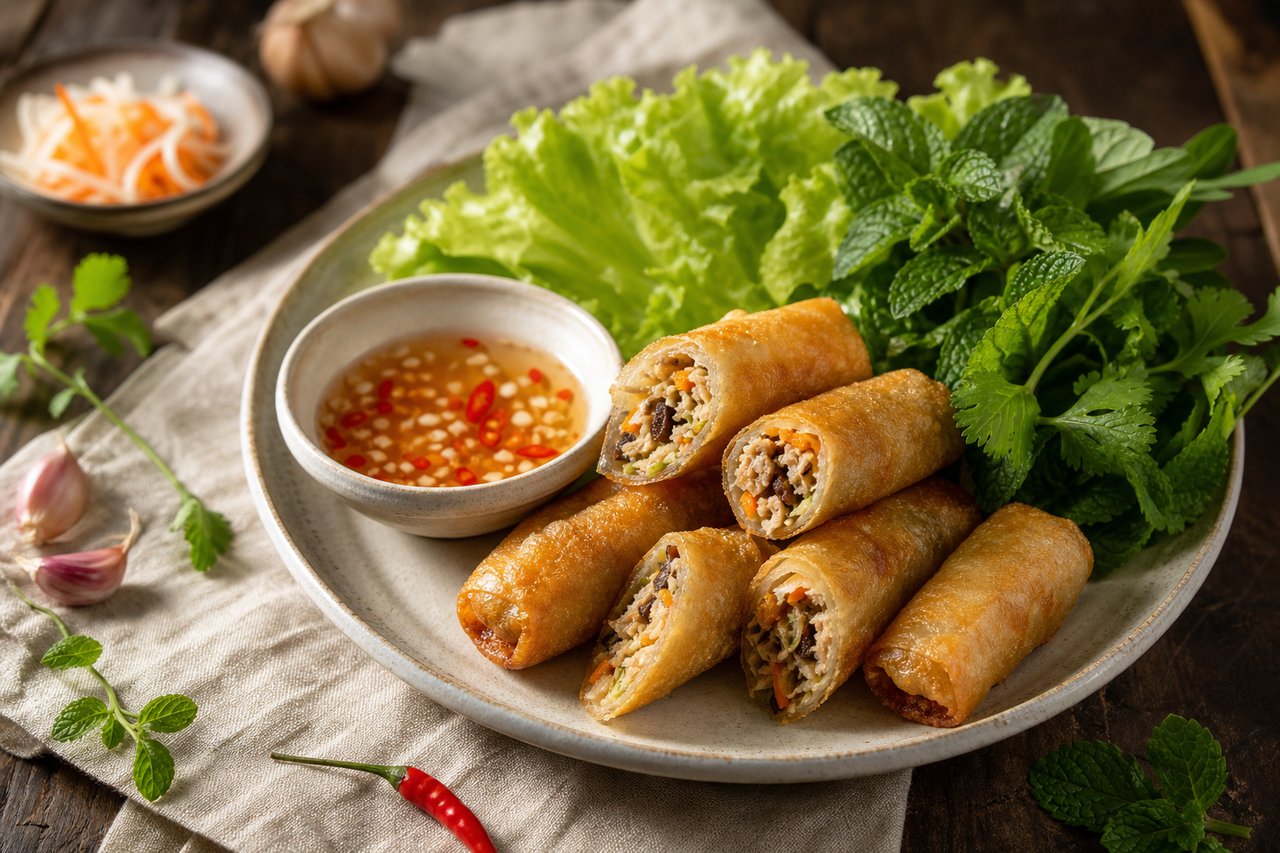
Drain on a rack and serve hot, wrapped in lettuce with herbs and dipped in nuoc cham.
Cha gio are the crisp fried spring rolls of Vietnam, with a savoury pork and shrimp filling sealed in delicate rice paper. They turn up at celebrations and family tables alike, served wrapped in lettuce and herbs and dipped in a bright, tangy sauce that cuts the richness.
The filling
A good filling is varied in texture as much as flavour: ground pork for body, chopped shrimp for sweetness, wood ear mushrooms for a faint snap, and glass noodles to keep everything light. Mixing it ahead and letting it rest lets the fish sauce and aromatics settle into the meat, which makes for a more cohesive bite.
Wrapping with rice paper
Rice paper is unforgiving if oversoaked, so dip each sheet only briefly and let it finish softening on the board. Roll the cylinders snugly but without forcing, and keep the finished rolls apart so they do not stick together before they reach the oil.
Why the double fry matters
The technique that separates a great cha gio from a soggy one is the double fry. A first pass at moderate heat cooks the dense filling through, and a second pass at higher heat just before serving blisters the wrapper to a shattering crisp. Done this way, the rolls can also be prepped ahead and finished at the last minute.