Cook with
Recipes with Fish Sauce
Fermented anchovy sauce central to Thai and Vietnamese cooking.
Fish sauce is the salty soul of Southeast Asian cooking, a clear amber liquid made by fermenting anchovies with salt over many months until they break down into a deeply savoury extract. Where soy sauce anchors East Asian kitchens, fish sauce plays the same role across Thailand and Vietnam, supplying the umami base that makes a dish taste complete rather than merely seasoned.
What it is and how it tastes
Small fish, usually anchovies, are packed with sea salt and left to ferment for many months, slowly liquefying into a pungent, protein-rich brew that is then drained and aged. The first press yields the finest, most aromatic sauce, much as a first cold pressing yields the best oil. In the bottle it smells boldly of the sea, but that intensity is the point: a small amount delivers a rounded, savoury saltiness with a long finish rather than any fishy flavour once cooked. Quality varies widely, so the better bottles, often labelled first press or with a high anchovy content and a short ingredient list, taste cleaner and less harshly salty than the cheaper, murkier sauces bulked out with additives.
How to use it
Fish sauce seasons from behind the scenes. It is the backbone of countless dipping sauces, balanced against lime, sugar and chilli, and the seasoning that brings a curry or stir-fry to life. Add it during cooking so its sharp aroma softens into savoury depth, or use it raw in dressings where its bright punch is wanted. Treat it like salt: start small, taste, and build up. In a Vietnamese dipping sauce it is diluted heavily with water, lime and sugar to a mellow, balanced seasoning, while in a Thai stir-fry a single tablespoon may carry the whole dish. Brands differ markedly in strength and saltiness, so let the palate, not the recipe, set the final amount, and remember it is far easier to add more than to rescue an over-seasoned pot.
Buying and storing
Choose a bottle made simply from fish and salt, with a clear amber-to-reddish colour rather than a cloudy, dark brown. Higher anchovy ratios and first-press labels signal better quality, and a glass bottle generally holds a sauce that has been treated with more care. Once opened it keeps for a year or more in the cupboard thanks to its high salt content, though refrigerating slows the natural darkening and preserves the fresher aroma for longer.
Where it shines and substitutes
Fish sauce is essential to a balanced pad thai, to the hot-and-sour broth of tom yum goong, and to the fragrant stir-fry pad krapow chicken. When it must be left out, soy sauce with a pinch of salt is the nearest swap, though the marine depth will be missing. For more on building a pantry around it, see the Asian pantry guide.
Fish Sauce recipes (11)
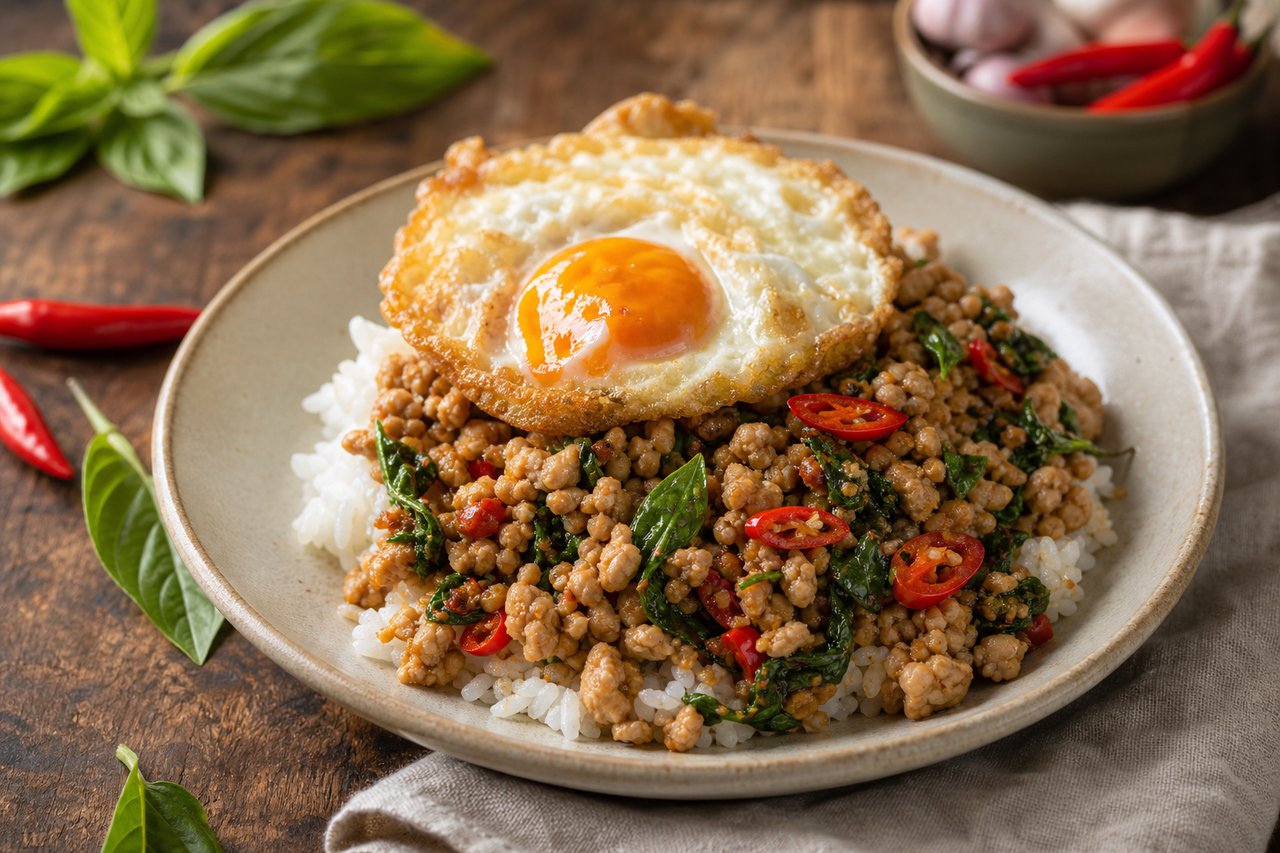
Thai
Pad Krapow Gai (Thai Holy Basil Chicken)
The fast, fiery street-food stir-fry of minced chicken with garlic, chilli and holy basil, served over rice with a crispy fried egg.
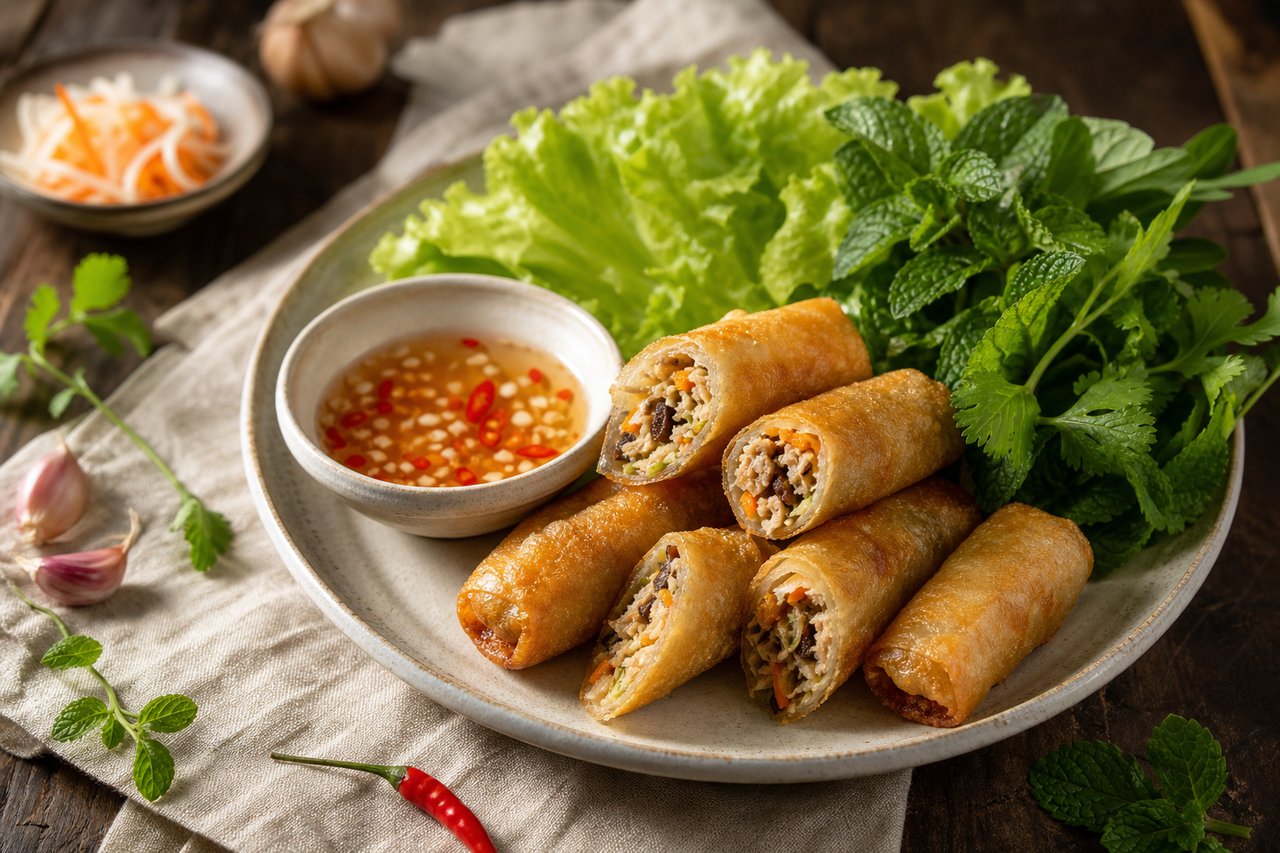
Vietnamese
Cha Gio — Crispy Vietnamese Fried Spring Rolls
Shatteringly crisp Vietnamese spring rolls with a pork and shrimp filling, wrapped in rice paper and served with herbs and nuoc cham.
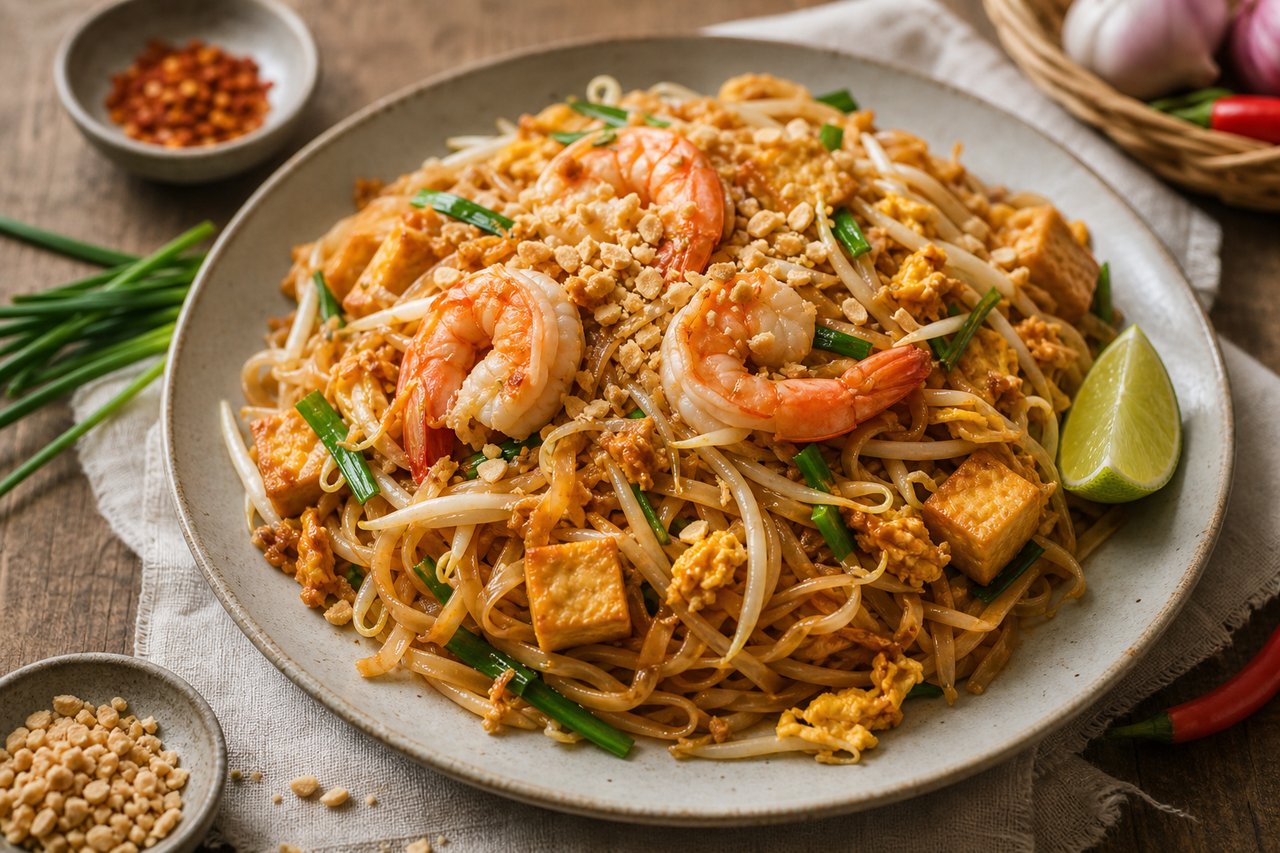
Thai
Pad Thai
Stir-fried rice noodles balanced on tamarind, fish sauce and palm sugar, with prawns, egg, tofu and a crunch of peanuts — the four-flavour classic in noodle
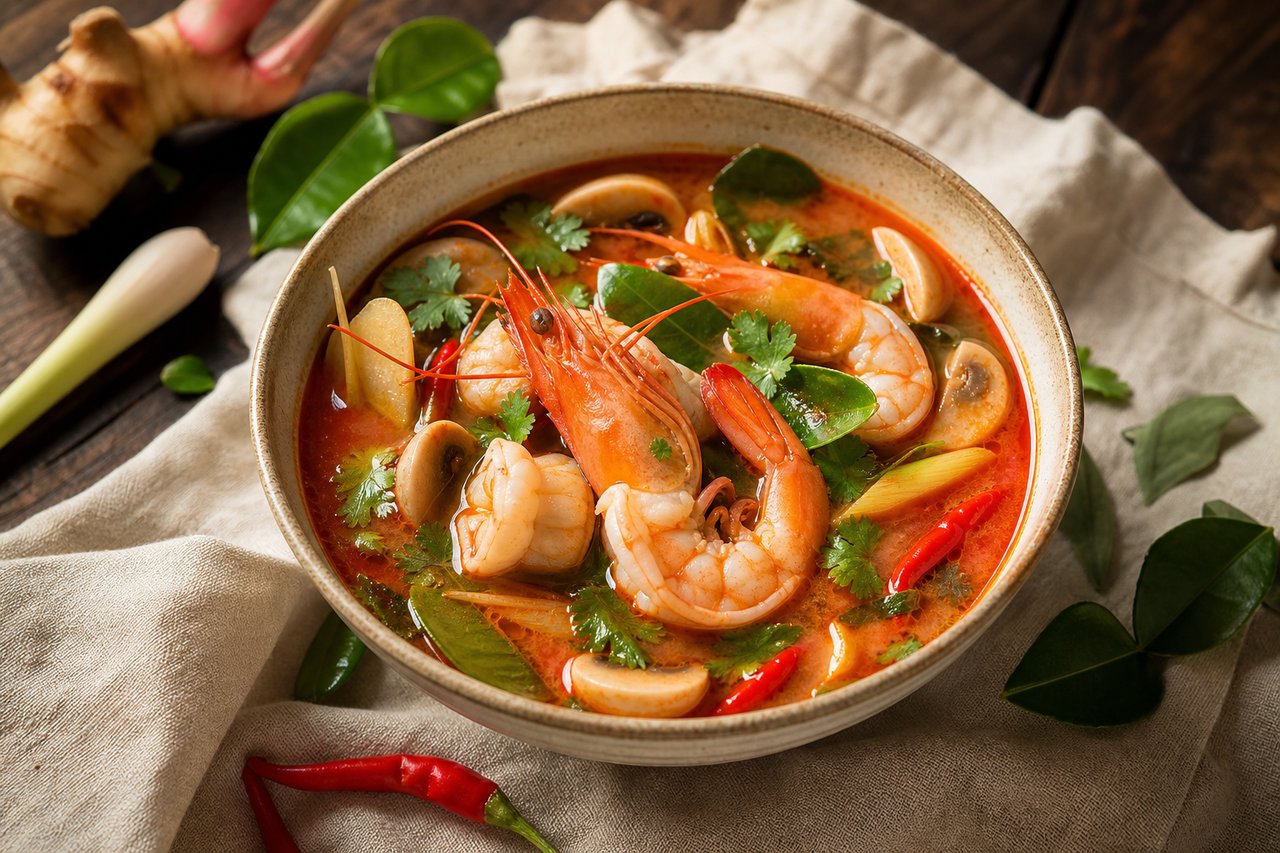
Thai
Tom Yum Goong
Thailand's iconic hot-and-sour prawn soup — fragrant with lemongrass, galangal and kaffir lime, sharpened with lime and chilli and ready in under half an hour.
Vietnamese
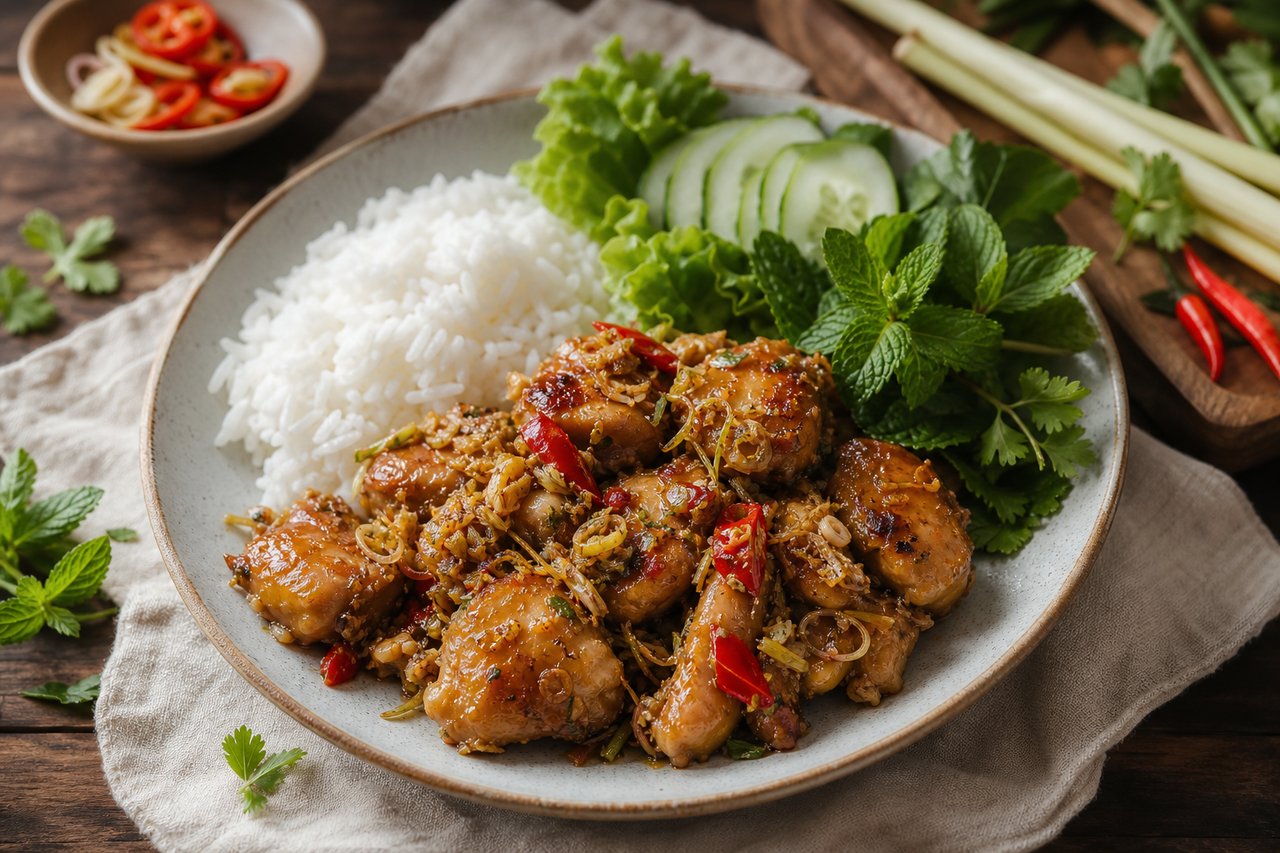
Vietnamese Lemongrass Chicken (Ga Xao Sa Ot)
Quick stir-fried chicken in a fragrant lemongrass, garlic and chilli marinade with a savoury fish-sauce glaze — a bright, aromatic weeknight dish over rice.
Thai
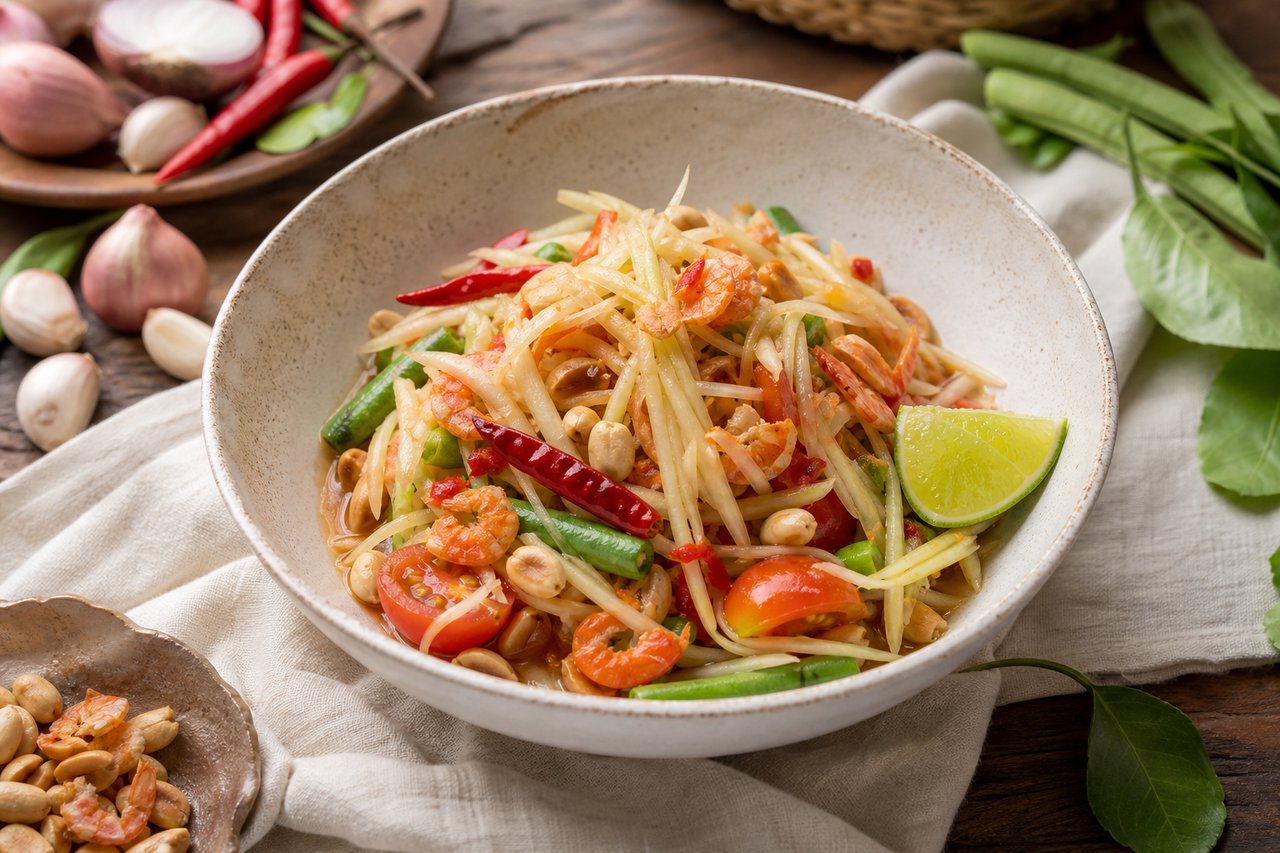
Som Tam — Thai Green Papaya Salad
Shredded green papaya pounded with lime, chilli, fish sauce and palm sugar — the bracing, crunchy salad at the heart of northeastern Thai food.
Vietnamese
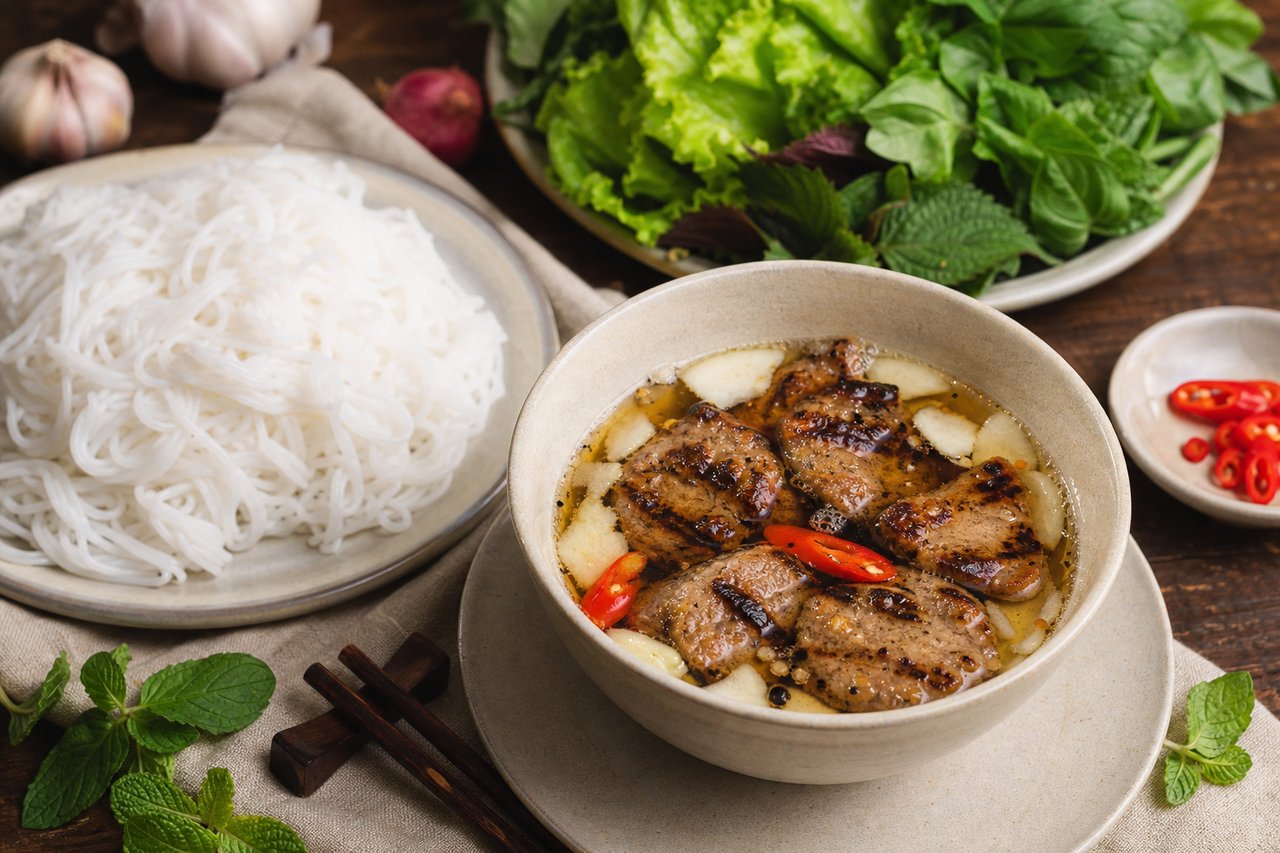
Bun Cha (Grilled Pork with Rice Noodles)
Smoky, caramelised grilled pork patties and belly served in a warm, sweet-and-sour dipping broth with cold rice vermicelli and a heap of fresh herbs
Vietnamese
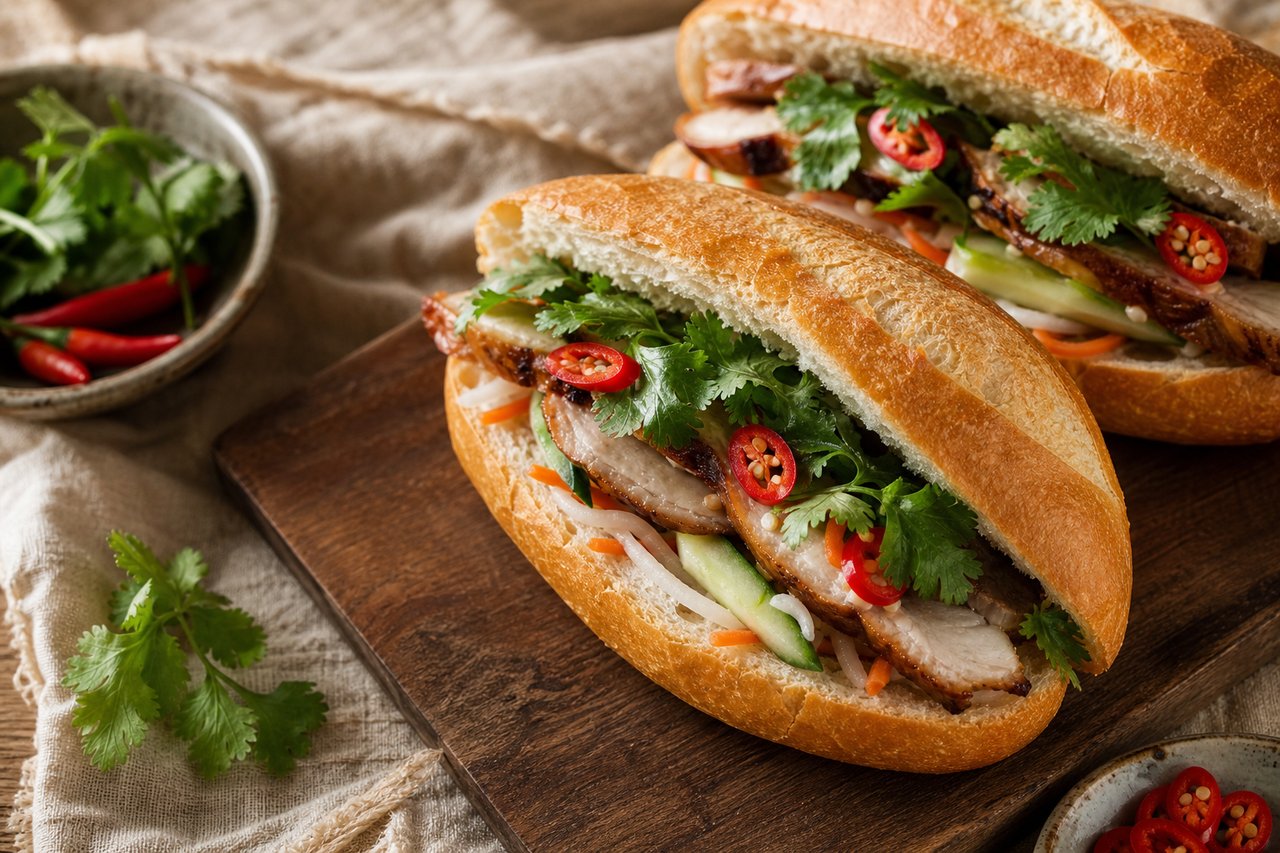
Banh Mi (Vietnamese Pork Sandwich)
A shatteringly crisp baguette filled with savoury pork, quick-pickled carrot and daikon, cucumber, coriander and chilli — the four-taste balance in a sandwich.
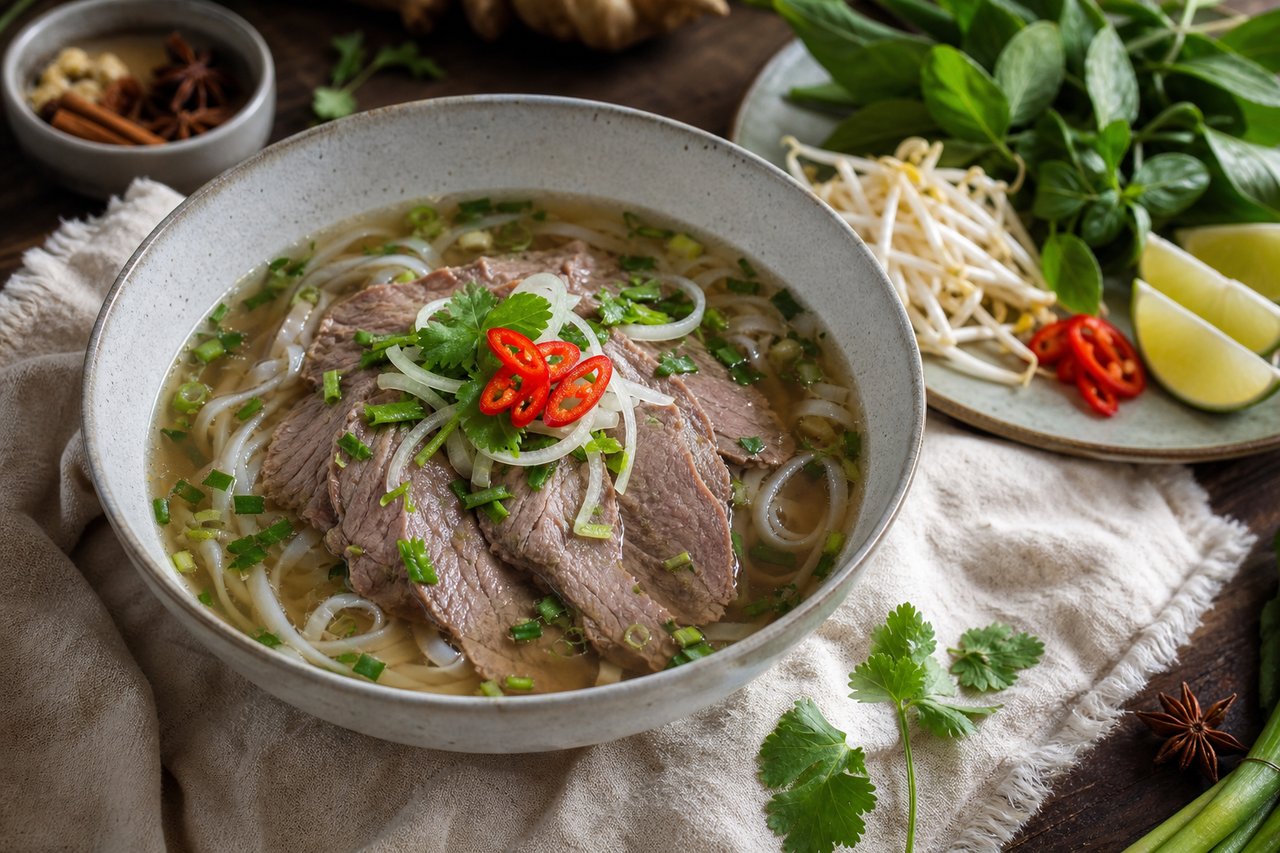
Vietnamese
Pho Bo (Vietnamese Beef Noodle Soup)
A clear, deeply aromatic beef broth scented with charred onion, ginger and toasted spice, poured over rice noodles and raw beef and finished with a plate
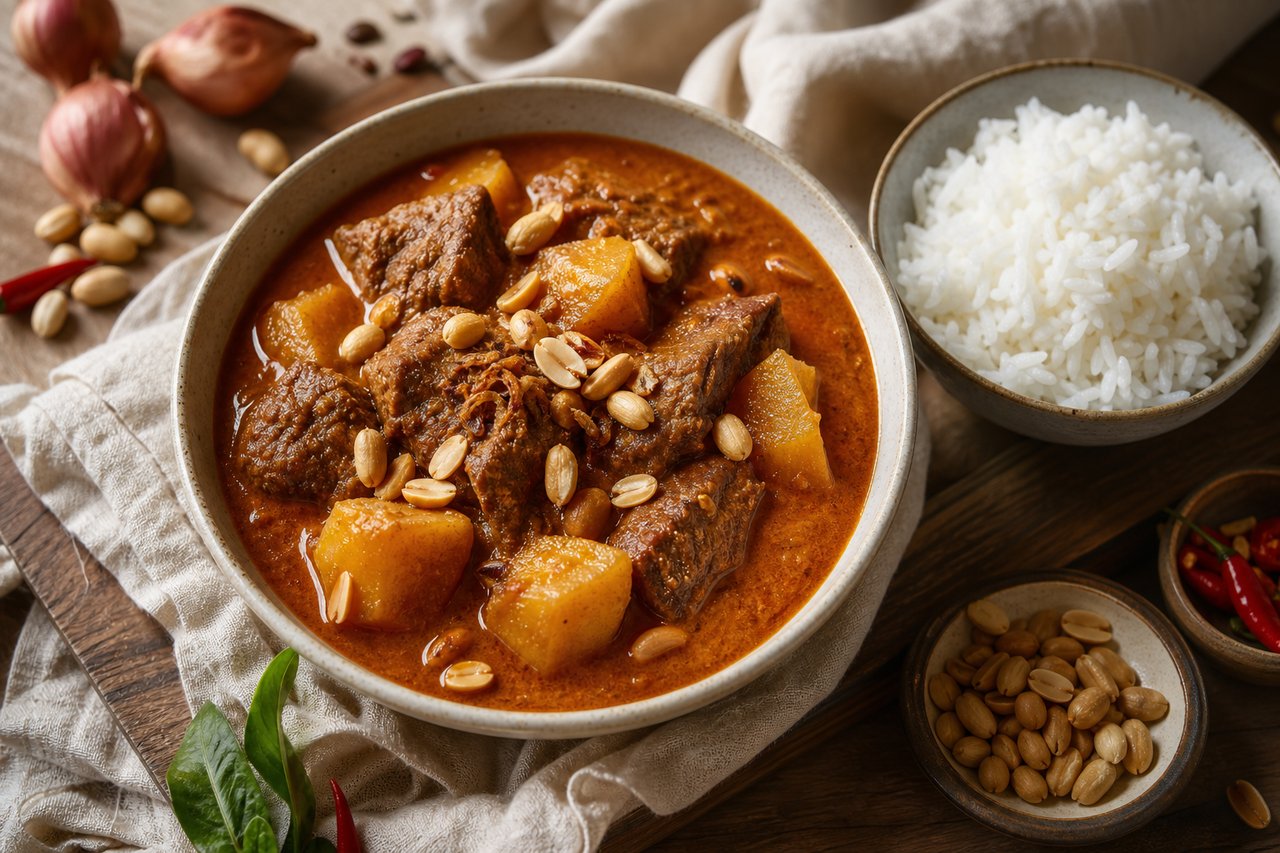
Thai
Massaman Curry
A mild, warmly spiced beef curry with potatoes and peanuts — slow-simmered in coconut milk with cardamom, cinnamon and tamarind for a rich, rounded depth.
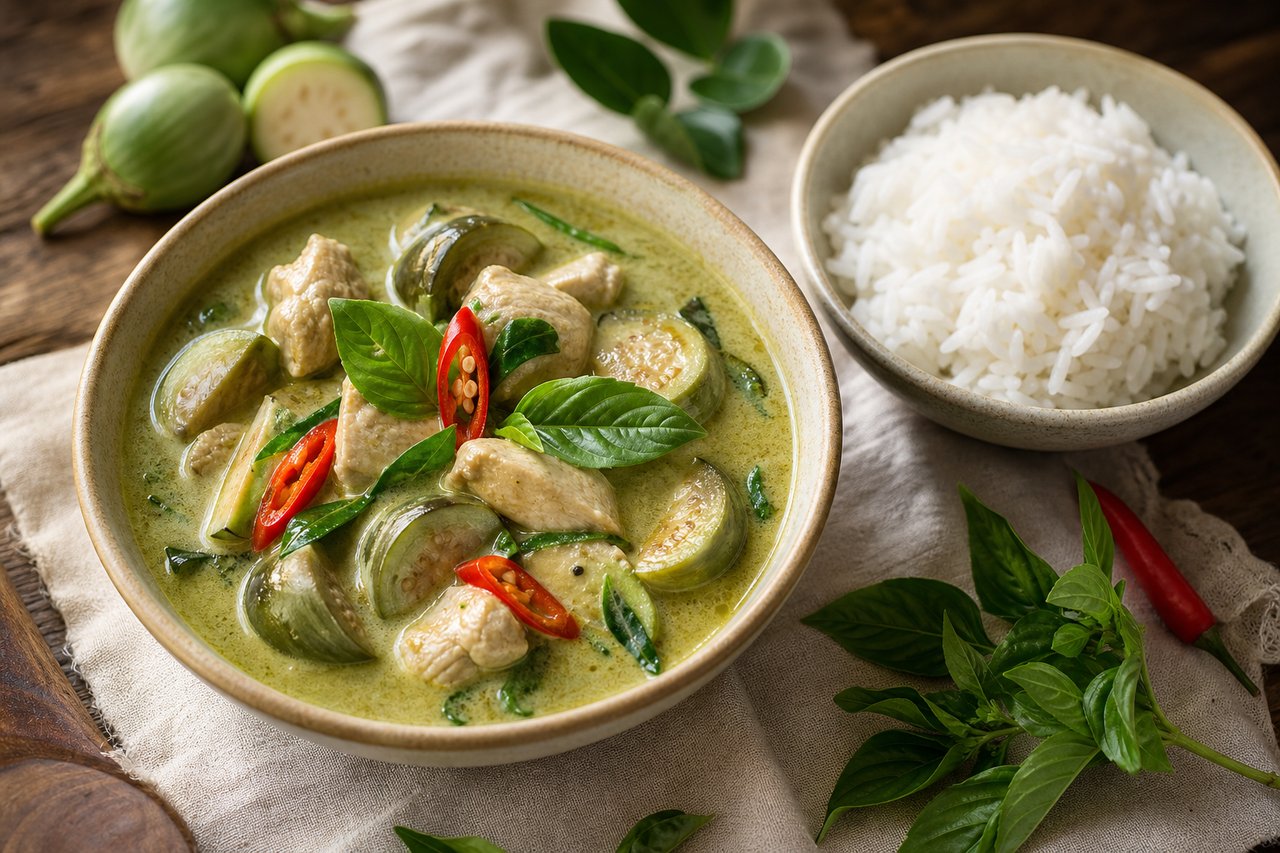
Thai
Thai Green Curry
A bright, fragrant coconut curry built on a fresh green chilli paste fried until it splits — with chicken, aubergine, basil and kaffir lime.
See also the Asian pantry guide for more on stocking these ingredients.