Pad Thai
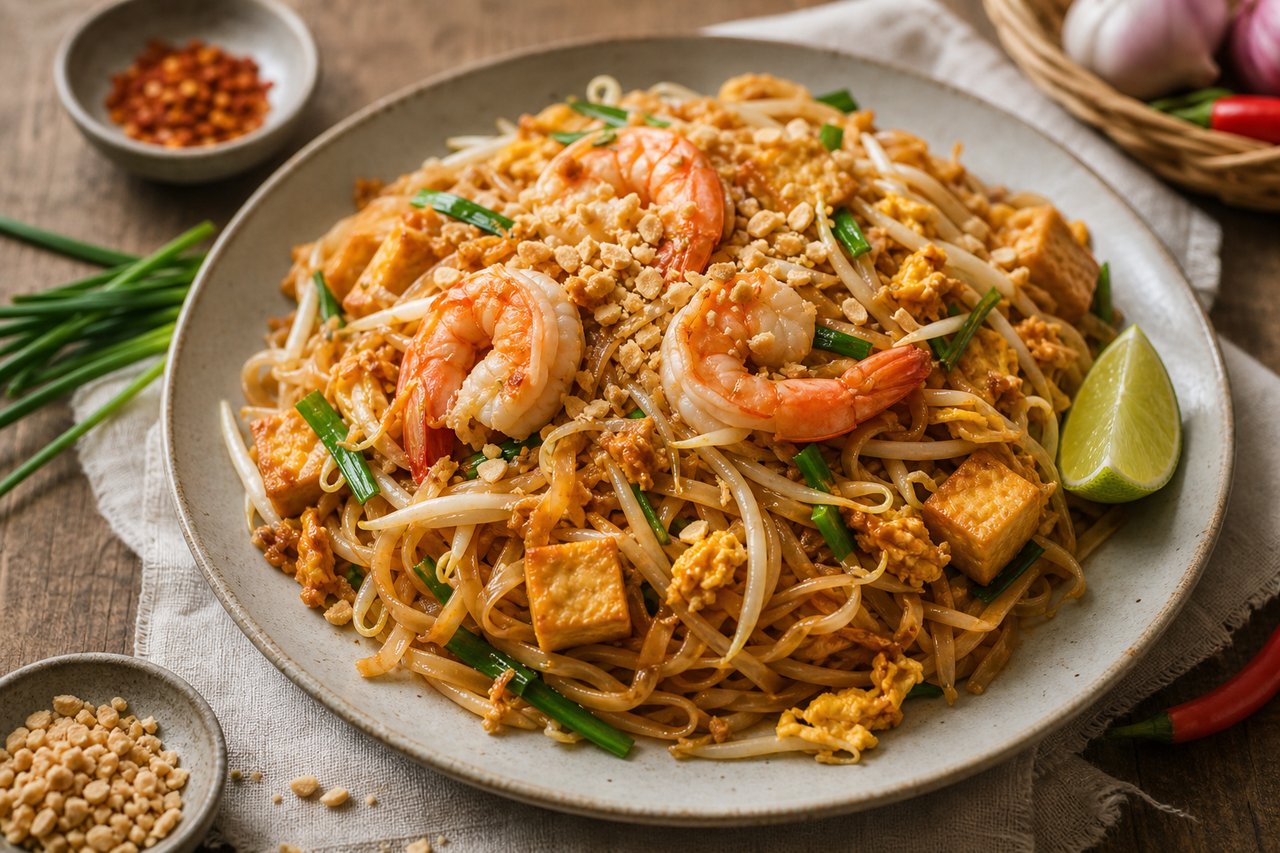
Stir-fried rice noodles balanced on tamarind, fish sauce and palm sugar, with prawns, egg, tofu and a crunch of peanuts — the four-flavour classic in noodle
- Prep
- 25 min
- Cook
- 10 min
- Serves
- 2 plates
- Level
- Medium
By Maya Chen
Method
- 01
Soak the rice noodles in warm (not boiling) water for 20–30 minutes until pliable but still firm with a bite. Drain well — they will finish cooking in the wok.
- 02
Make the sauce: gently warm the tamarind paste, fish sauce and palm sugar together until the sugar dissolves into a smooth, glossy liquid. Taste; it should be sour, salty and sweet in balance.
- 03
Heat the oil in a wok over high heat. Fry the tofu cubes until golden on all sides, then add the garlic and prawns and stir-fry until the prawns just turn pink.
- 04
Push everything to one side, pour the beaten eggs into the clear space and let them set for a few seconds before breaking them up into soft curds.
- 05
Add the drained noodles and the sauce. Toss constantly over high heat until the noodles absorb the sauce, soften and turn glossy — add a splash of water if they tighten before they are tender.
- 06
Add the garlic chives and most of the bean sprouts and toss for 30 seconds, keeping the sprouts crisp.
- 07
Plate up and top with crushed peanuts, the remaining raw bean sprouts, lime wedges and chilli flakes so each diner can adjust the final balance.
Pad thai is the four-flavour balance translated into a plate of noodles: tamarind for sour, fish sauce for salt, palm sugar for sweet, and chilli flakes added at the table for heat. Done well it is glossy and springy, never gluey, with the noodles just barely clinging together and a fresh crunch from peanuts and raw sprouts on top.
Get the sauce and the soak right first
The two things that make or break pad thai both happen before the wok gets hot. First, the sauce: warm the tamarind, fish sauce and palm sugar together until smooth and taste it on its own, adjusting until it sits in balance — it should make you want sour, salt and sweet in roughly equal measure. Second, the noodles: soak them in warm water only until they bend without snapping. They should still feel firm, because the final cooking happens in the pan.
Work fast and keep the wok hot
Stir-frying is a sprint. Have every ingredient prepped and lined up before the oil goes in, because once the wok is smoking there is no time to chop. Keep the heat high and the noodles moving so they fry and absorb the sauce rather than steam and stick. If the pan looks dry before the noodles are tender, add a splash of water rather than more oil. Cook no more than two portions at once on a home stove — a crowded wok cools down and the dish turns soft.