Cuisine guide
Vietnamese Home Cooking: A Cook's Guide
How Vietnamese home cooking actually works — fresh herbs, fish sauce and nuoc cham, clean aromatic broths, and the techniques that keep every dish bright
By Maya Chen
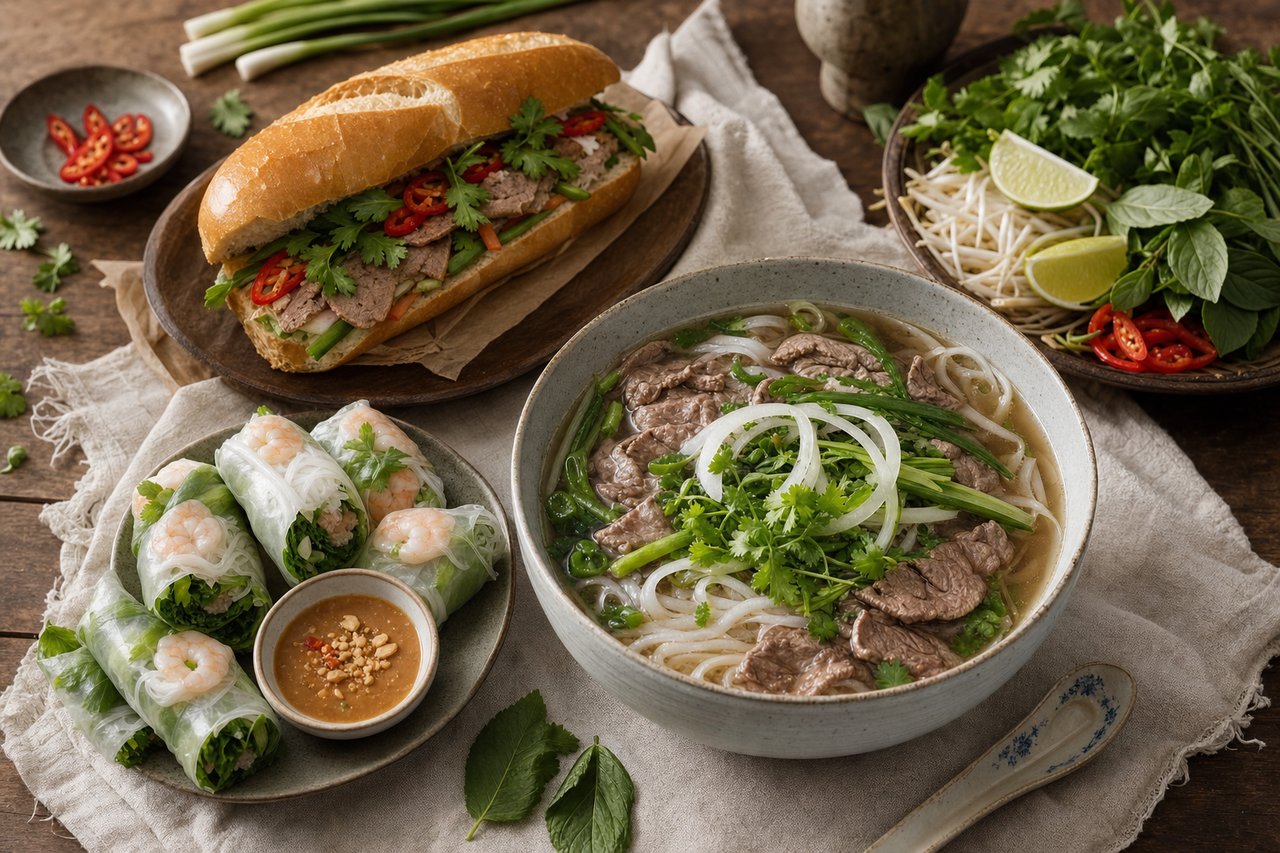
Vietnamese home cooking has a reputation for lightness, and it earns it. Where many cuisines build flavour by reduction and richness, Vietnamese food builds it by contrast — hot against cold, soft against crisp, rich against sharp, cooked against raw. The result is food that feels clean and alive even when it is deeply savoury, and a style of cooking that rewards balance far more than technique.
This guide moves through the cuisine the way a home cook learns it: the tasting habit that governs every dish, the fish sauce and dipping sauce at its centre, the raw herbs that finish so many plates, then the major dishes — pho, banh mi, summer rolls and noodle bowls — and the quiet everyday cooking of grilling and simmering that holds the table together. The pantry guide covers the handful of staples that make all of it possible.
The four tastes in balance
The guiding idea behind almost every Vietnamese dish is harmony between salty, sour, sweet and a little heat. You can see it most clearly in the dipping sauces, but it runs through everything: a noodle bowl is dressed so no single element dominates, a braise is brightened with a squeeze of lime at the end, a rich grilled pork is cut with pickled vegetables and herbs. Cooking well in this tradition is less about following a recipe to the gram than about tasting and adjusting until the four tastes sit in tension with one another.
Texture and temperature are part of the same balancing act. A bowl is rarely uniform: there is something soft and something crunchy, something hot and something cool, something rich and something sharp. That layering is why Vietnamese food can be deeply savoury and still feel refreshing — the contrasts keep the palate awake from the first bite to the last.
Sweetness in this cuisine deserves a note of its own. It is used as a seasoning rather than a flavour in its own right — a small amount of sugar in a dipping sauce or a braise rounds the edges and brings the other tastes together, much as salt does. Heat, likewise, is usually optional and adjustable, added at the table from fresh chilli or a pot of chilli sauce so each diner sets their own level. The base dish is built to be balanced for everyone, and the final tuning happens in the bowl.
Fish sauce and nuoc cham
If there is one ingredient that defines the cuisine, it is fish sauce — nuoc mam — the salted, fermented anchovy liquid that supplies savoury depth the way soy sauce does further north. On its own it is intense, but used with restraint it rarely reads as fishy; it simply makes food taste more of itself. A good bottle lists only anchovy and salt, smells clean and briny rather than muddy, and is worth seeking out, because it is the foundation of nearly everything.
Its most important form is nuoc cham, the dipping and dressing sauce found on nearly every table. It is built from fish sauce, water, lime juice and sugar, sharpened with garlic and fresh chilli. The proportions shift from cook to cook and dish to dish, but the goal is constant: a sauce that is sweet, sour, salty and fragrant in one mouthful. Learn to mix it by taste and a huge part of the repertoire opens up, because the same sauce dresses grilled meats, spring rolls and noodle bowls alike.
Mixing nuoc cham by feel
A useful starting frame is to dissolve sugar in warm water, add lime juice and fish sauce, then taste and tilt: more lime if it is flat, more sugar if it is sharp, more fish sauce if it is thin. Garlic and chilli go in last, often pounded or finely chopped so they float through the sauce. Diluting with water is what turns raw, salty fish sauce into something you can pour over a whole bowl, so do not skip it. Once the ratio feels right a few times, most cooks stop measuring altogether and mix it by eye.
The herb plate
No description of Vietnamese cooking is complete without the plate of raw herbs and vegetables that accompanies so many meals. Mint, coriander, Thai basil, perilla, sawtooth herb, bean sprouts, crisp lettuce and slivers of raw chilli arrive heaped on a communal plate, and diners tear and add them as they eat. This is not decoration — it is a working part of the dish, letting each person tune freshness, crunch and aroma to their own taste. The herbs cool a hot broth, lift a rich grilled meat, and turn a simple bowl into something layered and personal.
Each herb pulls in a slightly different direction: mint is cooling and clean, Thai basil brings a warm aniseed note, perilla is earthy and faintly minty, coriander is bright and green, and sawtooth herb is bolder and more pungent. Part of learning the cuisine is learning which herbs suit which dish, though at home the simplest approach is to put out whatever is fresh and let everyone build their own bite. Keeping the herbs raw and adding them at the very end is what preserves their lift — cook them in and the brightness is lost.
Pho and the clean broth
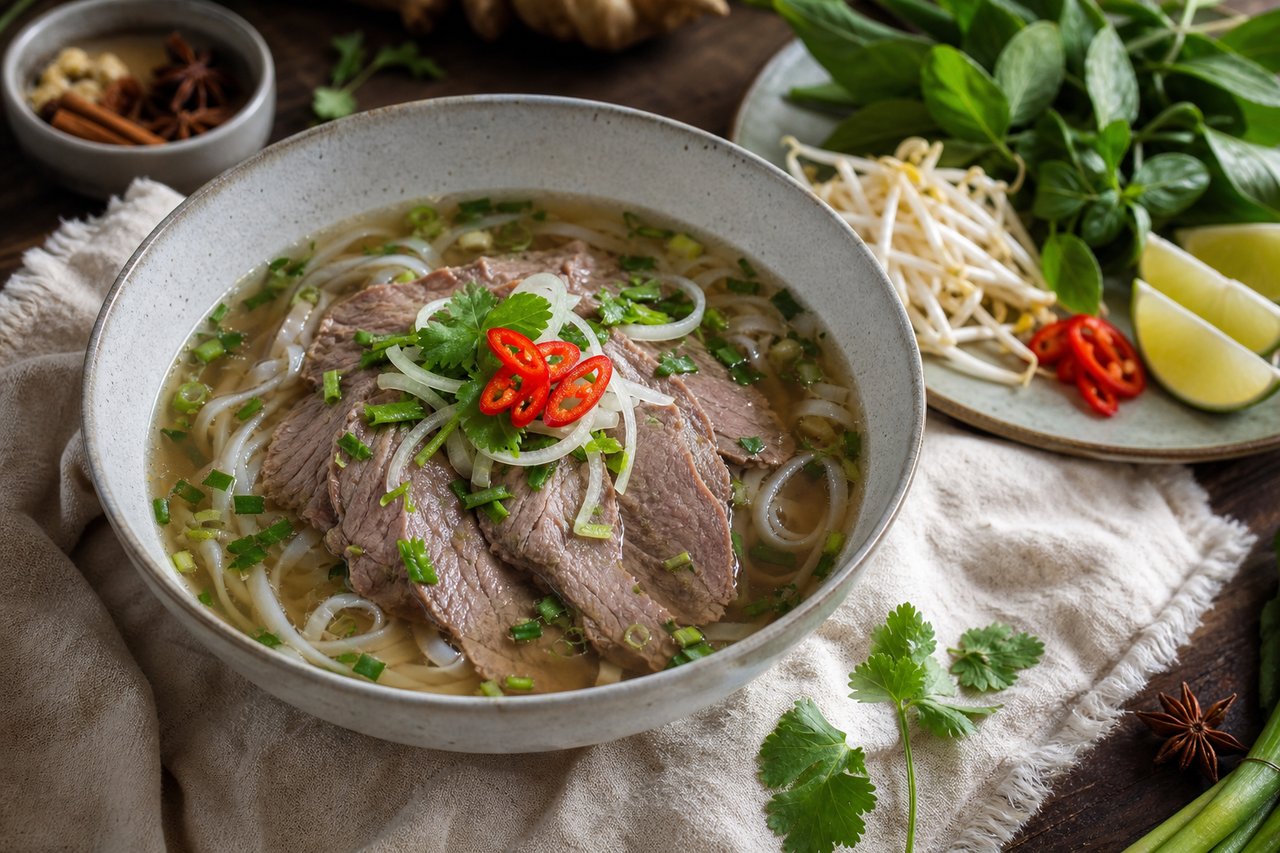
The most famous Vietnamese dish abroad is pho, and it shows another side of the cuisine: the patient, aromatic broth. Far from the milky, emulsified stocks of some traditions, a good pho broth is prized for being clear and clean, its depth coming from charred onion and ginger, toasted spices like star anise, cinnamon and clove, and long, gentle simmering of beef bones. The broth is skimmed obsessively so that nothing clouds it. At the table it is finished raw — thin slices of beef cook in the heat of the liquid, and the herb plate, lime and chilli go in at the last second. The contrast of a long-cooked broth finished with raw additions is the whole point. The Pho Bo recipe walks through building that clarity from scratch.
Clarity is the technical heart of a good broth. Blanching the bones first and discarding that initial water removes the scum that would otherwise cloud the stock; after that the simmer must stay gentle, because a hard boil emulsifies fat and turns the broth murky. Charring the onion and ginger over a flame before they go in adds a smoky sweetness, and toasting the whole spices briefly wakes them up. The reward for the patience is a stock that is fragrant and golden-clear, with all its richness in the flavour rather than the texture.
The baguette legacy: banh mi
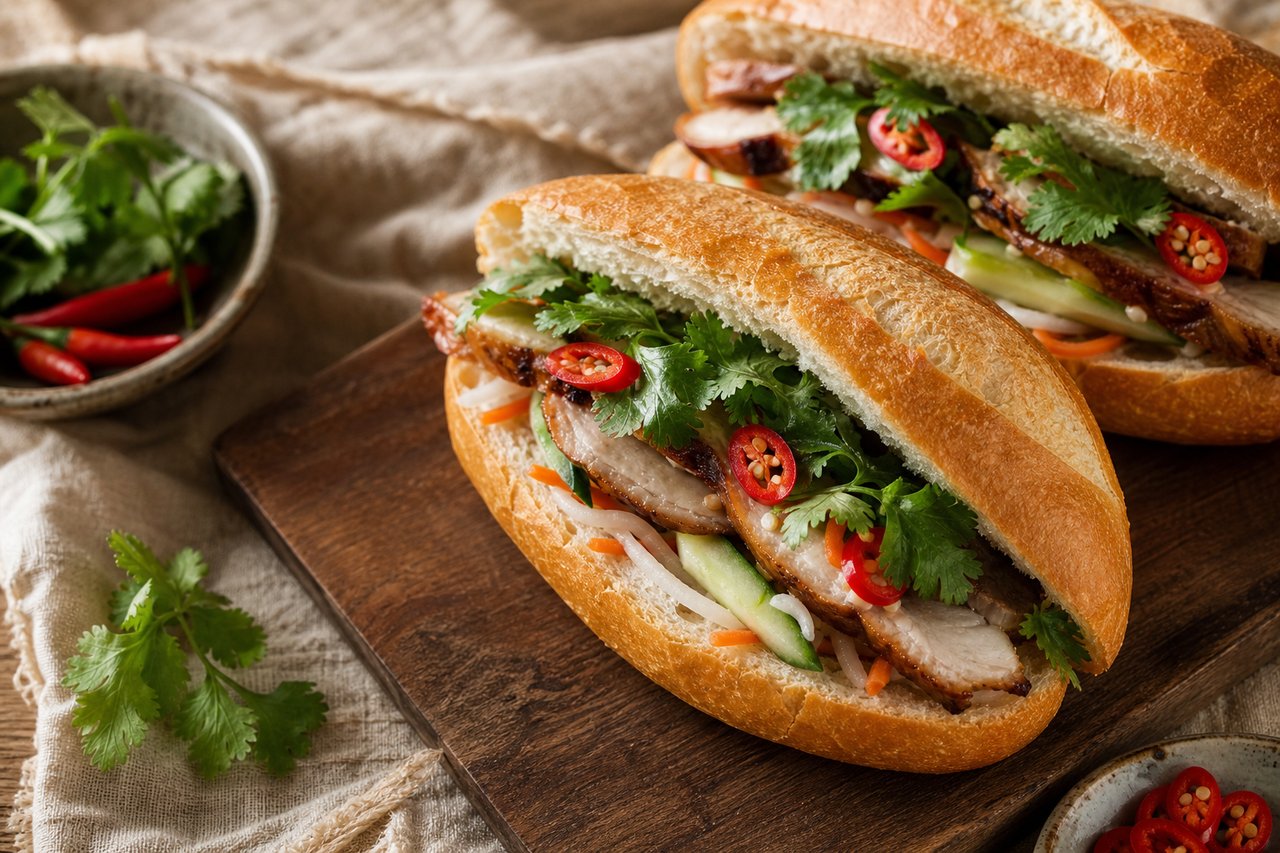
Not everything in the cuisine is ancient. The banh mi is the most delicious souvenir of the French colonial period — a light, airy baguette, made with a portion of rice flour so the crust shatters and the crumb stays tender, split and filled in an unmistakably Vietnamese way. Pate and a smear of mayonnaise nod to France, but the fillings are local: grilled or cold cuts of pork, a tangle of pickled carrot and daikon, cucumber, coriander, chilli and a few drops of seasoning. It is the four-taste balance again, this time in a sandwich, and it has become one of the great street foods of the world. The Banh Mi recipe covers the pickle and the assembly that make it sing.
The genius of the banh mi is structural as much as it is about flavour. The crisp, hollow bread gives way to soft pate and meat, the pickles cut the richness with sourness and crunch, the herbs add a green lift, and the chilli brings heat — every element of the cuisine pressed into one handheld form. The pickle is doing real work here, not just adding decoration, which is why a banh mi without it tastes heavy and incomplete.
Rice paper and rice noodles
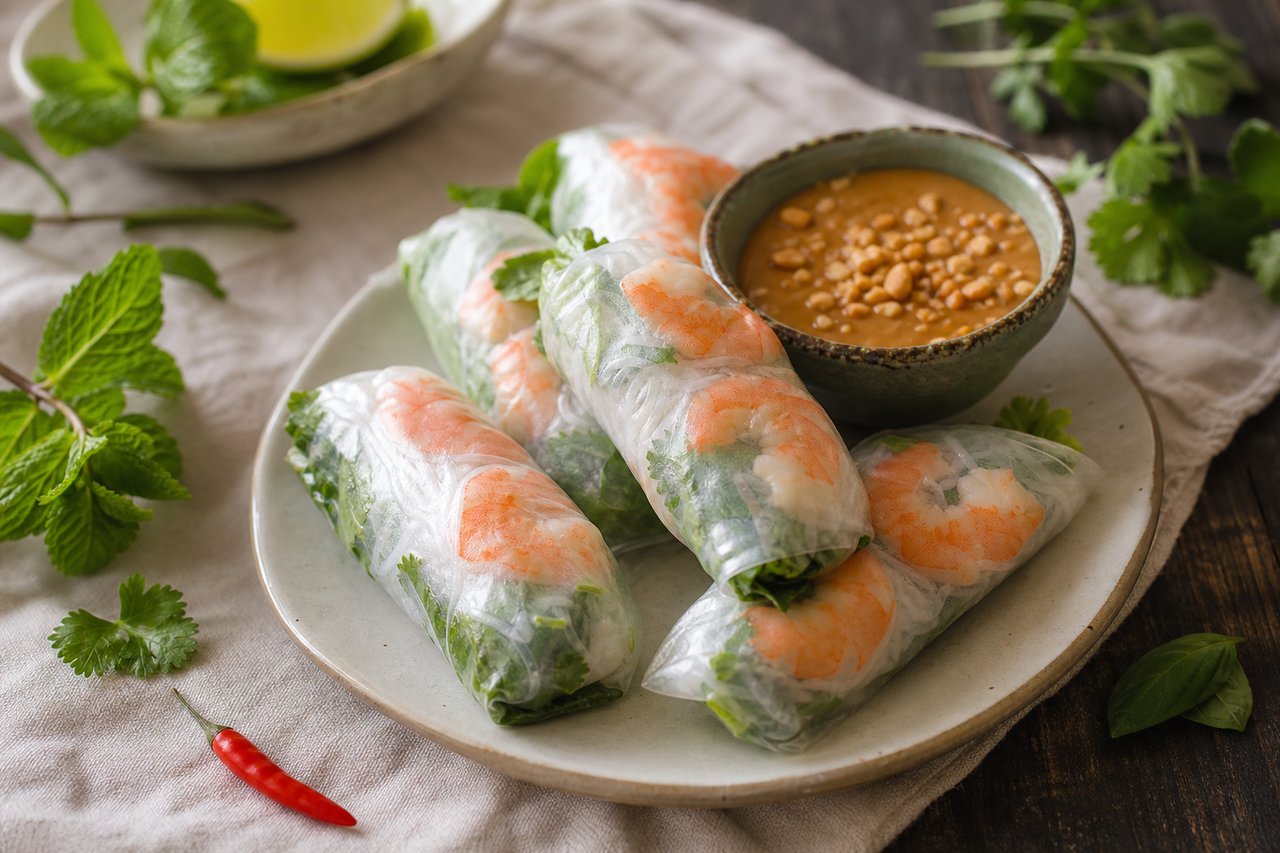
Rice is the staple, but in Vietnamese cooking it appears in two forms that go well beyond the bowl of steamed grains. The first is rice paper — translucent, brittle sheets that soften in a moment of warm water and become the wrapper for fresh summer rolls. Rolling them is a knack rather than a skill: dip briefly, lay the fillings near one edge, fold the sides in and roll tight while the paper is still slightly firm. The Goi Cuon recipe is the gentlest place to learn the technique, with prawns, pork, herbs and noodles wrapped raw and dipped in a peanut or nuoc cham sauce.
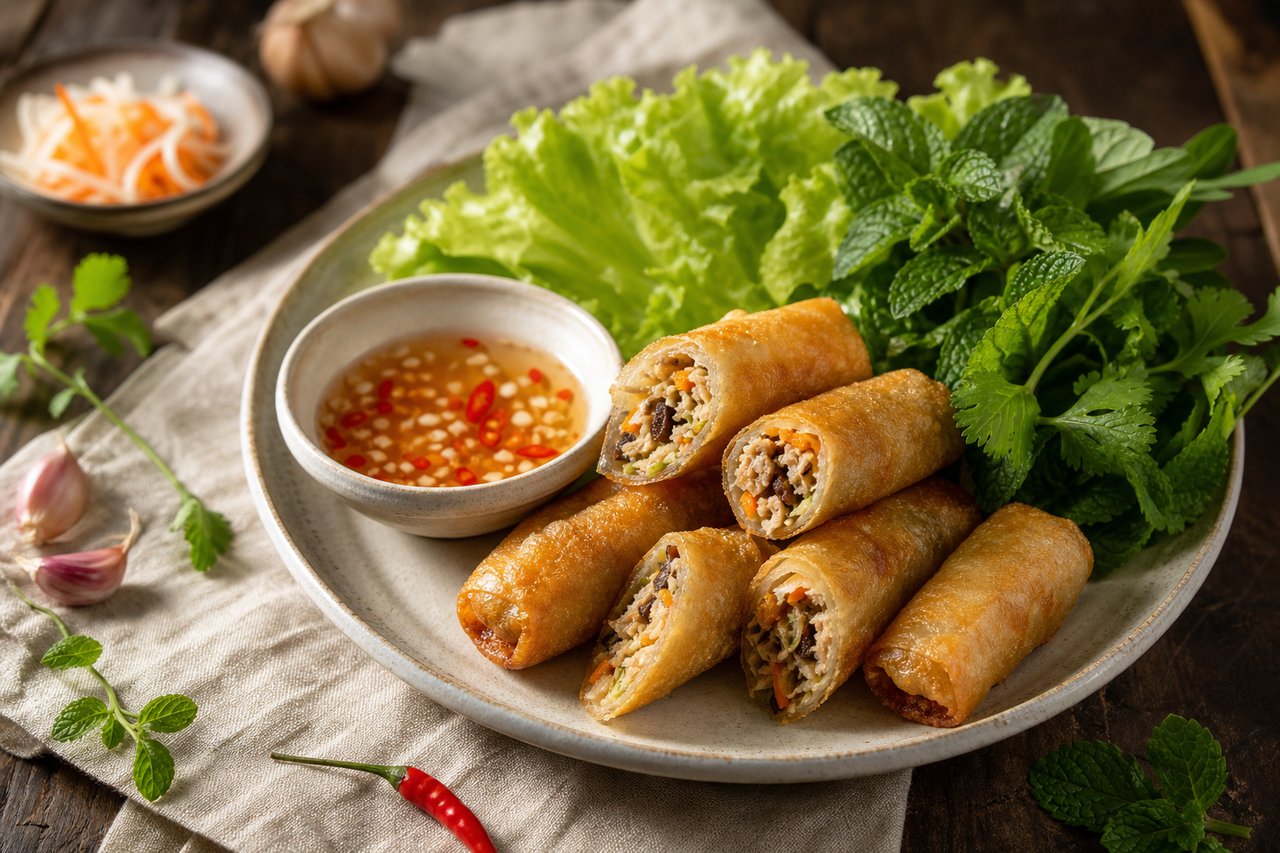
The same rice paper, fried rather than served fresh, gives the crisp spring rolls known as cha gio — wrapped around a savoury pork-and-vegetable filling and fried until shatteringly crisp, then themselves wrapped in lettuce and herbs to eat. Fresh and fried, raw and cooked: the two uses of one ingredient capture the contrast the cuisine is built on.
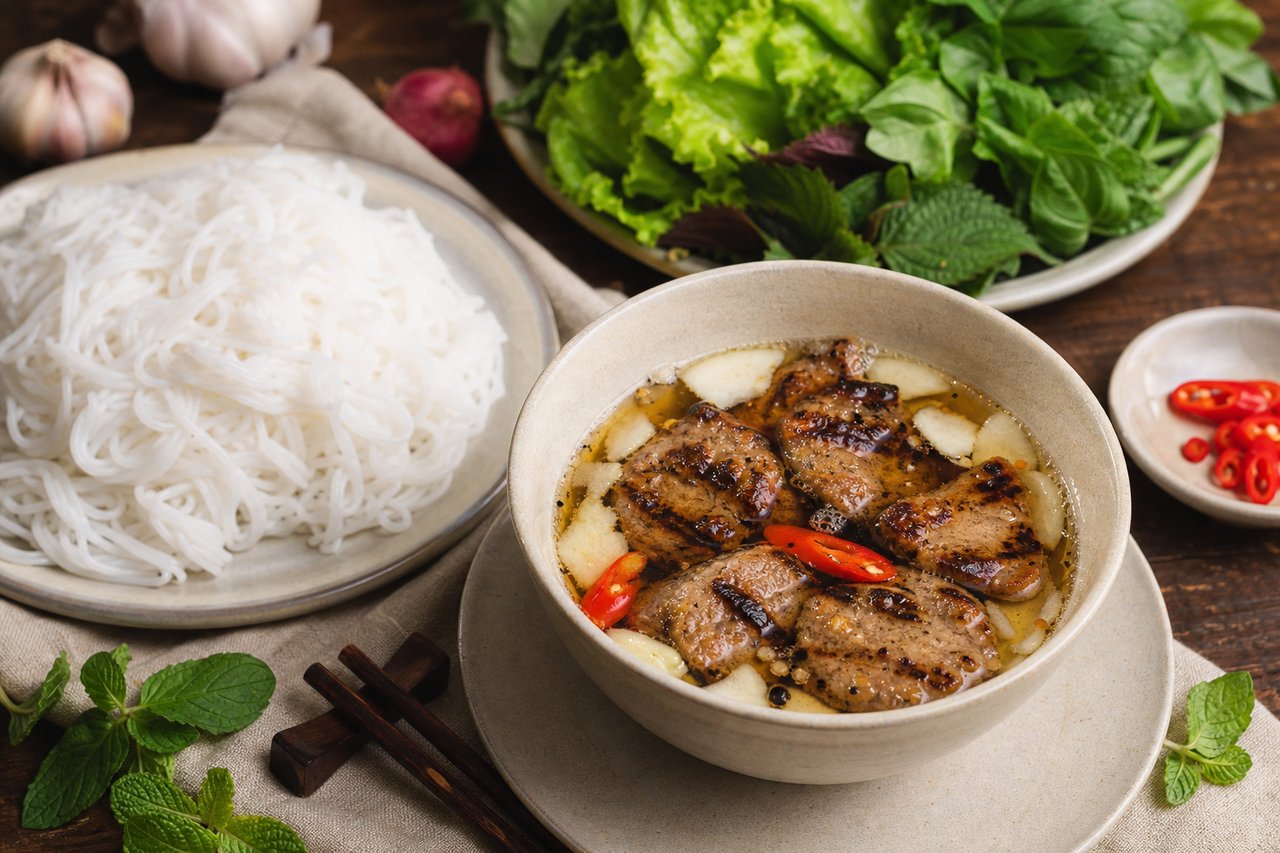
The second form is rice noodles, in every gauge from the hair-thin vermicelli of a bun bowl to the wide flat noodles of pho. Dried rice noodles need only a soak and a brief plunge in boiling water, and they form the base of the cold, herb-strewn noodle bowls that are a cornerstone of everyday eating — a heap of vermicelli topped with grilled meat, herbs, pickles and crushed peanuts, then dressed with nuoc cham poured over or served alongside. The classic of the form is bun cha, where smoky grilled pork patties and slices sit in a bowl of warm, diluted nuoc cham, to be dipped into along with the noodles and herbs.
The trick with rice noodles is to undercook them slightly, because they continue to soften once drained and dressed; a noodle that is just tender holds up in a warm broth or a sauced bowl far better than one boiled to collapse. Rinsing them under cool water after cooking stops them sticking and washes off surface starch, leaving separate strands that take a dressing cleanly. Soaking the dried noodles first, in warm water until pliable, shortens the boil and gives more control over that final texture.
Grilling, simmering and the everyday table
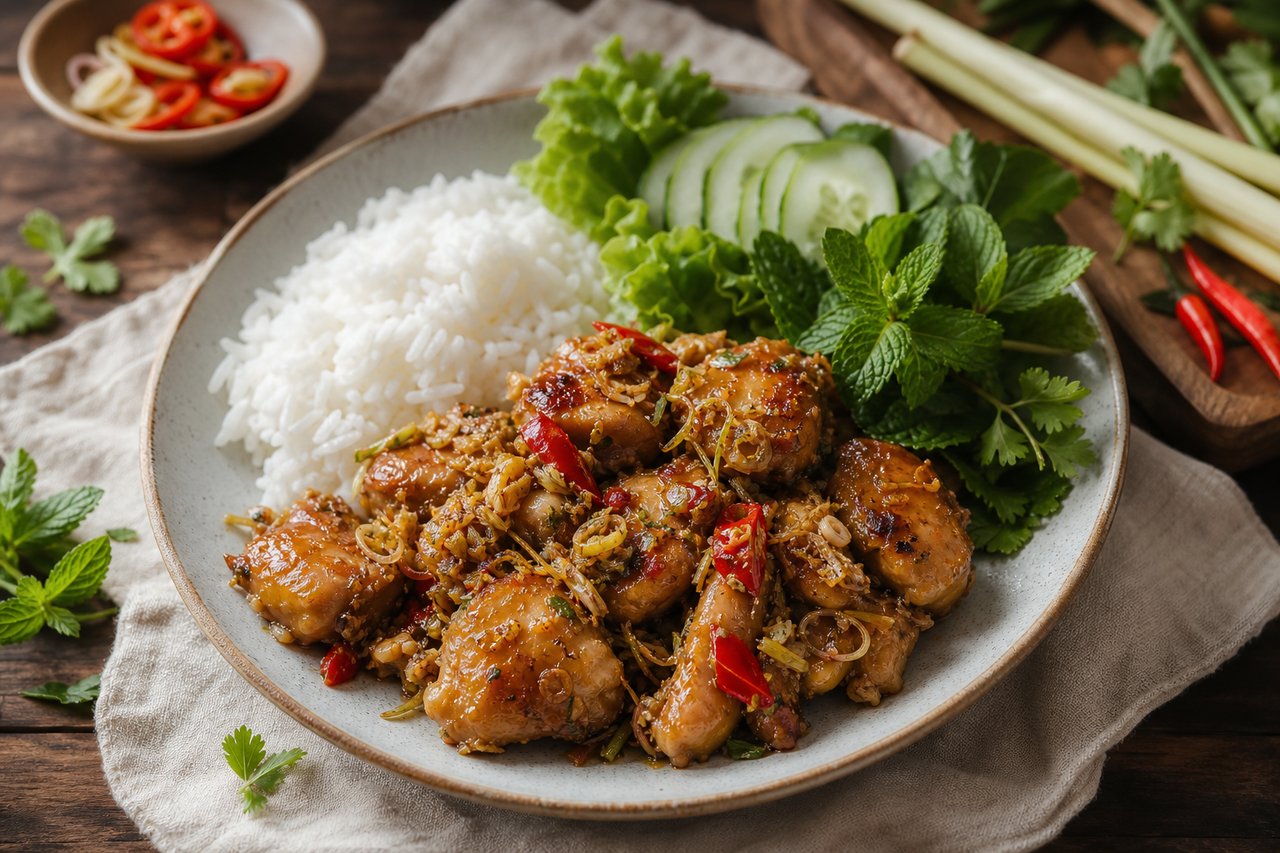
Beyond the famous dishes, the heart of Vietnamese home cooking is quiet and quick. Lemongrass, shallots, garlic and fish sauce form a marinade base that turns up again and again, perfuming grilled pork, chicken and seafood with a citrus-floral lift — lemongrass chicken is the everyday model of it, fast to cook and endlessly adaptable. Grilling over a fierce heat is one of two everyday methods; the other is the gentle simmer.
Caramel — sugar cooked dark and loosened with fish sauce and water — gives the country’s clay-pot braises their savoury-sweet glaze and deep colour. Making it is a small but pivotal skill: melt the sugar and let it cook past golden to a deep amber, just short of burning, where it gains a faint bitterness that balances its sweetness, then carefully add liquid to stop the cooking. Pushed too far it turns acrid; stopped too soon it is merely sweet. That dark caramel is what gives a braise its mahogany colour and its rounded, almost roasted depth.
These slow-simmered dishes, of fish or pork braised until tender in a sticky, salty-sweet sauce, are the comforting counterweight to all the fresh and grilled food, and they are eaten in small amounts over plenty of plain rice. A clay pot, if you have one, holds and spreads the gentle heat these braises want, but a heavy lidded pan does the job. Simmered vegetables, light soups served alongside rice, and quick stir-fries round out a meal that is rarely a single plate but a spread of small, complementary dishes shared from the centre of the table.
Regional differences: north and south
The cuisine is not uniform across the country. Northern cooking, centred on Hanoi, is the most restrained — subtler in seasoning, fonder of black pepper than chilli, and sparing with sugar; the famous clean pho broth is a northern sensibility. Southern cooking, around the Mekong delta and its abundant produce, is sweeter and bolder, with a freer hand on sugar, coconut, chilli and the heaped herb plate. Central Vietnamese food, between the two, is often the spiciest and most intricate, with many small, carefully composed dishes.
These are tendencies rather than strict rules, and they overlap, but they explain why the same dish can taste noticeably different from one cook to another. Knowing roughly where a recipe sits on that map helps a home cook understand its balance — whether to lean sweet or savoury, mild or fiery — rather than treating every Vietnamese dish as a single flat style.
A pantry to start from
A short list of staples opens up most of the home repertoire. Fish sauce is the cornerstone, followed by limes and sugar for the dipping sauces, and garlic and fresh chilli for sharpness. Add dried rice noodles in a couple of gauges, a pack of rice paper, and the aromatics that recur in marinades — lemongrass, shallots and sometimes ginger — and the majority of everyday dishes are within reach. A jar of pickled carrot and daikon, made ahead from a simple sweet-sour brine, is the kind of thing that turns a plain bowl or a sandwich into a proper meal in minutes.
Fresh produce does the rest, and it is bought close to when it is eaten rather than stockpiled. A weekly habit of picking up whatever herbs and salad leaves look best — mint, coriander, Thai basil, lettuce, bean sprouts, cucumber — means there is always something raw to finish a dish. Because so much of the cooking is quick assembly rather than long preparation, a well-judged pantry plus a handful of fresh things is genuinely enough to eat this way most nights. The pantry guide lays out the keeping ingredients in more detail.
The thread that ties it together
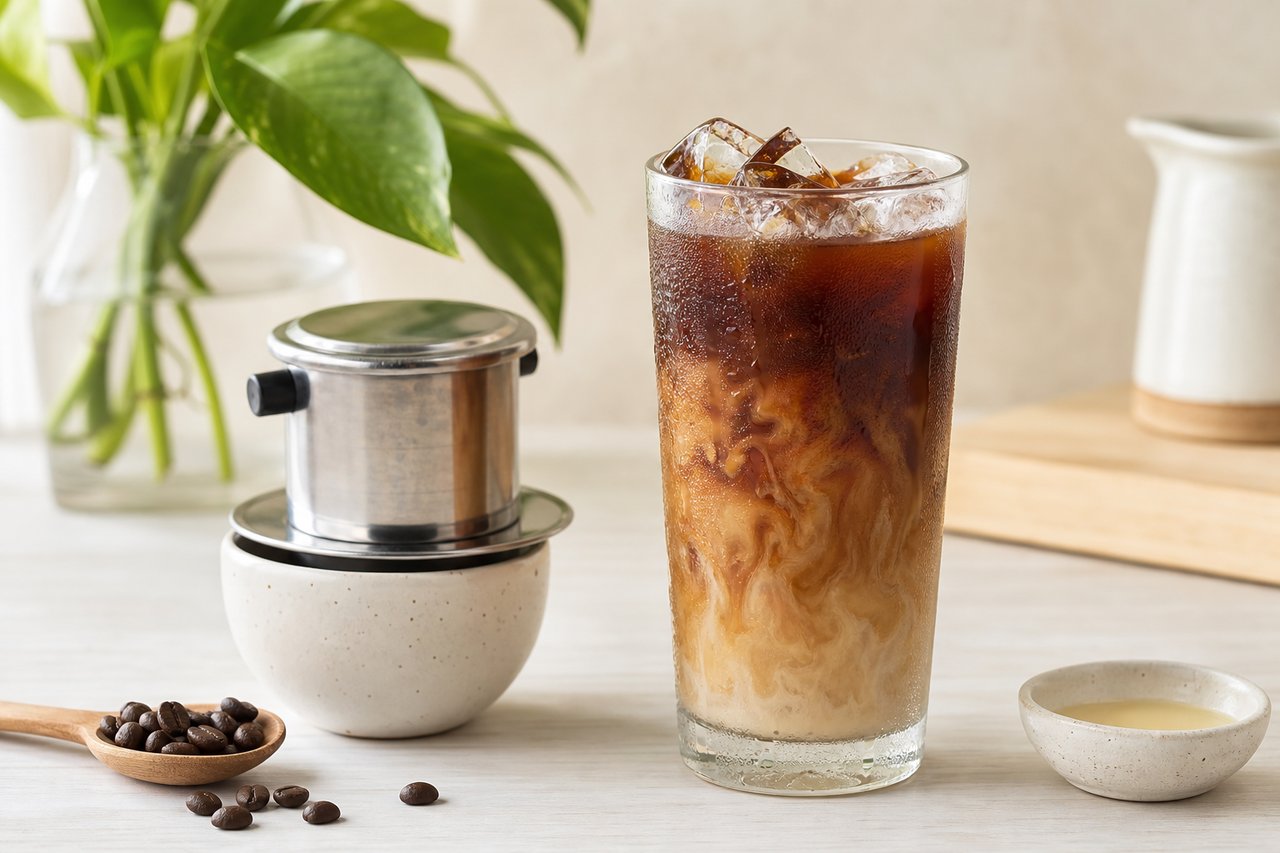
What ties all of it together is restraint. Vietnamese cooking trusts good ingredients, a sharp balance of seasoning, and the freshness of raw herbs added at the end. A meal is assembled from contrasts — a rich grilled meat against cool herbs, a long-cooked broth against raw beef and lime, a fried roll against a fresh one — and the cook’s job is to keep those contrasts in tension rather than blurring them together. Even the drinks follow the pattern: the bittersweet jolt of a Vietnamese iced coffee, strong over sweet condensed milk and ice, is the same play of opposites in a glass.
Master nuoc cham, keep a bottle of decent fish sauce and a stack of rice paper and noodles on hand, learn to put out a plate of fresh herbs, and a whole repertoire of bright, satisfying food is within reach — food that tastes light without ever tasting thin.