Cuisine guide
Bubble Tea & Asian Drinks at Home: A Maker's Guide
How to make bubble tea at home that actually tastes like the shop — chewy tapioca pearls, properly brewed tea bases, brown sugar syrup, taro and fruit teas
By Maya Chen
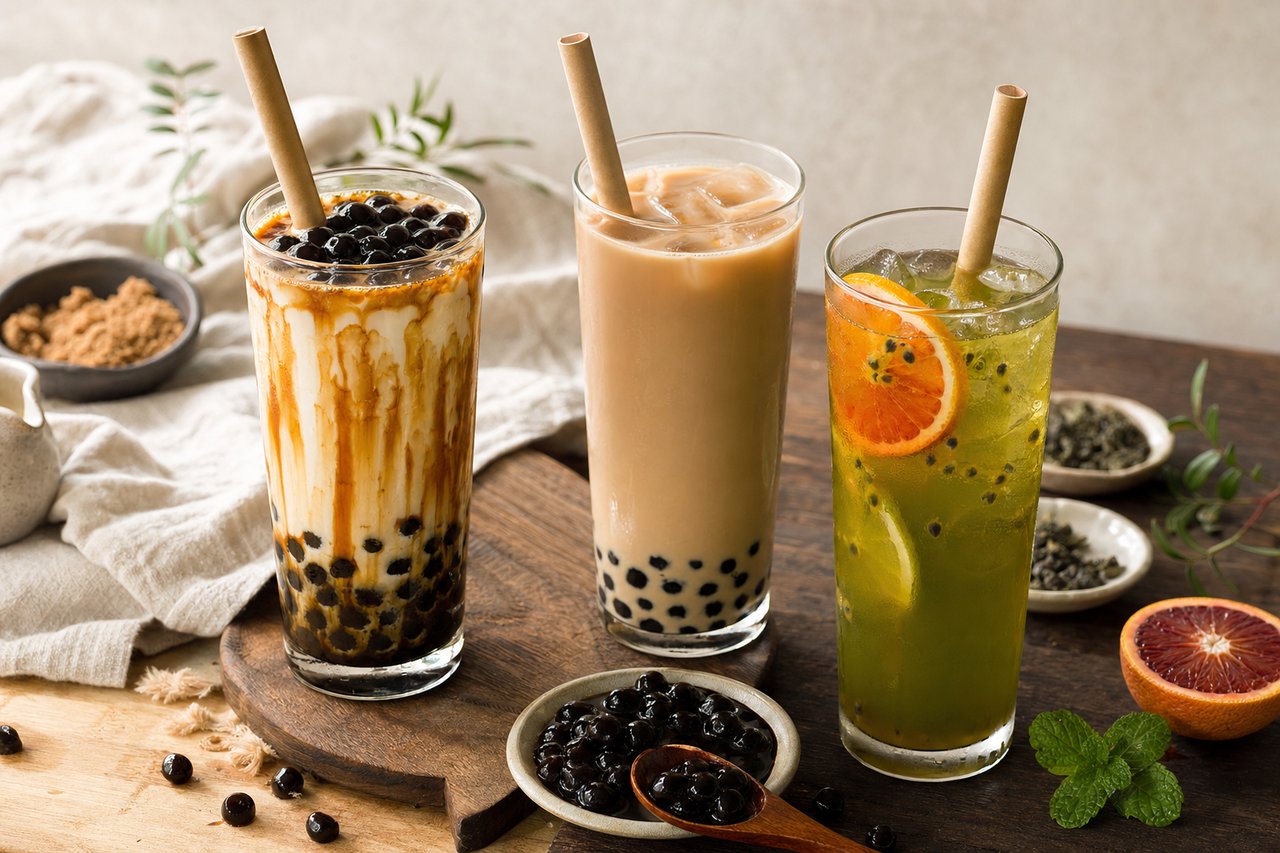
Bubble tea looks like a single drink but is really an assembly job: a tea base, a sweetener, a dairy or fruit element, ice, and a chewy topping, balanced against each other. Done carelessly it tastes like sweetened milk with rubbery lumps. Done with a little attention it has the layered tea flavour, the clean sweetness and the springy pearls that make the shop version worth queuing for. None of the components is difficult on its own, and almost all of the quality lives in three places: the pearls, the strength of the tea, and the ratio of sweet to ice to liquid.
This guide takes each component in turn — how to cook tapioca so it stays chewy, how to brew a tea base strong enough to survive milk and ice, how brown sugar syrup builds the dark milk tea, how the milk or creamer choice changes the body, where taro and fruit teas fit, and finally how to calibrate sweetness and ice so the whole thing holds together. A short equipment note and a troubleshooting section round it out, because most failed drinks fail for one or two predictable reasons.
Tapioca pearls, the part everyone gets wrong
The pearls — boba — are small balls of tapioca starch, and their whole appeal is texture: a firm, bouncy chew with a soft centre, never gummy and never hard. Cooking them well is mostly about heat and timing. Drop dried pearls into a large volume of vigorously boiling water, stir immediately so they do not stick to the base, and keep the water at a full boil. Crowding the pot or using too little water drops the temperature and gives you a starchy, claggy result.
Most commercial pearls cook in around 20 to 30 minutes of boiling, but the package time is a guide, not gospel — taste one. It should be tender all the way through with a pleasant resistance and no chalky raw core in the middle. Undercooked pearls have a hard, floury centre; overcooked ones collapse into mush. When they are right, pull the pot off the heat, cover it, and let the pearls rest in the hot water for a further 15 to 20 minutes so the centres finish softening evenly.
The step that separates good boba from bad is what happens next. Drain the pearls and immediately tip them into a warm sugar syrup — a simple mix of sugar and a little water, or brown sugar for the popular dark style. The syrup soak does two jobs: it sweetens the pearls from the outside in, so they carry flavour rather than tasting of bland starch, and the sugar coating slows the staling that would otherwise turn them hard. Leave them to bathe for at least 20 minutes; they keep best sitting in that syrup at room temperature.
Which brings up the hard truth about boba: it does not keep. Cooked tapioca begins to firm up within a couple of hours and refrigeration accelerates it dramatically, turning a soft pearl into a tooth-cracking pellet by the next morning. There is no good way to revive fridge-cold pearls. The only real answer is to cook small batches, hold them warm in syrup, and drink them the same afternoon. If a recipe promises pearls that store for days, it is promising something tapioca cannot do. The full cooking-and-syrup sequence, with timings, is set out in the cooking tapioca pearls guide.
Quick-cook and instant pearls
Not all tapioca is the same. The large dried pearls behind most homemade boba need the long boil-and-rest treatment described above. There are also “quick-cook” pearls engineered to be ready in five minutes or so, and frozen pre-cooked pearls that only need a short reheat. They trade some of the fresh-cooked spring for convenience, but for a single drink on a weeknight they are a reasonable shortcut. Whatever the type, the syrup soak afterwards is non-negotiable — it is what gives the pearls flavour and slows their staling, regardless of how they were cooked.
Building the tea base
Tea is the flavour spine of the whole drink, and the most common home mistake is brewing it too weak. A cup of tea you would happily sip on its own will vanish entirely once milk, syrup and a glass of ice get involved. The base has to be concentrated enough to fight through all of that.
For a classic milk tea, black tea is the default — an assam or a robust ceylon gives the brisk, malty backbone that stands up to dairy. Oolong brings a more floral, roasted character and makes an elegant milk tea or a fragrant fruit tea. Green tea is lighter and grassier, best kept for fruit teas and lattes where its delicacy is an asset rather than something to be buried. Brew black and oolong with water just off the boil; for green tea, drop the water to around 80°C and shorten the steep, because boiling water scorches green leaves and turns them bitter in the wrong way.
To get the strength a milk tea needs, use roughly twice the leaf you would for a normal cup, or steep a standard amount for a longer time, and brew until the liquid tastes a touch too strong and even slightly bitter on its own. That over-extraction is deliberate: the milk rounds off the edge and the sweetener fills it in, and what is left tasting weak in the cup will taste like nothing in the glass. Strain the tea well, since stray leaf dust makes the finished drink cloudy and astringent.
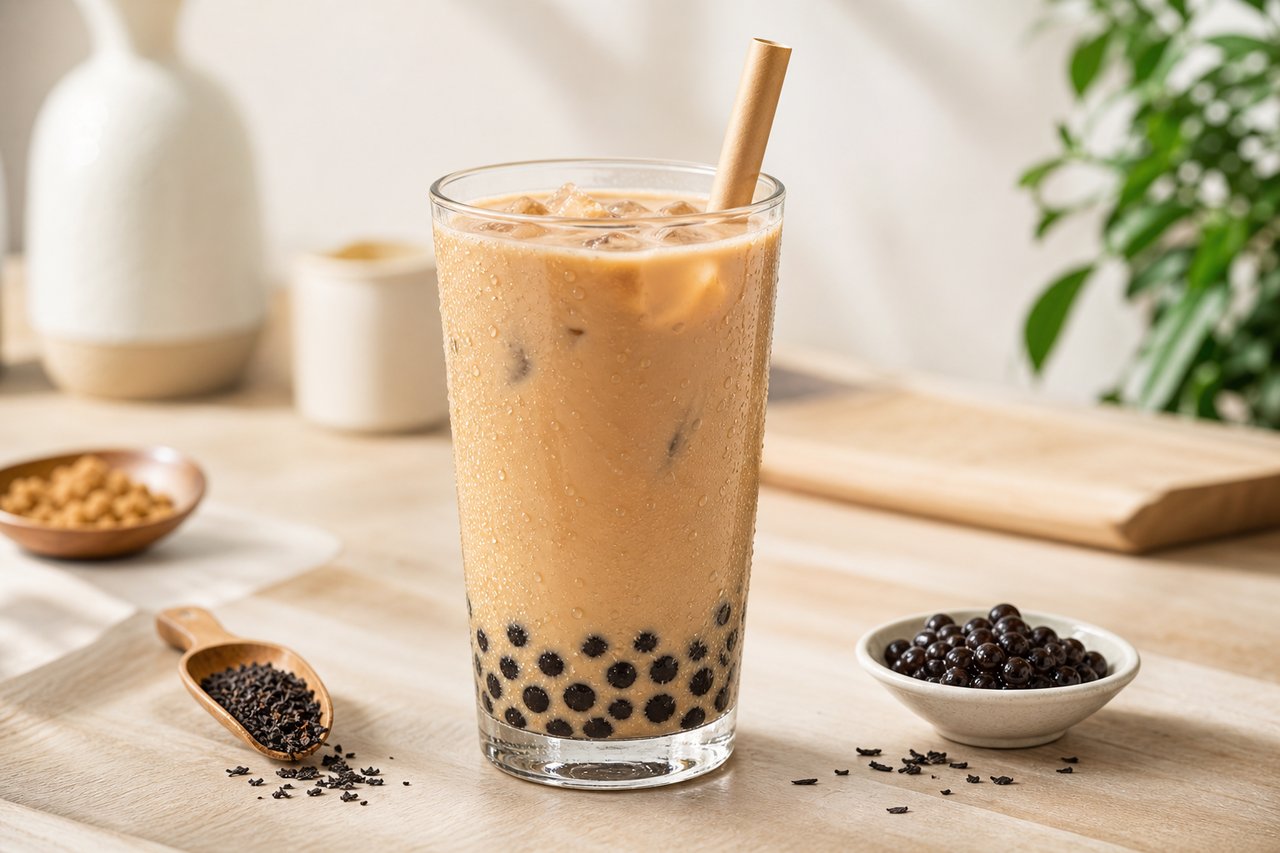
This brings together into the classic milk tea, the drink every other variation builds from: a strong black-tea base, sweetener dissolved while warm, milk to soften it, ice, and chewy pearls at the bottom.
A note on matcha and powdered bases
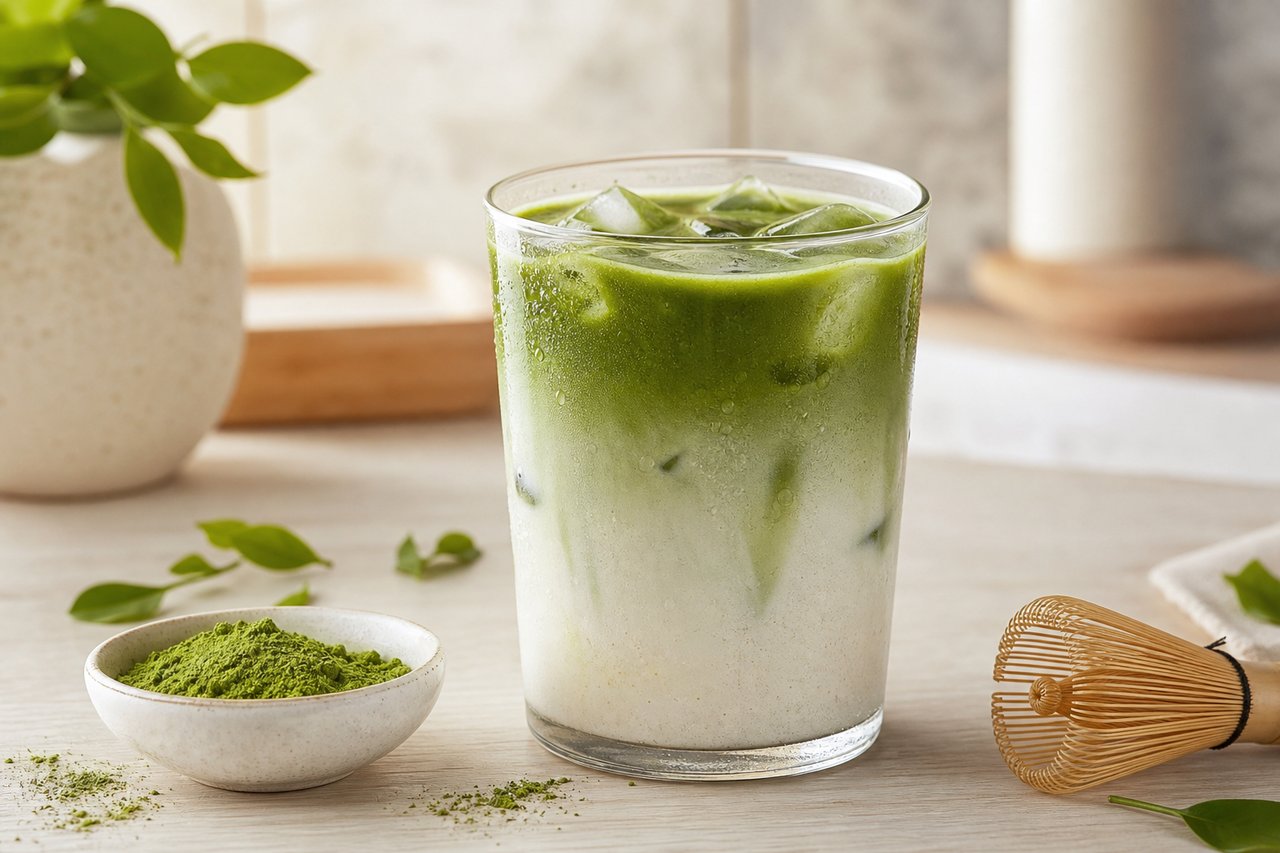
Not every drink starts with steeped leaves. Matcha is stone-ground green tea powder whisked directly into water or milk rather than brewed and strained, which is why it keeps its vivid green colour and full, grassy body. Sift it first to break up clumps, whisk it with a small amount of warm (not boiling) water into a smooth paste, then build the rest of the drink on top; a handheld frother does the job if a bamboo whisk is not to hand. A matcha latte over ice with pearls is one of the simplest non-brewed drinks to get right. The same whisking logic applies to other powdered bases, where the goal is always a lump-free paste before any milk or ice arrives.
Brown sugar syrup and the dark milk tea
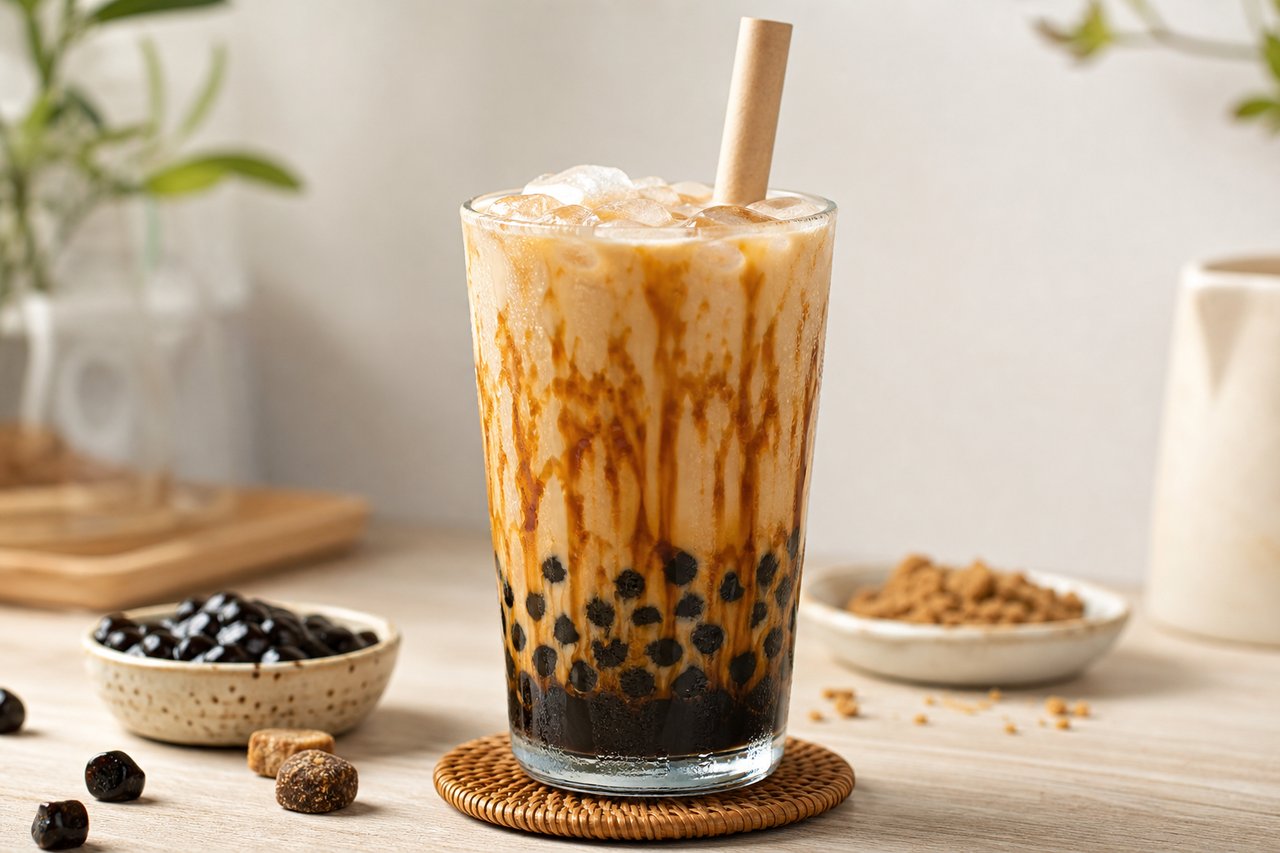
The brown sugar drink that defines so many menus is built on a thick, caramelised syrup. Cook dark brown sugar with a little water over low heat until it dissolves and reduces to a glossy, pourable caramel — stop while it still flows, because it thickens further as it cools. Used two ways, it does most of the work: the cooked tapioca soaks in it, and the syrup is streaked down the inside of the glass so it bleeds those dramatic tiger stripes into the milk. A proper Brown Sugar Bubble Tea leans on the syrup so heavily that it often skips brewed tea altogether, relying on warm pearls, caramel and milk for its whole flavour.
Other syrups and sweeteners
Brown sugar is the dramatic one, but it is not the only option. A plain simple syrup — equal parts sugar and water, warmed until clear — is the neutral workhorse for milk teas, dissolving instantly into a cold drink where granulated sugar would just sink and sit. Honey and agave bring their own character and suit lighter fruit teas, while fruit syrups add sweetness and flavour at once. The reason syrups are preferred over dry sugar is purely practical: sugar will not dissolve in a cold liquid, so any sweetener added after the drink is iced must already be in liquid form, or stirred into the still-warm base before the ice goes in.
Milk choices and how they change the drink
The dairy element decides the body of the drink, and it is a genuine choice rather than an afterthought. Whole milk gives a clean, fresh result and lets the tea read clearly through it, which makes it the natural partner for a tea-forward milk tea where the leaf should still be tasted. Many shops instead use a non-dairy creamer powder, which is what produces that distinctly thick, slightly artificial mouthfeel people associate with the classic shop drink; it is sweeter and heavier than fresh milk and dissolves cleanly, but it also flattens the tea behind a uniform creaminess.
Evaporated and condensed milk push the drink richer and more caramelised. Evaporated milk adds body without much added sugar, while condensed milk is intensely sweet and is best treated as the sweetener and the dairy at once. Both suit the bolder brown-sugar and Thai styles, where richness is the point. Plant milks behave differently from one another: oat is creamy and faintly sweet and stands in well for whole milk, soy is neutral and steady, and coconut brings its own flavour that can either complement or fight the tea. The thing to watch with plant milks is acidity — they can split against a very strong or tannic brew, so introduce them to the cooled, not the scalding, base.
There is no single correct choice. Match the milk to the style: rich and sweet for brown sugar and Thai, clean and light for a tea-forward oolong or a delicate green base, and whatever plant milk holds together against the particular tea for a dairy-free drink.
Taro and fruit teas
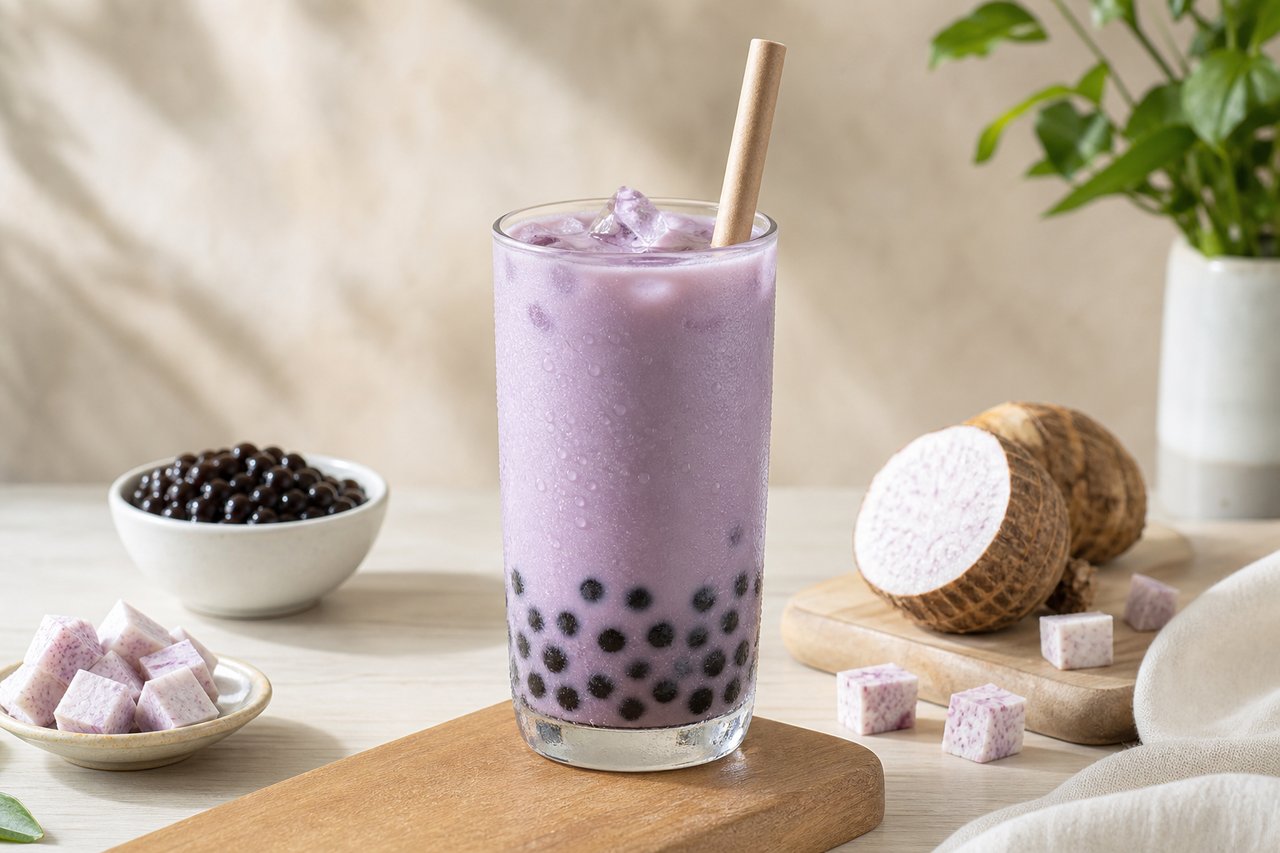
Beyond milk tea sit two other families. Taro is a starchy purple root with a gentle, nutty-vanilla flavour and a naturally creamy texture; most taro bubble teas are built from cooked, mashed taro or a taro powder blended into milk, giving the drink its signature lilac colour and soft, almost dessert-like body. It is a milk drink rather than a tea-led one, which is why it pairs so happily with pearls.
A taro drink is gentle, sweet and creamy, and the taro bubble tea is the template: cooked or powdered taro blended smooth with milk and a little sweetener, poured over ice and pearls. Because it is mild rather than assertive, taro is forgiving to make at home, and its soft lilac colour is half its appeal.
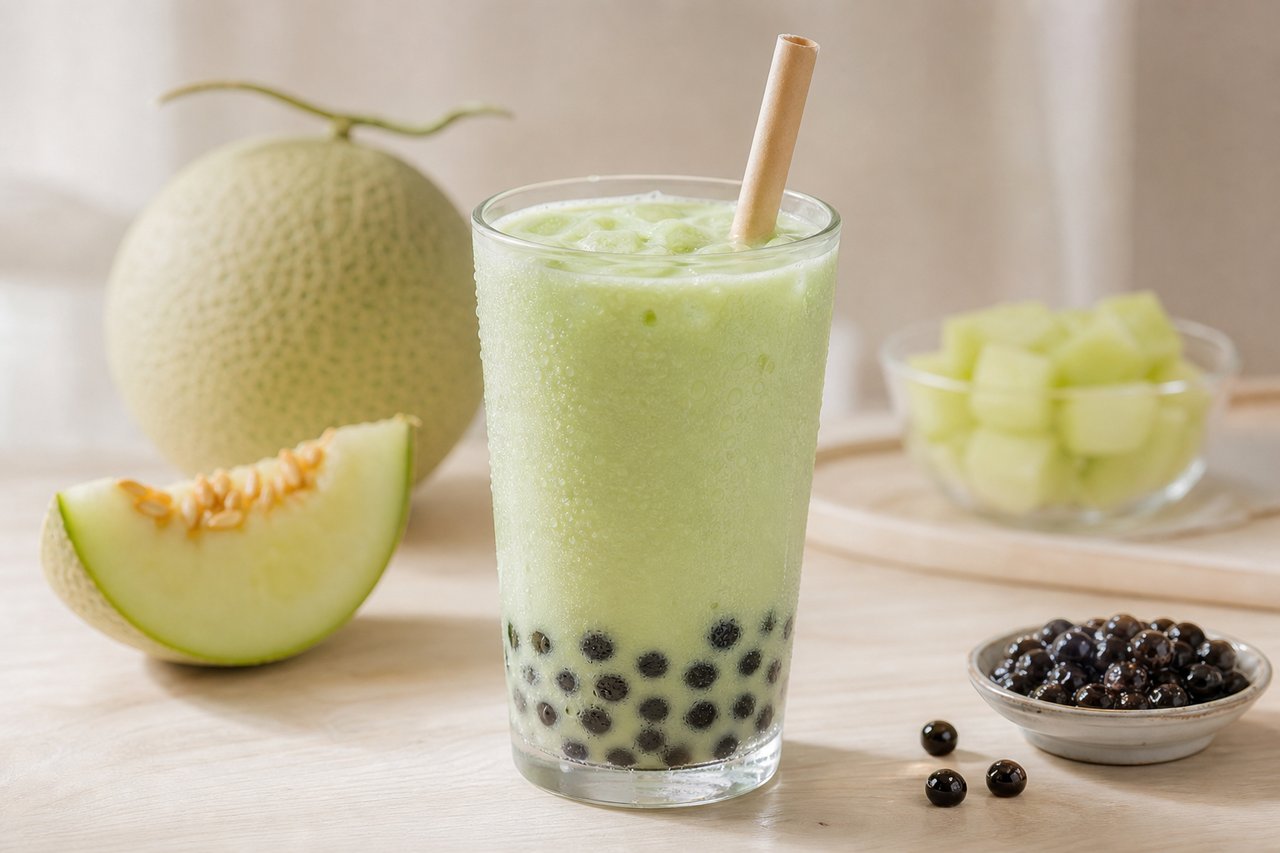
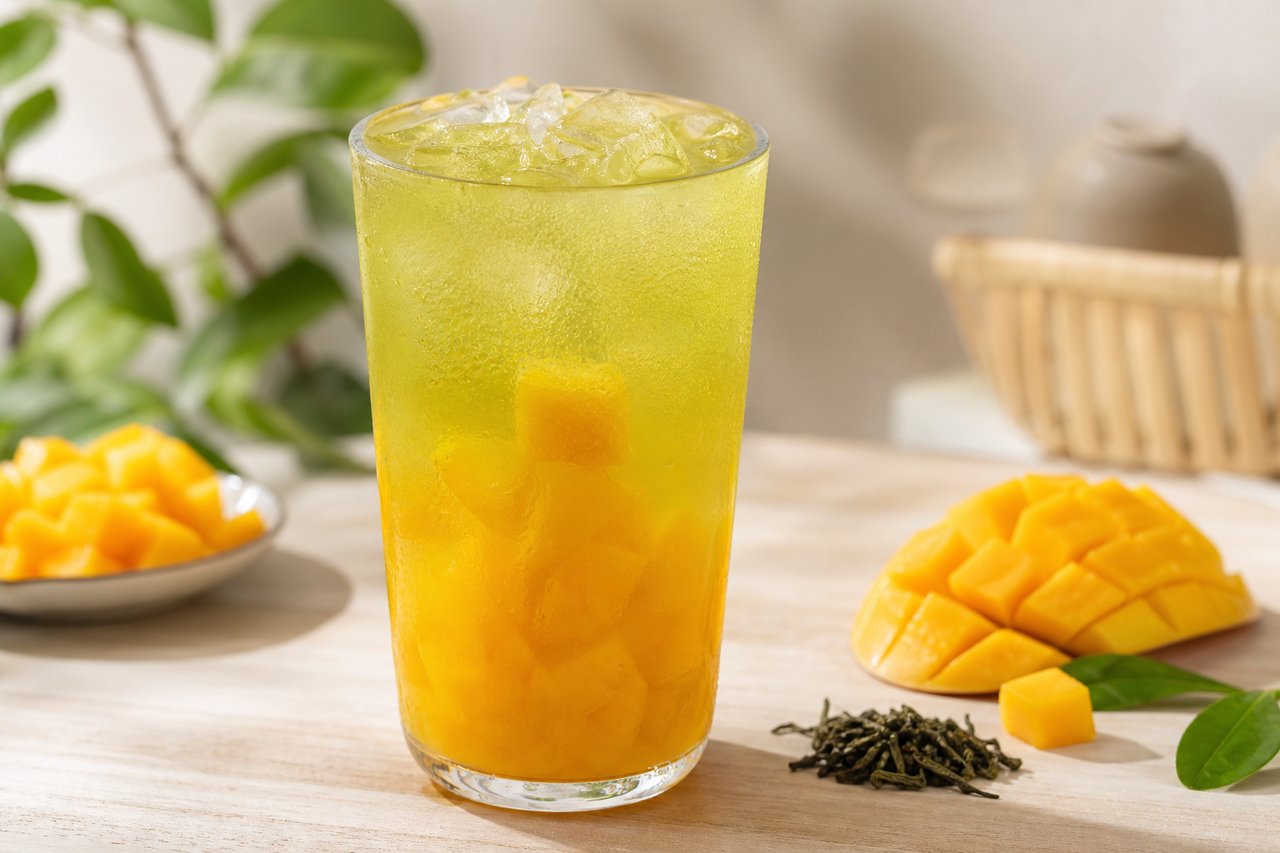
Fruit teas go the other way: bright, dairy-free, and refreshing. A green or oolong base is combined with fresh fruit, fruit puree or a good fruit syrup, then shaken hard with ice. The tea keeps the drink from tasting like plain juice and adds a tannic backbone, while the fruit supplies the perfume. Mango, passionfruit, peach and lychee are reliable, and a squeeze of citrus lifts almost any of them. A mango green tea is a good first fruit tea: ripe mango or a quality puree shaken with a strong, cooled green base. The grassy melon-and-cream profile of a honeydew milk tea shows the rare exception where a mild, low-acid fruit can carry milk without curdling — but as a rule, keep milk out of fruit teas, because dairy curdles against acidic fruit and dulls the very freshness that makes them good.
Thai iced tea, a category of its own
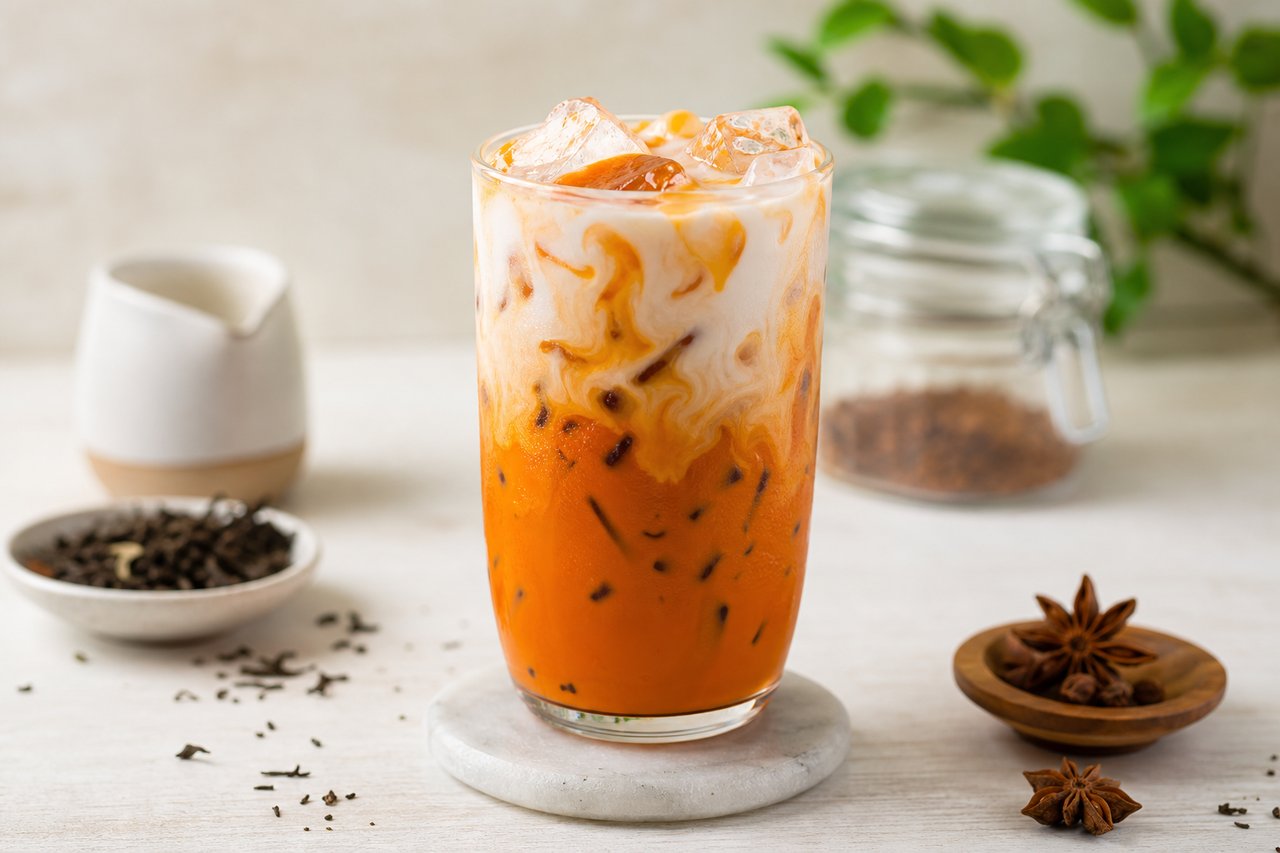
Some drinks sit outside the milk-tea and fruit-tea split entirely. Thai iced tea is built on a heavily spiced, strongly brewed black tea, sweetened generously and finished with condensed or evaporated milk poured over ice, giving its distinctive deep orange colour and rich, almost dessert-like sweetness. It is less about restraint than about contrast — intense spiced tea against creamy condensed milk. A Thai iced tea made at home depends on brewing the spiced tea base far stronger and sweeter than instinct suggests, because the milk and ice flatten it fast.
Sweetness, ice and the final balance
The last and most underrated skill is calibrating sweetness and ice, because the two are linked. Shops let you choose a sweetness level for a reason: the right amount depends on the tea, the milk and how much the ice will dilute things as it melts. Start lower than feels obvious — a base that tastes pleasantly sweet warm will taste under-sweet over ice, but a base that tastes sweet over ice is usually cloying once warmed. Sweeten the warm tea base while it can still dissolve sugar, taste, and adjust before the ice goes in.
Ice is not just for temperature; it is part of the recipe. More ice means more dilution as it melts, so a drink built on a lot of ice needs a stronger, sweeter base to hold up, while a less-iced drink can run lighter. Build in a consistent order — pearls and their syrup at the bottom, ice, then the tea or milk poured over — so the layers stay distinct until the first stir. Get the pearls chewy, the tea strong, and the sweet-to-ice ratio honest, and a home drink stands shoulder to shoulder with the shop.
The equipment, kept simple
Bubble tea needs almost nothing beyond a normal kitchen. A pot large enough to boil pearls in plenty of water is the one real requirement, along with a way to brew strong tea — a teapot, a saucepan, or even a sturdy jug. A sealable jar or a cocktail shaker lets a drink be shaken cold so the tea, sweetener and milk emulsify properly rather than just being stirred. Wide straws are needed only because the pearls have to fit through them.
A few extras earn their place once the habit takes hold. A handheld milk frother makes light work of matcha and powdered bases, breaking up clumps that a spoon leaves behind. A digital scale turns a vague recipe into a repeatable one, which matters most for the tea-to-water and sugar ratios. A fine strainer keeps leaf dust out of the finished drink. None of these is essential for a good first attempt, and a perfectly respectable bubble tea can be assembled with a pot, a jar and a straw.
Troubleshooting the common failures
Most disappointing home bubble tea fails for one of a handful of reasons, and each has a clear fix.
- Pearls hard in the centre. Undercooked, or boiled in too little water or below a true rolling boil, so the heat never reached the middle. Use a large volume of vigorously boiling water, cook longer, and rest the pearls covered off the heat so the centres finish softening.
- Pearls mushy or falling apart. Overcooked, or stirred too aggressively. Taste a pearl before draining rather than trusting the package clock, and stir gently only at the start to stop sticking.
- Pearls turned hard and unpleasant. Almost always because they were refrigerated. Cooked tapioca stales fast and far faster cold; make small batches, hold them warm in syrup, and drink them the same afternoon.
- Flavourless, watery drink. The tea was brewed too weak for milk and ice to survive. Brew the base strong enough to taste slightly bitter on its own.
- Cloudy, astringent drink. Stray leaf dust, or over-steeped tea — especially green tea brewed too hot. Strain well and drop the water temperature for green tea.
- Too sweet once warm, or flat once cold. A sweetness misjudgement. Sweeten the warm base a touch lighter than feels right, since ice both dilutes and mutes sweetness, and taste before the ice goes in.
Diagnose against this short list and almost any home drink can be put right. Get the pearls chewy, the tea strong and the balance honest, and the rest is just assembly.