Massaman Curry
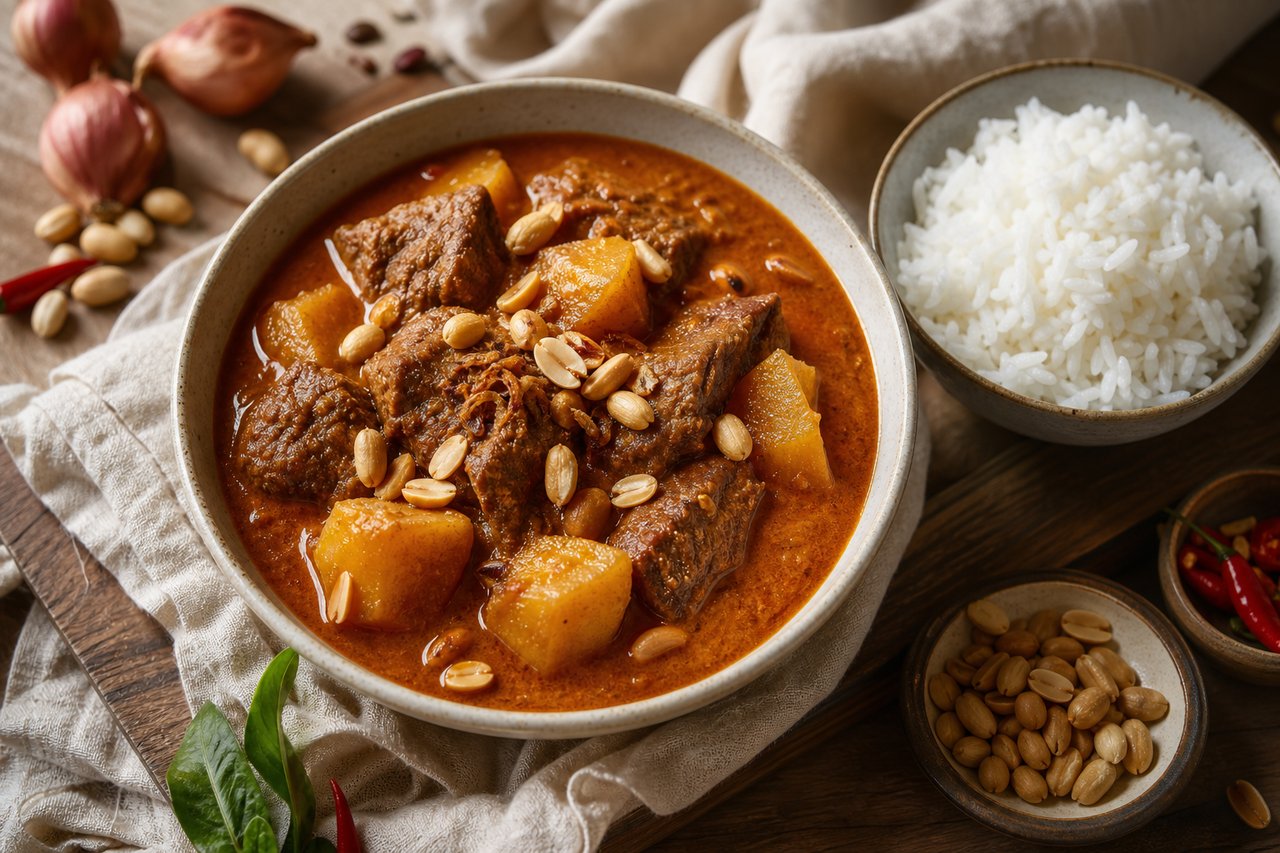
A mild, warmly spiced beef curry with potatoes and peanuts — slow-simmered in coconut milk with cardamom, cinnamon and tamarind for a rich, rounded depth.
- Prep
- 25 min
- Cook
- 2 h
- Serves
- 4 bowls
- Level
- Medium
By Maya Chen
Method
- 01
Spoon the thick cream from the top of the unshaken coconut milk into a heavy pot and heat over medium until it bubbles and the oil glistens.
- 02
Add the massaman paste and fry, stirring, for 3–4 minutes until it splits, darkens and smells fragrant.
- 03
Add the beef and turn to coat in the paste, searing the surface.
- 04
Pour in the remaining coconut milk and enough extra coconut milk or water to cover, then add the cardamom, cinnamon stick and bay leaves.
- 05
Bring to a gentle simmer, cover partially, and cook very slowly for about 1.5 hours until the beef is starting to turn tender.
- 06
Add the potatoes, onion wedges and peanuts and continue to simmer, uncovered, for 30–40 minutes until the beef is meltingly tender and the potatoes are cooked.
- 07
Season with fish sauce, palm sugar and tamarind, then taste and adjust — massaman should be mild, rich and balanced between sweet, sour and savoury. Serve with jasmine rice.
Massaman is the gentle giant of Thai curries: mild, deeply savoury and fragrant with warm dried spices that set it apart from its green and red cousins. With its potatoes, peanuts and slow-cooked beef, it sits closer to a rich stew than a fiery curry, and it rewards a slow, unhurried simmer.
Warm spices and a long simmer
What makes massaman distinctive is the warm spice profile — cardamom, cinnamon, cloves and nutmeg — folded into the paste and reinforced with whole aromatics in the pot. These flavours need time and a tough, collagen-rich cut of beef to come into their own, so plan for a couple of hours of gentle simmering. As with every Thai curry, start by frying the paste in coconut cream until it splits; this blooms both the chillies and the dried spices before any liquid goes in.
Balance the richness at the end
Massaman leans rich and sweet, so the tamarind and fish sauce added near the finish are what keep it from cloying. Season, then taste: you are aiming for a sauce that is mild and rounded, sweet and savoury with a quiet sour note underneath. It tastes even better the next day, once the spices have had time to settle into the coconut sauce.