Cook with
Recipes with Coconut Milk
The body of Thai curries and the silk in coconut desserts.
Coconut milk is the creamy liquid pressed from the grated flesh of mature coconuts, and it is the backbone of countless dishes across Southeast Asia. Rich, faintly sweet and silky, it softens the heat of chillies, carries the aromatics of a curry paste and turns a simple pot of rice into something fragrant and indulgent. It is the ingredient that gives so many tropical curries and desserts their luxurious body.
What it is and how it tastes
Grated coconut is steeped in warm water and pressed; the first press gives the thickest, richest milk, later presses a thinner one. The flavour is gently sweet and nutty rather than overpowering, with a smooth, rounded mouthfeel from its natural fat. In a tin the fat often separates into a firm cream on top and a thinner liquid below, which is useful: the cream can be used to fry a paste, the thinner milk to loosen the finished dish. Quality varies, so a richer tin with a high coconut-extract content tastes far creamier.
How to use it
Coconut milk is endlessly adaptable. In a curry the thick cream is often simmered until it splits and releases its oil, in which the spice paste is fried until fragrant before the rest of the milk goes in to build the sauce. It enriches soups, simmers rice to fragrant tenderness and forms the base of many sweet dishes, from puddings to sweet sticky rice. Keep the heat gentle once it is in to avoid an unwanted split, and stir as it warms so it heats evenly. Because it is rich, it balances heat and acidity rather than dominating, rounding out a fiery curry or a sharp, sour soup into something mellow and satisfying.
Buying and storing
Choose full-fat tins listing coconut extract and water, ideally with a high coconut percentage; shake the tin and feel for the weight and thickness of a creamy one. Avoid versions padded with thickeners, gums and emulsifiers, which mute the flavour and dull the texture. Once opened, refrigerate leftovers for four or five days, or freeze in portions or ice-cube trays for use in cooked dishes later.
Where it shines and substitutes
Coconut milk is essential to a fragrant green curry, to the rich gravy of massaman curry, and to the sweet, sauced mango sticky rice. It also softens the punch of a hot-and-sour soup and enriches many sauces and desserts across the region. There is no perfect swap, though a thinned dairy cream or a nut-based milk can stand in where the coconut flavour is not central to the dish. For sweet uses, the thicker cream skimmed from the top of a tin is often exactly what is wanted. For more on the pantry it anchors, see the Asian pantry guide.
Coconut Milk recipes (3)
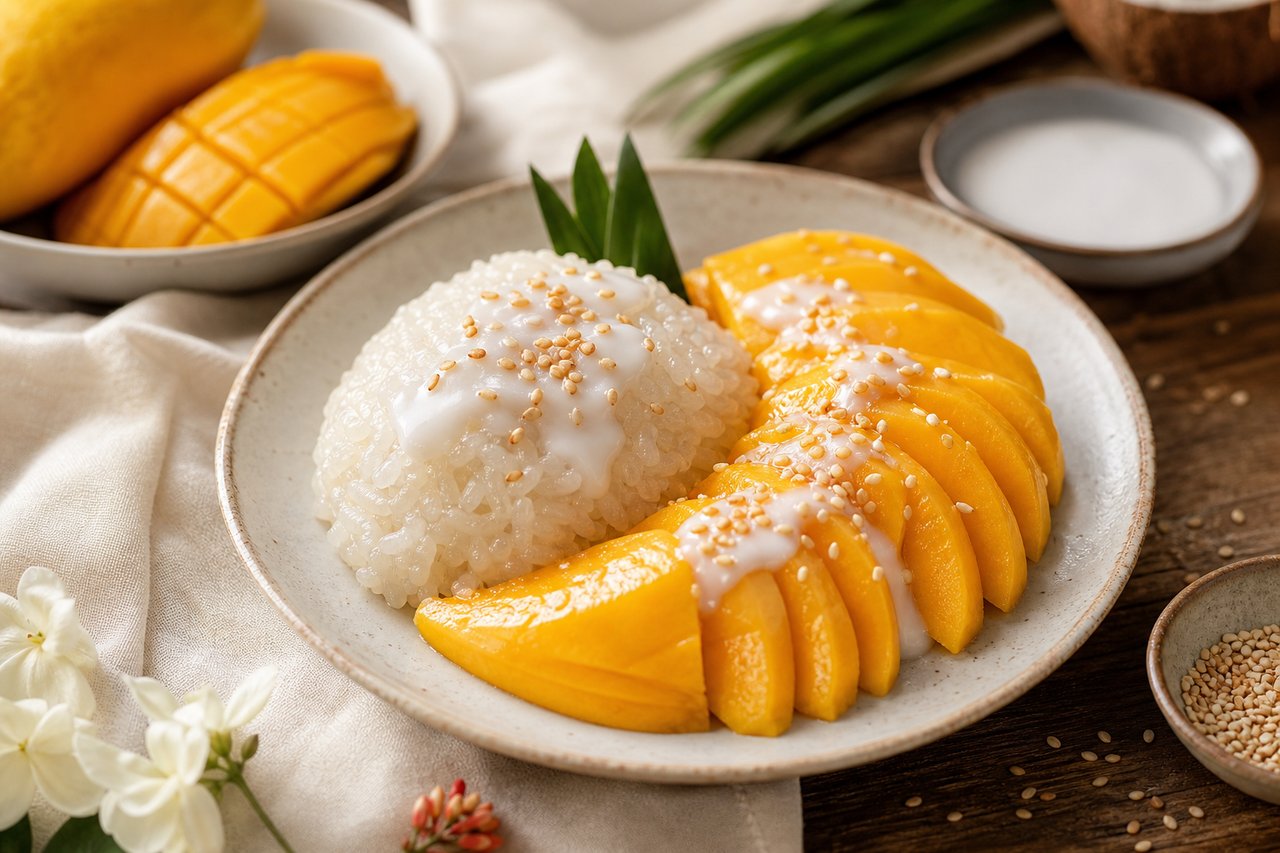
Thai
Mango Sticky Rice (Khao Niao Mamuang)
Thailand's best-loved dessert — warm glutinous rice steeped in sweet, salted coconut cream, served with ripe mango and a sprinkle of toasted mung beans.
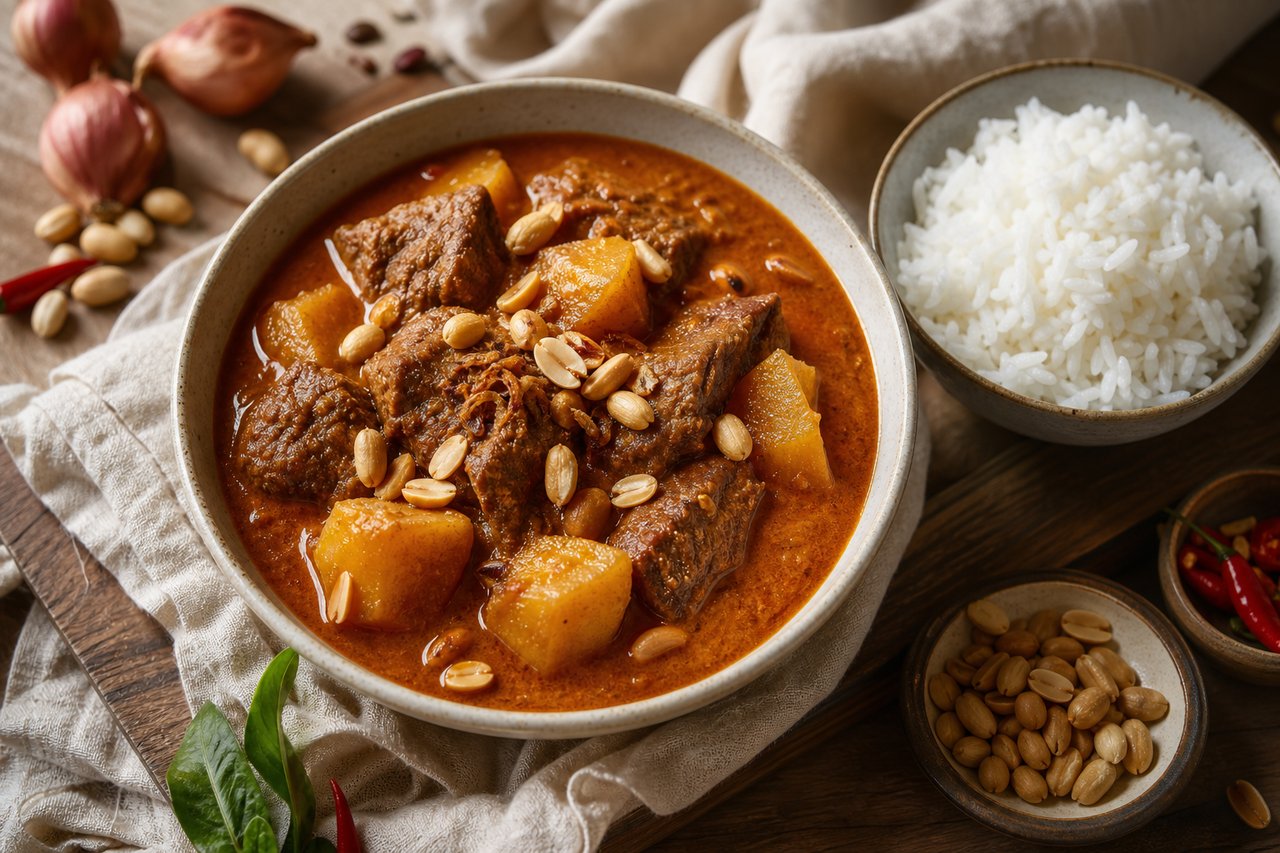
Thai
Massaman Curry
A mild, warmly spiced beef curry with potatoes and peanuts — slow-simmered in coconut milk with cardamom, cinnamon and tamarind for a rich, rounded depth.
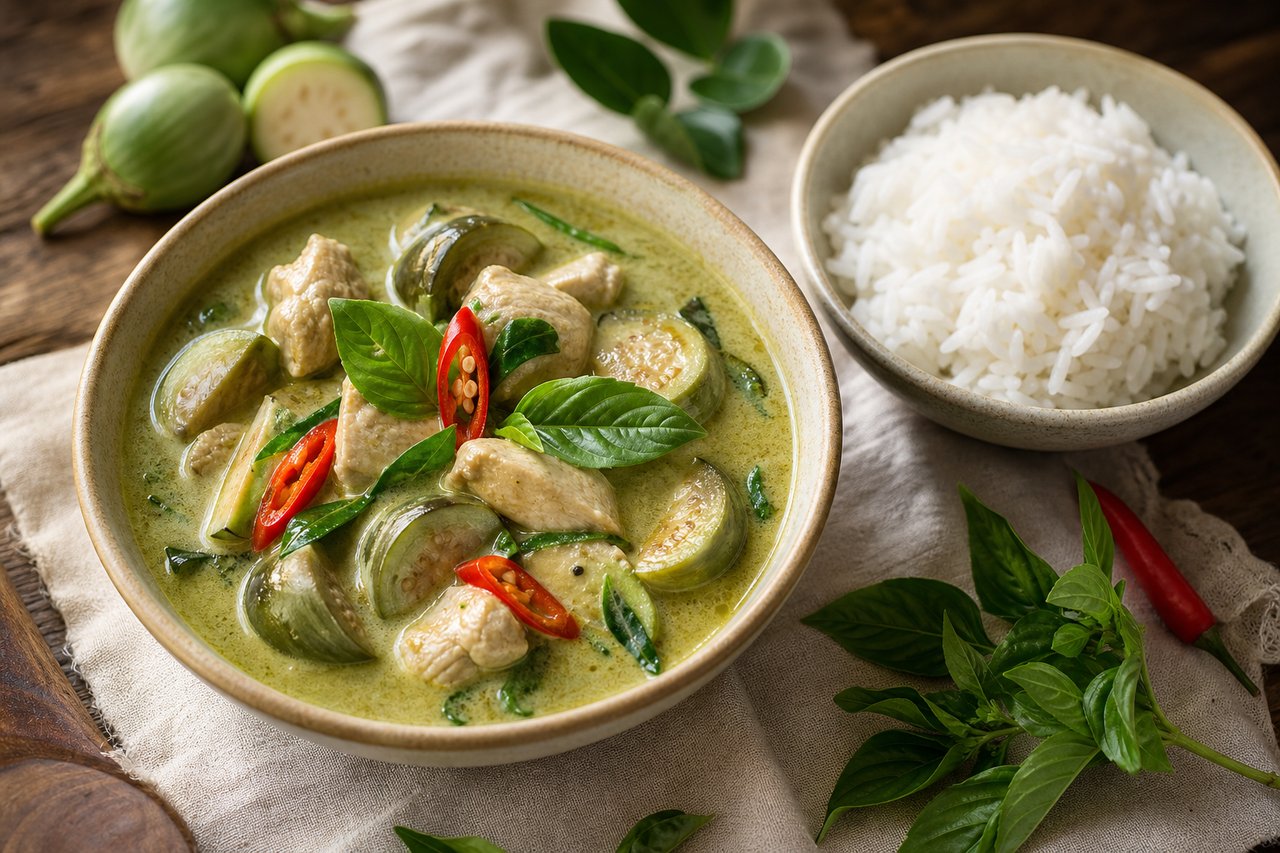
Thai
Thai Green Curry
A bright, fragrant coconut curry built on a fresh green chilli paste fried until it splits — with chicken, aubergine, basil and kaffir lime.
See also the Asian pantry guide for more on stocking these ingredients.