Cook with
Recipes with Basil
Anise-scented Thai and holy basil that perfumes curries and stir-fries.
Thai basil is one of the signature finishing herbs of Southeast Asian cooking — a hardy, purple-stemmed basil with narrow leaves and a bold anise-liquorice perfume that sets it firmly apart from the soft sweet basil of Italian kitchens. Spicy, fragrant and able to stand up to a hot wok, it is tossed into stir-fries and curries at the last moment, where it releases a heady aroma that defines many Thai and Vietnamese dishes.
What it is and how it tastes
The plant is recognised by its sturdy purple stems and pointed green leaves, sometimes carrying small purple flower buds. Its flavour is dominated by anise and liquorice, underpinned by a peppery, almost spicy warmth that gives it real backbone. Unlike sweet basil, which turns limp and dull when heated, Thai basil keeps its character through brief cooking, which is why it works as both a cooked aromatic and a fresh garnish. That assertive, slightly savoury perfume pairs naturally with chilli, garlic and fish sauce.
How to prepare and cook it
Pick the leaves from the tougher stems, keeping any tender stem tips, and add them whole rather than chopped so they bruise less and keep their aroma. Timing is everything: even though it is hardier than sweet basil, its fragrance still fades with long cooking, so the leaves go in during the final seconds of a stir-fry or are stirred through a curry off the heat just before serving. A handful scattered raw over the finished dish adds a second, brighter layer of the same perfume on top of the wilted leaves below.
Buying and storing
Look for bunches with firm purple stems and glossy, unblemished leaves with no blackening or wilting; a strong aniseed smell is the surest sign of freshness. The leaves bruise and darken easily, so handle them gently. Stand the bunch in water like cut flowers, loosely covered, and keep it out of the coldest part of the fridge where it blackens fast. Used within a few days it stays at its best, as it does not store as long as woodier aromatics.
Where it shines
Thai basil is the defining last-second aromatic of pad krapow chicken and lends its perfume to a fragrant green curry, while a handful tucked into a bowl of pho bo at the table lifts the whole broth. Sweet basil with a touch of mint can stand in faintly, but the distinctive liquorice note will be muted. Where it leads a dish it is worth seeking out fresh; for more on these aromatics, see the Asian pantry guide.
Basil recipes (5)
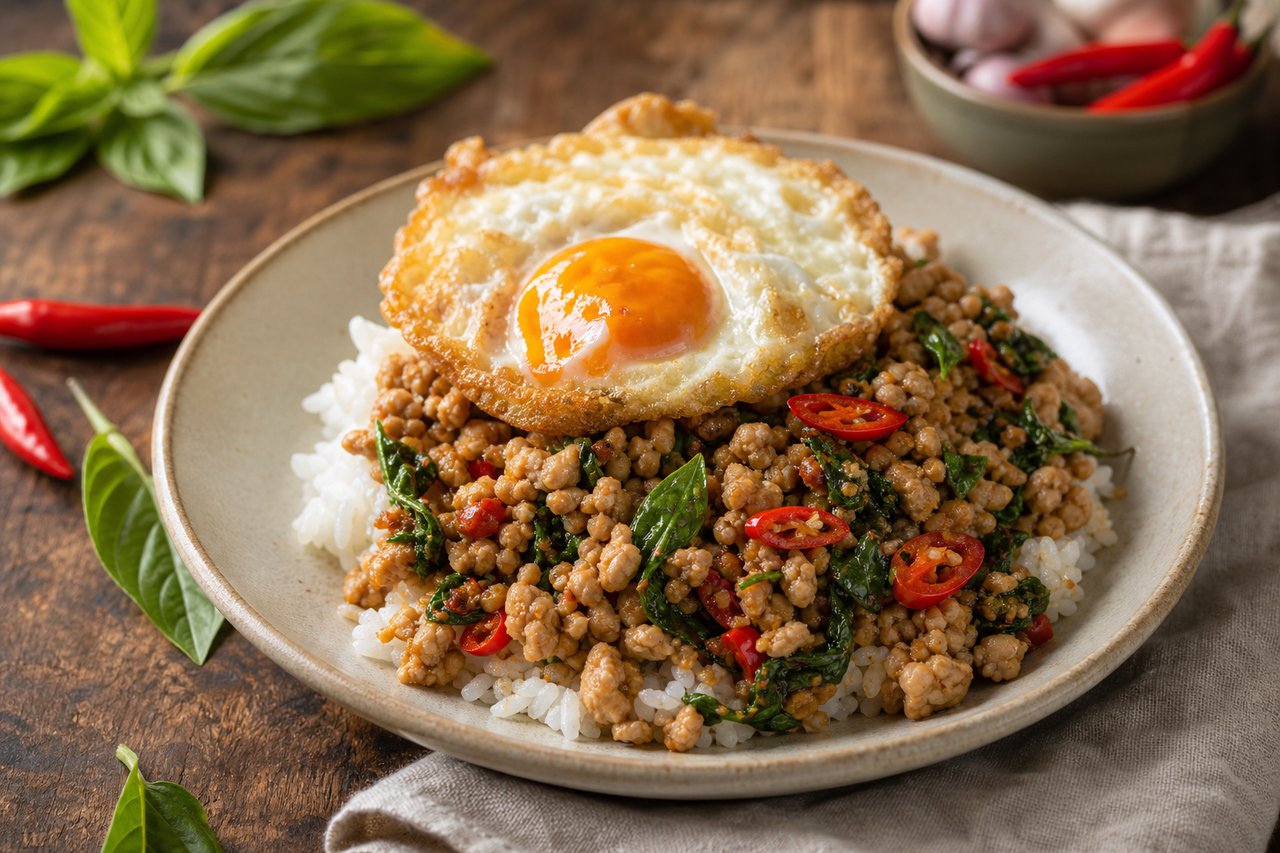
Thai
Pad Krapow Gai (Thai Holy Basil Chicken)
The fast, fiery street-food stir-fry of minced chicken with garlic, chilli and holy basil, served over rice with a crispy fried egg.
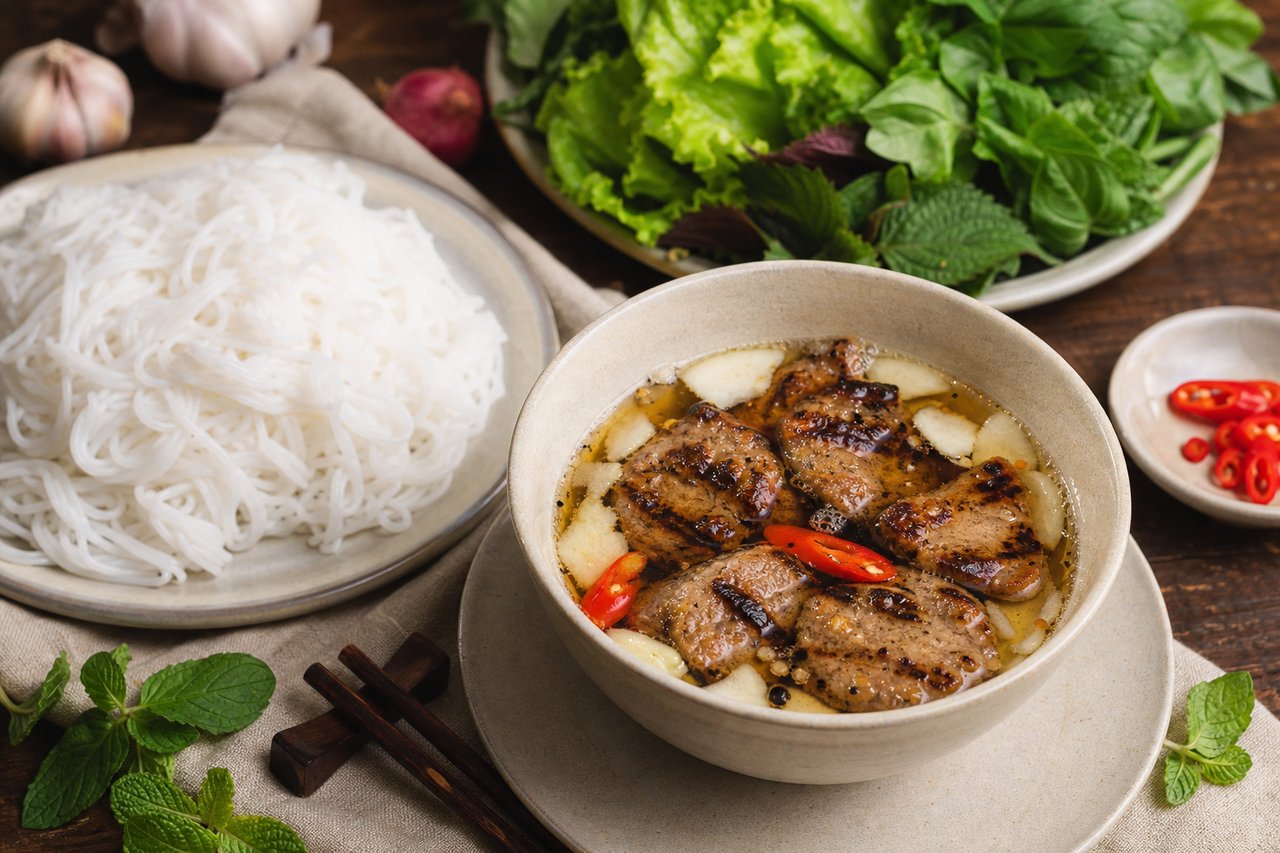
Vietnamese
Bun Cha (Grilled Pork with Rice Noodles)
Smoky, caramelised grilled pork patties and belly served in a warm, sweet-and-sour dipping broth with cold rice vermicelli and a heap of fresh herbs
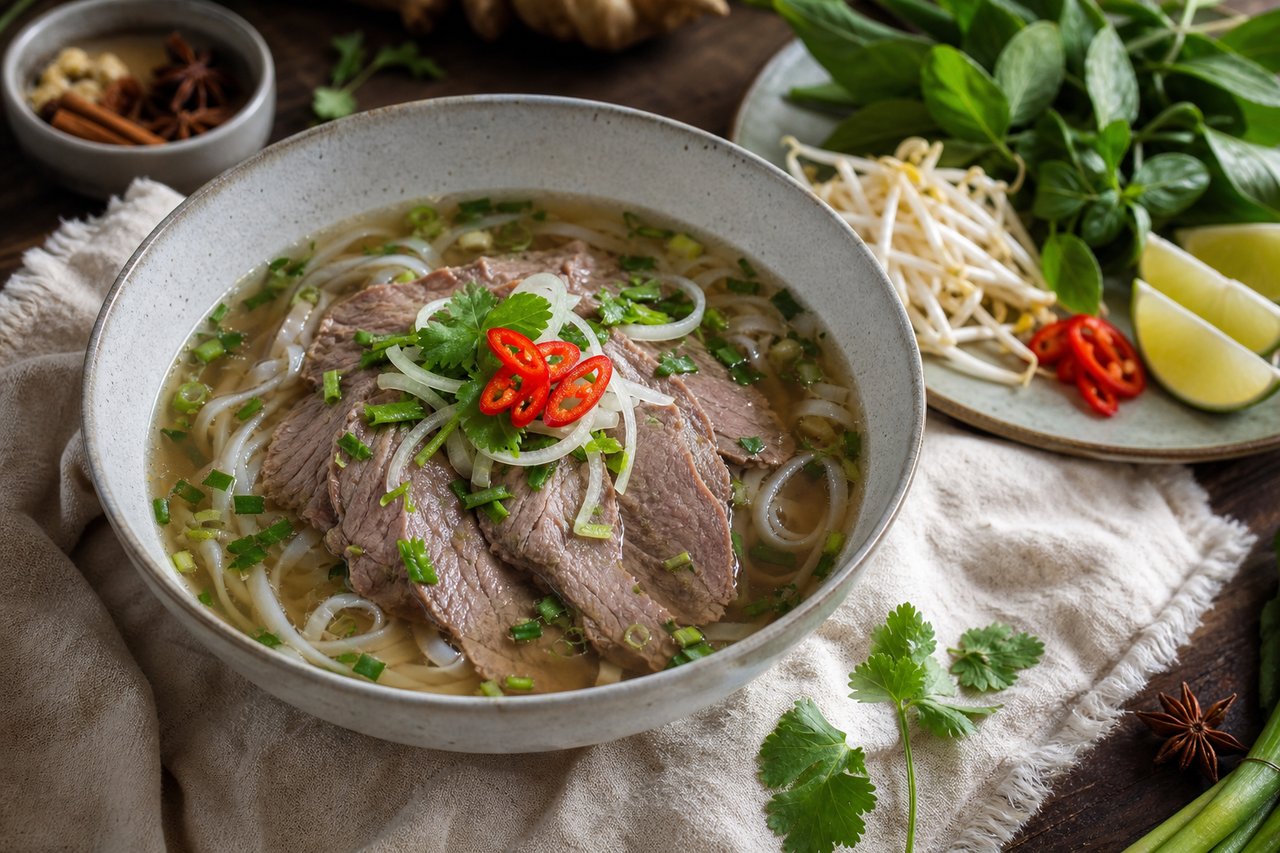
Vietnamese
Pho Bo (Vietnamese Beef Noodle Soup)
A clear, deeply aromatic beef broth scented with charred onion, ginger and toasted spice, poured over rice noodles and raw beef and finished with a plate
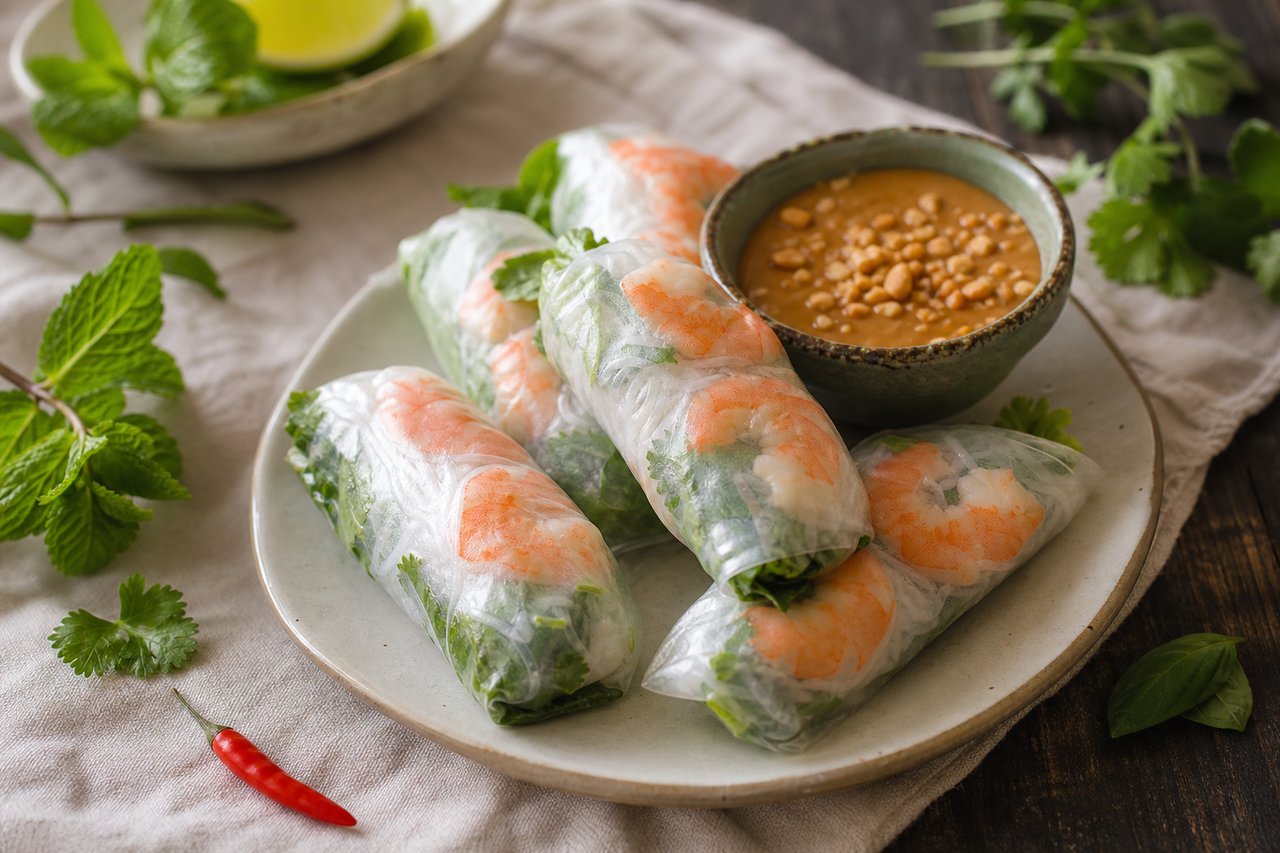
Vietnamese
Goi Cuon (Fresh Vietnamese Summer Rolls)
Soft rice-paper rolls packed with prawns, pork, herbs and vermicelli — served fresh and uncooked with a rich peanut dipping sauce.
Thai
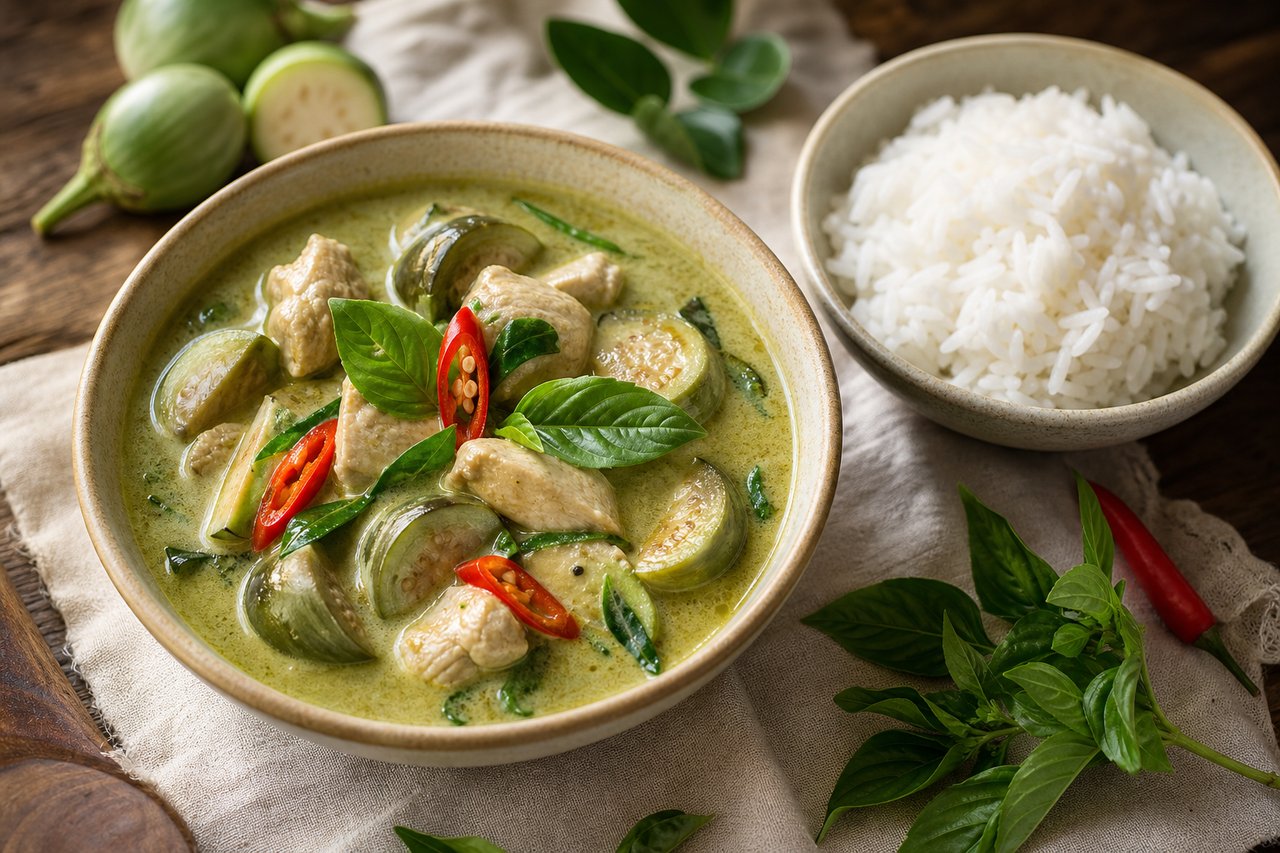
Thai Green Curry
A bright, fragrant coconut curry built on a fresh green chilli paste fried until it splits — with chicken, aubergine, basil and kaffir lime.
See also the Asian pantry guide for more on stocking these ingredients.