Cook with
Recipes with Star Anise
A liquorice-sweet spice that defines pho broth and many Chinese braises.
Star anise is the dried fruit of a small evergreen tree, and its eight-pointed star shape makes it one of the most recognisable spices in the cupboard. Despite the name it has no botanical link to aniseed, yet both carry a sweet liquorice perfume. In Chinese and Vietnamese cooking it is prized for the deep, warming aroma it lends to slow braises and long-simmered broths.
What it is and how it tastes
Each star is made up of woody points, and tucked inside most of them sits a shiny seed that holds much of the oil. The flavour is sweet and liquorice-like up front, with a warm, slightly numbing, almost medicinal depth underneath that distinguishes it from gentler anise spices. It is powerful and can dominate quickly, so it is used with restraint. That same intensity is why it pairs so naturally with rich pork, beef and poultry, cutting through fat and adding a rounded sweetness that balances soy and salt. It also marries well with cinnamon, clove, fennel and ginger, which is why those warming spices so often share a pot with it in a braise or a master stock.
How to prepare and toast it
For broths and braises the whole star is added as it comes — there is no need to break it, since long simmering draws out the flavour gradually. A brief toast in a dry pan over medium heat for a minute, until fragrant, wakes up the oils before it goes into the liquid. For spice blends, toast the stars first, let them cool, then grind them whole, points and seeds together, in a mill or mortar. Because it is so potent, measure ground star anise carefully; it is far easier to add a little more than to rescue an over-spiced pot.
Buying and storing
Choose whole stars that are intact and reddish-brown, with a strong aroma when sniffed; pale, crumbling or scentless ones are stale. Whole pods keep their punch for a year or more in an airtight jar away from light and heat, which makes them a better buy than the ground form, whose aroma fades within a few months. Grind small amounts as needed. Broken stars are fine and often cheaper, so long as the seeds are still present and the smell is vivid.
Where it shines and substitutes
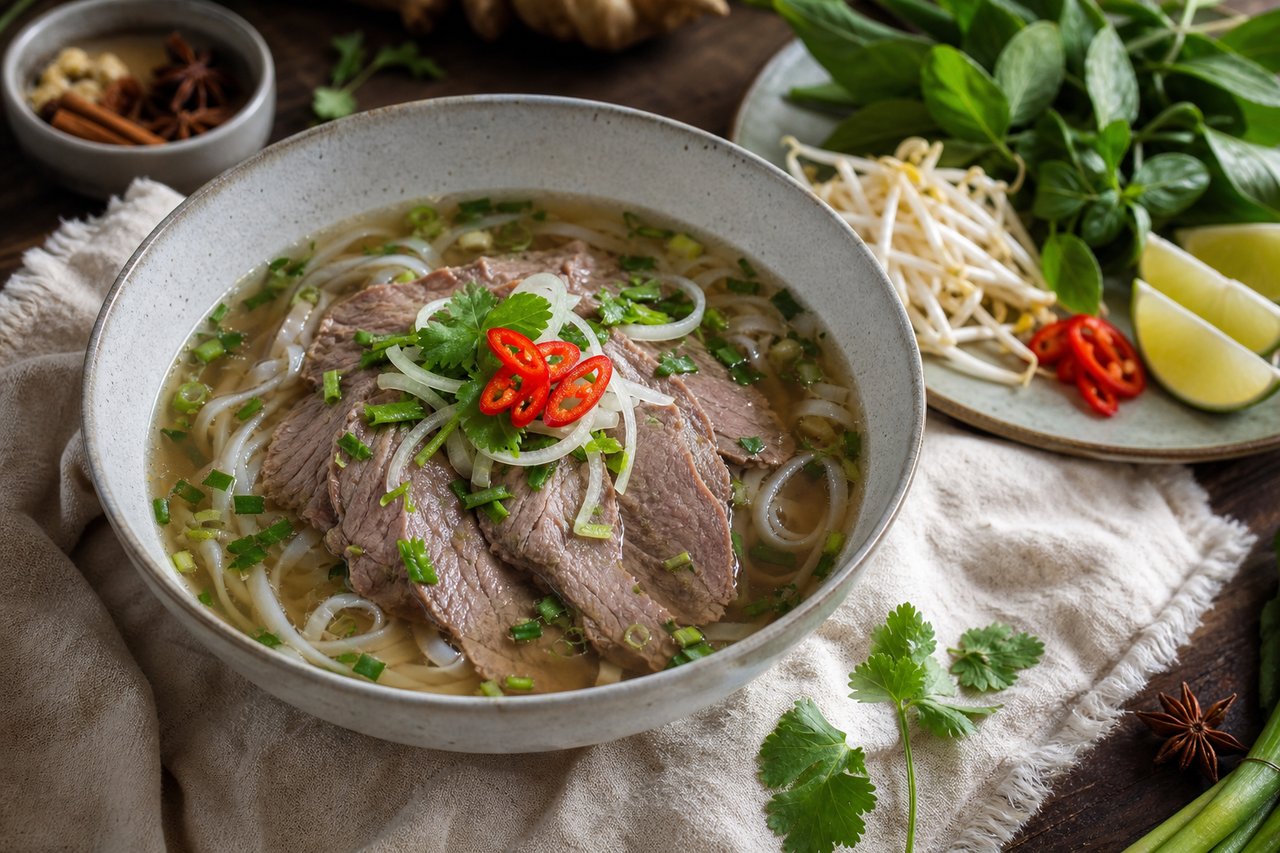
Star anise is one of the signature aromatics of a slow-cooked char siu, where it deepens the glaze, and it is essential to the long-simmered beef broth of pho bo. It also rounds out the sweet-savoury braising liquid of a pork fried rice base when pork is cooked down first. If none is to hand, Chinese five-spice powder stands in best, since star anise leads that blend. For more on stocking warming spices like this, see the Asian pantry guide.
The star anise recipe (1)
See also the Asian pantry guide for more on stocking these ingredients.