Kimbap — Korean Seaweed Rice Rolls
Seasoned rice and a row of bright fillings rolled in seaweed, sliced into neat rounds — Korea's classic picnic and lunchbox food.
- Prep
- 40 min
- Cook
- 20 min
- Serves
- 4 rolls
- Level
- Medium
By Maya Chen
Method
- 01
Season the warm rice with sesame oil and salt, folding gently so the grains stay intact. Let it cool to just above room temperature so it spreads without tearing the seaweed.
- 02
Prepare each filling separately: stir-fry the carrot with a pinch of salt, season the blanched spinach with a little sesame oil and salt, and cook the egg into a flat omelette before slicing into strips.
- 03
Place a sheet of seaweed shiny side down on a bamboo mat, with the lines running horizontally.
- 04
Spread a thin, even layer of rice over the bottom two-thirds, leaving the top third bare so the roll seals cleanly.
- 05
Lay the fillings in a tight row across the centre of the rice: radish, carrot, spinach, egg, protein and cucumber.
- 06
Lift the near edge of the mat and roll forward over the fillings, tucking firmly, then continue rolling to the bare strip.
- 07
Press the finished roll along its length to firm it, then brush the outside with a little sesame oil and scatter with sesame seeds.
- 08
Wipe a sharp knife with sesame oil and slice each roll into rounds about 1.5 cm thick, cleaning the blade between cuts.
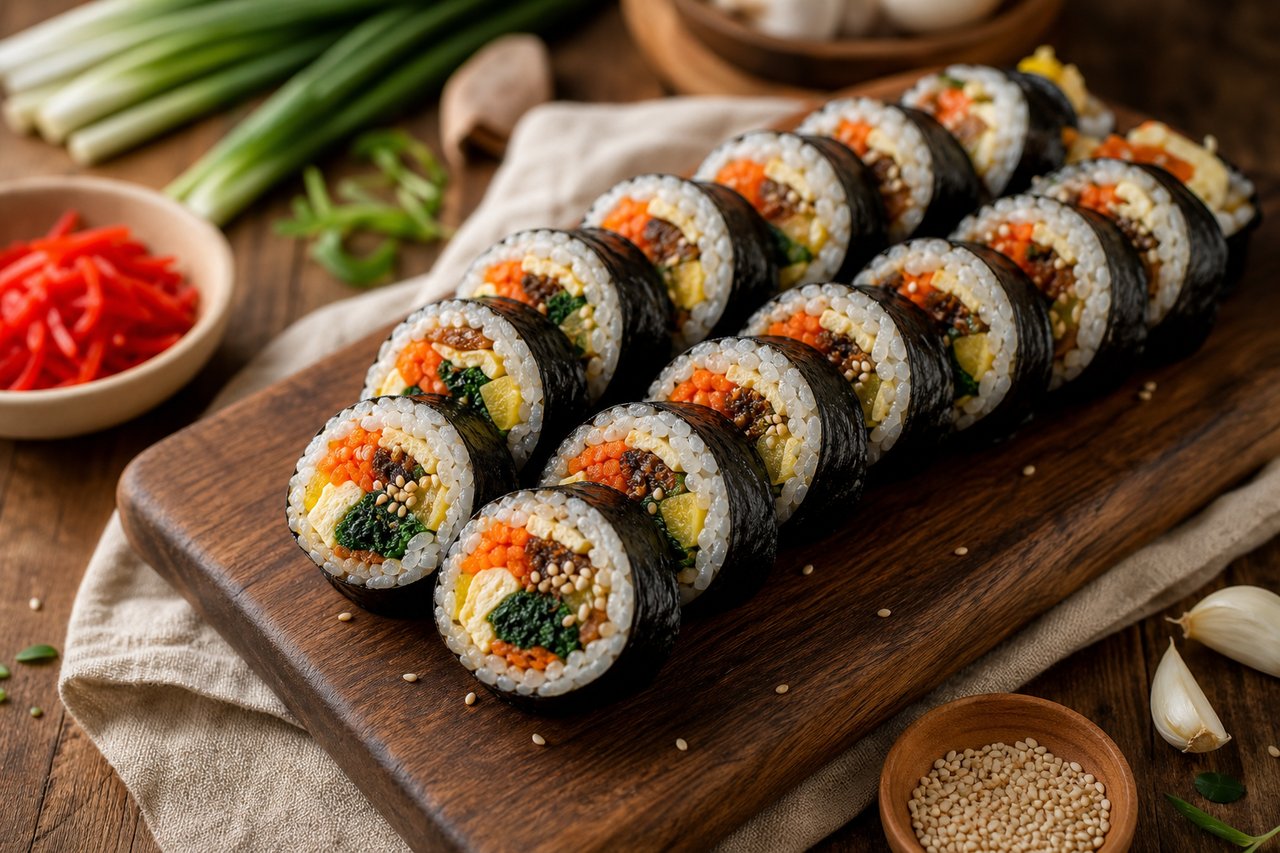
Kimbap is Korea’s everyday rice roll: seasoned rice and a tidy row of cooked, colourful fillings wrapped in seaweed and sliced into rounds. It is picnic food, lunchbox food, and road-trip food, built to taste good at room temperature rather than hot off the stove.
Season the rice, not with vinegar
The detail that surprises people coming from sushi is the rice. Kimbap rice is dressed with toasted sesame oil and salt rather than vinegar and sugar, which gives the whole roll a savoury, nutty backbone. Use short-grain rice, season it while still warm, and let it cool to just above room temperature so it spreads without tearing the seaweed.
Prep each filling on its own
A good roll is a balance of textures and seasonings, so the fillings are cooked and seasoned separately before they meet. Stir-fry the carrot, blanch and dress the spinach, cook a flat egg omelette, and have the radish and protein cut into long batons. Lining them up in a tight row across the centre is what gives each slice its neat mosaic of colour.
Rolling and slicing
Spread the rice over the bottom two-thirds of the seaweed and leave the top strip bare to seal. Roll firmly with steady pressure, then brush the outside with sesame oil. The cleanest slices come from a sharp knife wiped with a little oil and cleaned between every cut.