Bulgogi
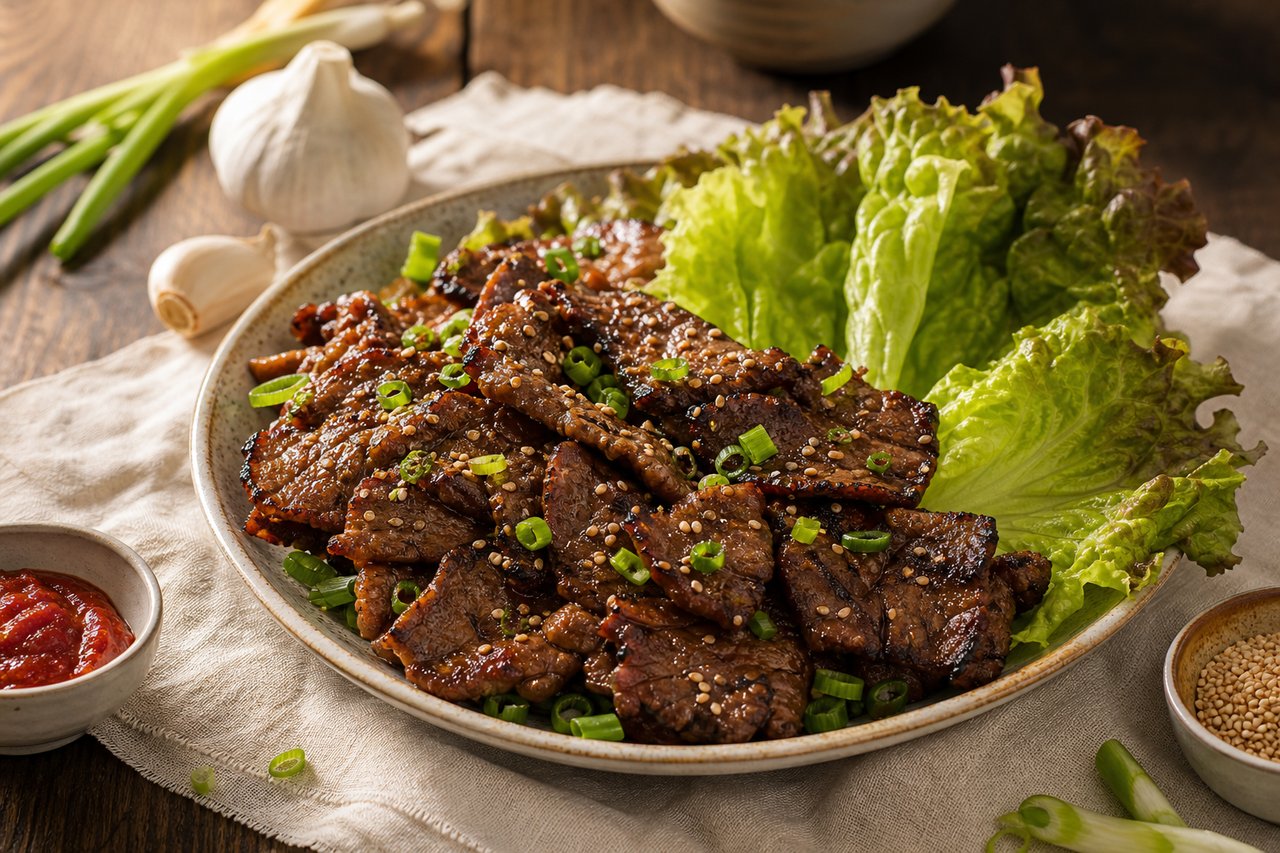
Thin slices of beef marinated in a sweet-savoury soy, garlic, sesame and grated-pear marinade, then seared hard and fast — the most loved of Korea's grilled
- Prep
- 25 min
- Cook
- 10 min
- Serves
- 4
- Level
- Easy
By Maya Chen
Method
- 01
Whisk together the grated pear, soy sauce, sugar, sesame oil, garlic, ginger, grated onion and black pepper to make the marinade.
- 02
Add the thinly sliced beef and turn to coat. Marinate for at least 30 minutes, or up to 4 hours in the fridge for deeper flavour.
- 03
Lift the beef from the marinade, letting excess drip off so it sears rather than stews.
- 04
Heat a wide, heavy pan or grill over high heat until very hot. Add a little oil.
- 05
Sear the beef in batches in a single layer, cooking each batch for 1 to 2 minutes until caramelised at the edges. Do not crowd the pan.
- 06
Add the sliced onion to the last batch and cook until just softened.
- 07
Pile onto a platter, scatter with spring onions and sesame seeds, and serve with rice and lettuce leaves for wrapping.
Bulgogi, whose name means fire meat, is the gateway to Korean grilling. Thin slices of beef soak up a sweet-savoury marinade, then cook in moments over high heat, caramelising at the edges while staying tender within. It is a forgiving, crowd-pleasing dish that works as well in a hot pan as it does over coals.
The marinade does the heavy lifting
The flavour and tenderness of bulgogi are decided before the beef ever hits the heat. Soy and sugar build the signature sweet-savoury balance, garlic and sesame oil give it its unmistakable aroma, and grated pear works quietly in the background, both sweetening and tenderising the meat. Slice the beef as thinly as you can — chilling it firm first makes this far easier — so it drinks up the marinade and cooks through in seconds.
Hot pan, single layer
The cooking itself is fast. Get the pan or grill genuinely hot, shake the excess marinade off each batch, and cook the beef in a single layer so it sears rather than stews. Crowding the pan drops the temperature and leaves the meat grey and watery; a little patience across two or three batches gives caramelised, deeply savoury slices. Serve with rice and lettuce leaves so everyone can build their own wraps.