Cook with
Recipes with Mushroom
Shiitake and other mushrooms add deep, savoury umami to soups and stir-fries.
Mushrooms bring a deep, savoury, almost meaty quality to Asian cooking that few other vegetables can offer. From the silky enoki and the firm-capped shiitake to oyster and king mushrooms, they appear in broths, stir-fries and braises across the region, prized as much for their umami as their texture. Both fresh and dried forms have their place, and the dried versions in particular are a quiet source of profound flavour.
What it is and how it tastes
Mushrooms are fungi rather than plants, and their flavour leans savoury, earthy and umami-rich, deepening as they cook and lose their water. Shiitake are meaty and aromatic; oyster mushrooms are mild and tender; enoki are delicate, thread-like and slightly crunchy; king oyster mushrooms are firm enough to slice into thick, scallop-like rounds. Drying transforms them, concentrating their savouriness and, for shiitake especially, building new umami compounds that make them far more intense than fresh. This is why dried mushrooms and their fragrant soaking liquid are so valued for stocks, broths and braises across the region.
How to use it
Fresh mushrooms cook best over high heat in a hot, dry pan or wok so they brown rather than stew — crowding them releases water and leaves them limp and grey. Give them space, let them colour to a deep golden, then season once they have given up their moisture. Dried mushrooms must be soaked first in warm water for twenty to thirty minutes until pliable, then squeezed and sliced, with any tough stems trimmed away and the strained soaking liquid kept as a deeply savoury stock. They suit long-simmered braises, soups and broths where their concentrated flavour has time to infuse the whole pot, and they reward patience far more than speed.
Buying and storing
Choose fresh mushrooms that are firm and dry, not slimy or shrivelled, and store them in a paper bag in the fridge for up to a week. Dried mushrooms should look whole and smell fragrant; kept airtight in a cool cupboard they last many months, ready to soak whenever needed.
Where it shines and substitutes
Mushrooms enrich the broth of a hearty tonkotsu ramen, add savoury depth to japchae glass noodles, and bring body to a spicy mapo tofu. They also lend a meaty quality to vegetable-forward stir-fries and soups, standing in for richness where no meat is used. Where one type is unavailable, another firm mushroom usually substitutes well, with dried shiitake the reliable go-to for deep stock flavour. A jar of dried mushrooms in the cupboard is one of the easiest ways to add instant savoury depth to almost any pot. For more on the staples they sit beside, see the Asian pantry guide.
Mushroom recipes (2)
Korean
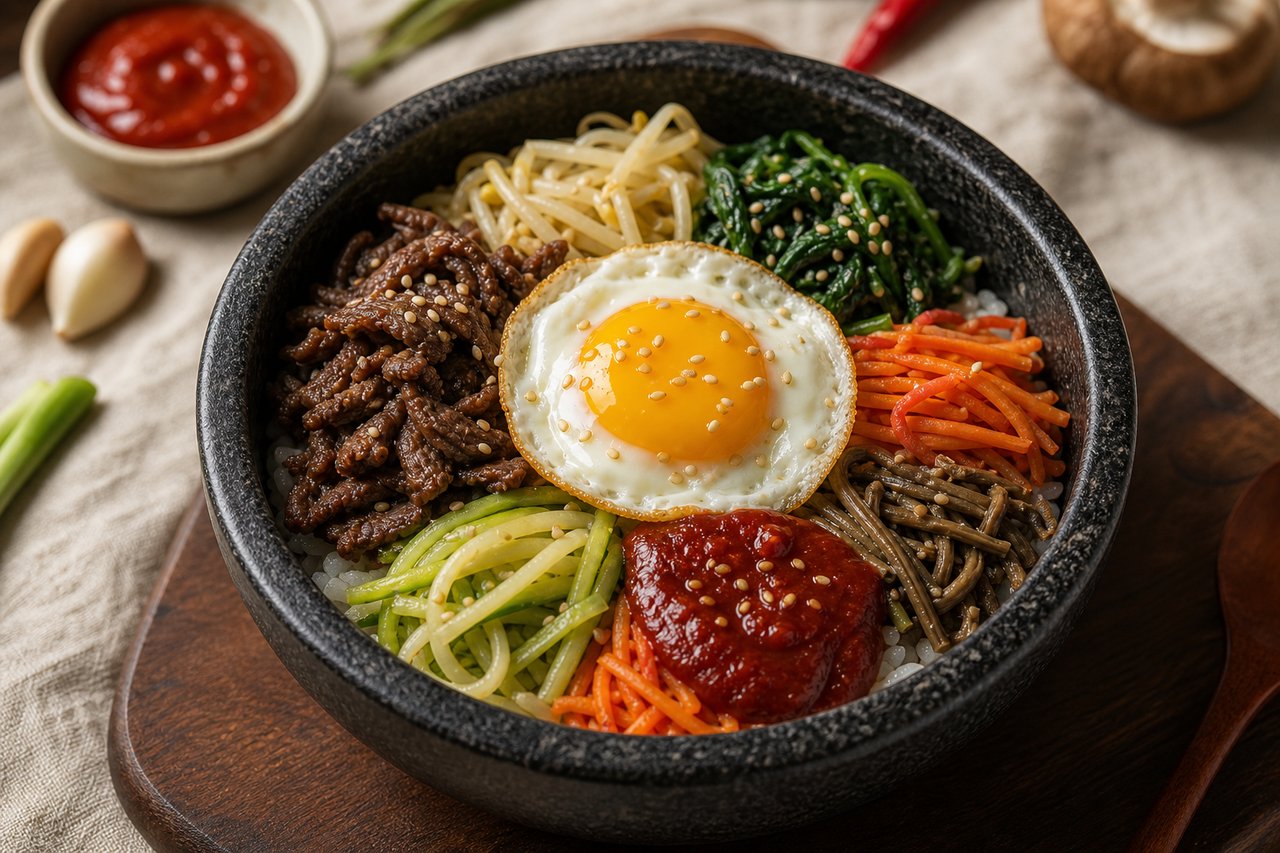
Bibimbap
A bowl of warm rice crowned with seasoned vegetables, beef and a fried egg, all bound together with a sweet-savoury gochujang sauce and a slick of sesame oil.
Korean
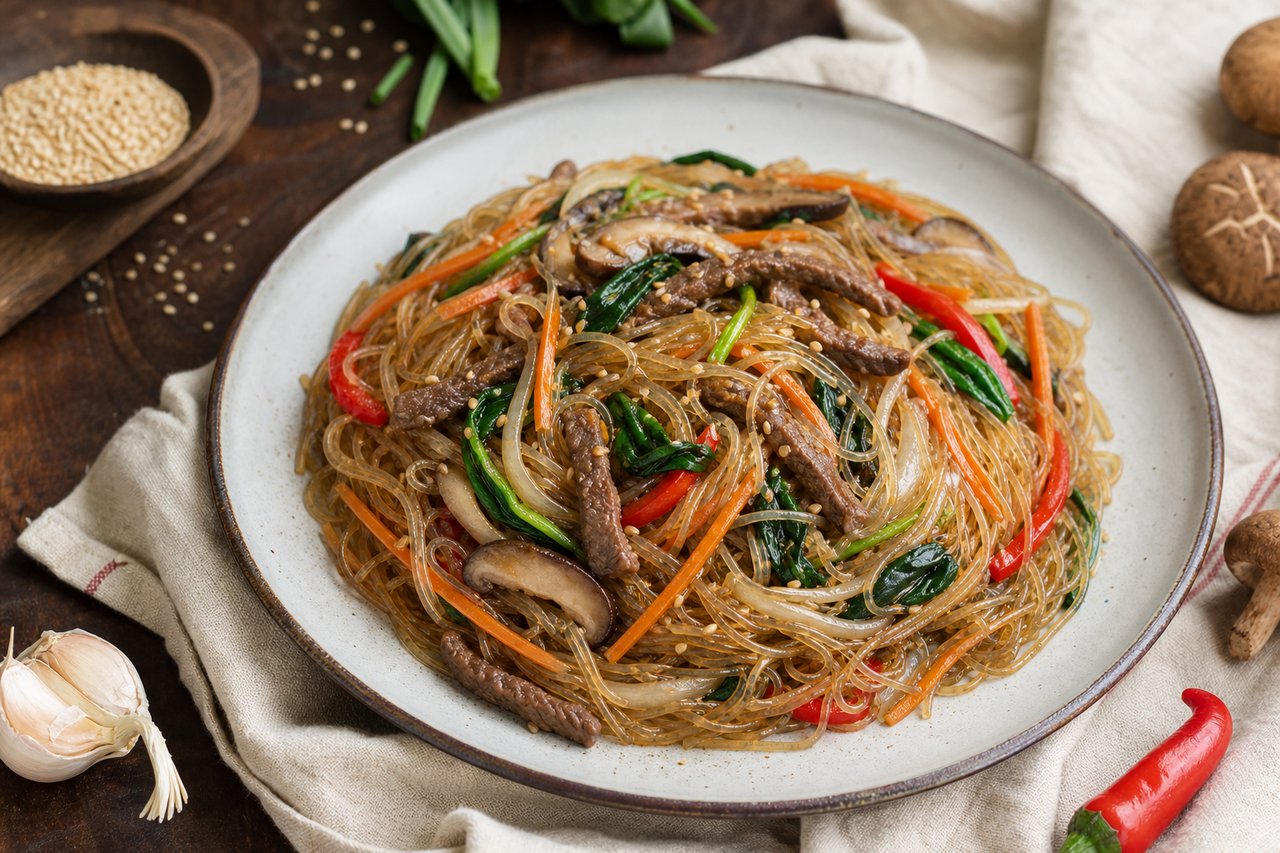
Japchae
Glassy sweet-potato noodles tossed with beef and a rainbow of seasoned vegetables in a savoury-sweet soy and sesame dressing — Korea's beloved celebration
See also the Asian pantry guide for more on stocking these ingredients.