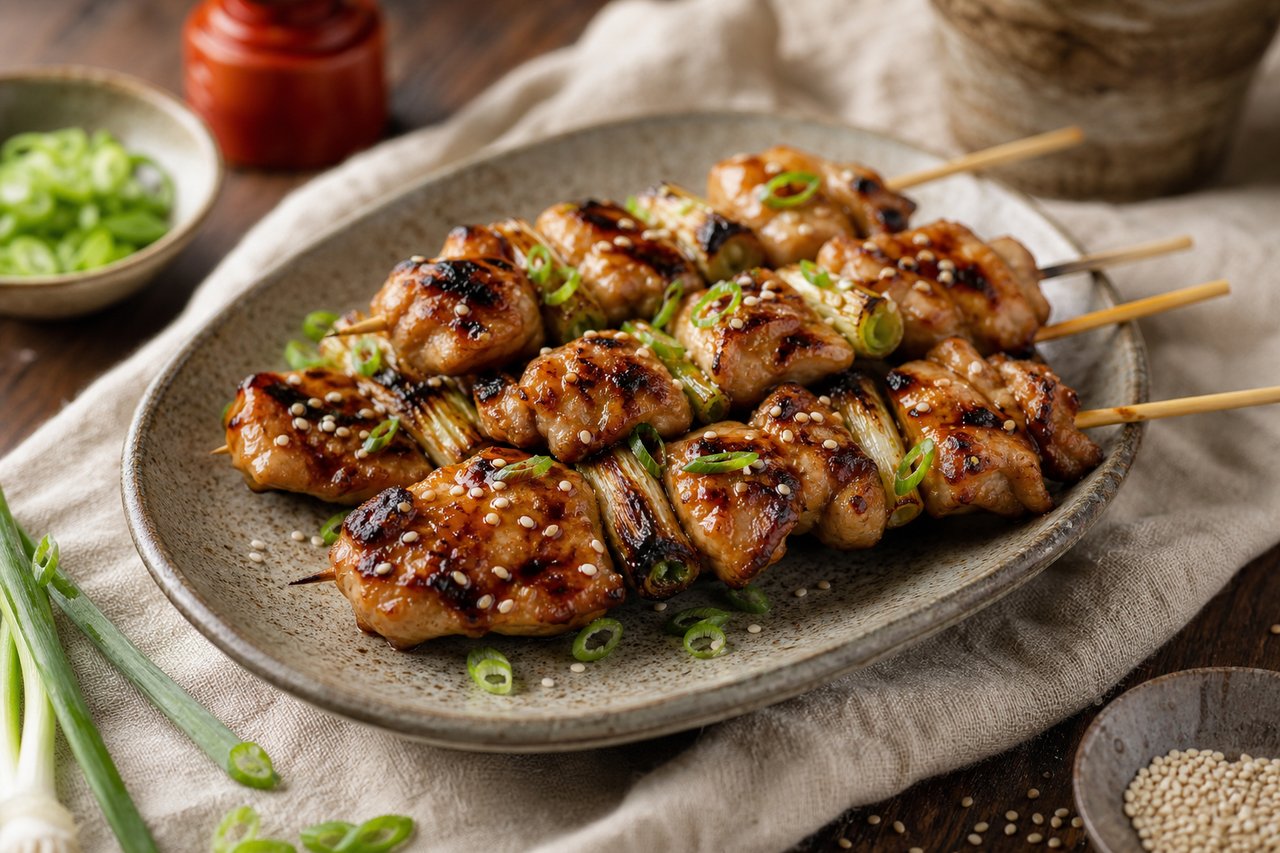
Yakitori — Japanese Grilled Chicken Skewers
Bite-sized chicken skewers grilled over high heat and lacquered with a sweet-savoury tare, plus a salt-only version for purists.
- Prep
- 30 min
- Cook
- 15 min
- Serves
- 4 (about 12 skewers)
- Level
- Medium
By Maya Chen
Method
- 01
Make the tare: combine soy, mirin, sake, water, sugar, ginger and spring onion tops in a small pan. Simmer gently for 15 minutes until lightly syrupy and reduced by about a third, then strain and cool.
- 02
Thread the chicken onto skewers, packing the cubes snugly so they cook evenly. For negima, alternate chicken with spring onion lengths.
- 03
Pat the skewers dry. A dry surface chars rather than steams, which is the whole point of the grill.
- 04
Set up a hot charcoal or gas grill, or a ridged cast-iron pan. Yakitori wants fierce, direct heat and a short cook.
- 05
Grill the skewers undisturbed for 2 minutes per side until the surface is marked and the fat begins to render.
- 06
For salt skewers, season with fine salt only and grill until just cooked, around 6 minutes total.
- 07
For tare skewers, brush with the sauce, grill 30 seconds, then repeat the brush-and-grill two or three more times to build a glossy lacquer.
- 08
Rest the skewers for a minute, dust with shichimi togarashi, and serve straight away while the glaze is still tacky.
Yakitori is Japanese grilled chicken reduced to its essentials: small pieces of well-seasoned thigh cooked fast over fierce heat. The format rewards good technique over long ingredient lists, which makes it an ideal weeknight grill once the rhythm of brushing and turning becomes second nature.
Salt or sauce
There are two camps, and both are correct. Shio skewers are seasoned with nothing but salt, letting the rendered fat and char carry the flavour. Tare skewers are lacquered in a sweet soy glaze that builds in thin coats. Cooking a few of each from the same batch of skewers is the easiest way to find a preference, and it keeps a platter interesting.
Heat and timing
The single most common mistake is too little heat. Yakitori is a high-temperature, short-duration cook, so the surface chars and the fat renders before the centre overcooks. Keep the pieces small and uniform, pat them dry before they hit the grill, and resist the urge to fuss with them between turns.
Building the glaze
Tare is applied late and in layers. Grill the chicken until nearly done, then brush, return to the heat for thirty seconds, and repeat. Each pass caramelises into a thin coat, and three or four passes produce the glossy, deeply savoury finish that defines a good tare skewer.