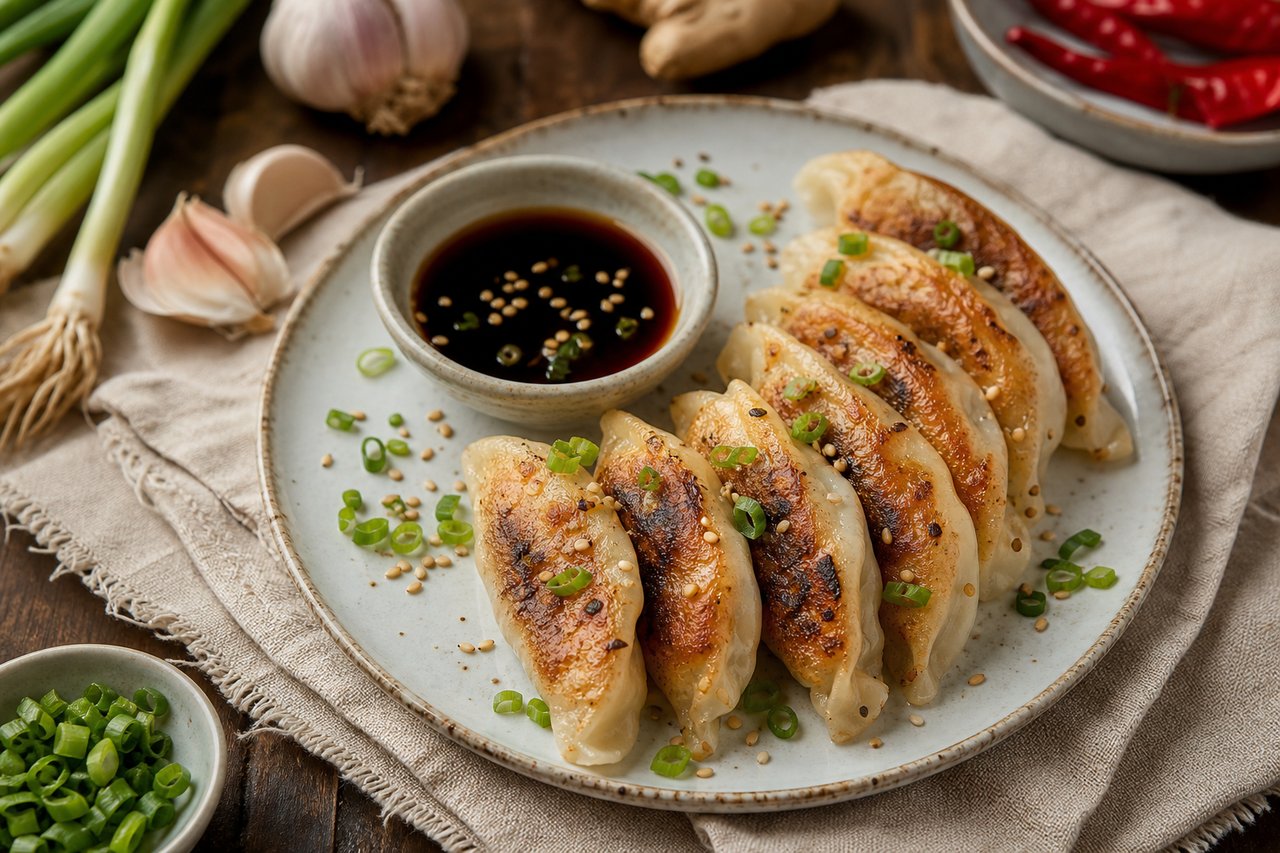
Pan-Fried Pork Gyoza
Juicy pork-and-cabbage dumplings with a lacy, crisp base and steamed pleated tops — the home version of the izakaya classic.
- Prep
- 40 min
- Cook
- 10 min
- Serves
- About 30 dumplings
- Level
- Medium
By Maya Chen
Method
- 01
Toss the chopped cabbage with the salt and leave for 10 minutes. Wring it out hard in a clean towel — this step keeps the filling from going watery.
- 02
Combine the pork, drained cabbage, garlic, ginger, spring onion, soy, sake, sesame oil and sugar. Mix in one direction until the filling turns slightly sticky and cohesive.
- 03
Place a heaped teaspoon of filling in the centre of a wrapper. Wet the rim with water, fold into a half-moon, and pleat one side toward the centre, pressing the seam tight.
- 04
Set each finished gyoza seam-up on a floured tray so the flat base stays intact for frying.
- 05
Heat a thin film of oil in a non-stick pan over medium-high. Arrange the gyoza flat-side down in a single layer and fry 2 minutes until the bases are golden.
- 06
Pour in about 60 ml water and immediately cover. Steam 4–5 minutes until the water has evaporated and the wrappers turn translucent.
- 07
Uncover and let the bases re-crisp for a minute. Slide onto a plate, crisp-side up, and serve with the dipping sauce.
Gyoza are the dumpling most home cooks reach for first, and for good reason: the filling is forgiving, the wrappers are sold ready-made, and the cooking method rewards a little practice quickly. The goal is a dumpling that is crisp and golden on the base, tender and translucent on top, and full of a savoury pork filling that stays juicy rather than dense.
The filling, and why the cabbage matters
Texture is everything in the filling. Napa cabbage carries a surprising amount of water, so salting and squeezing it before it ever meets the pork is the difference between a juicy bite and a soggy one. Mixing the pork in a single direction until it becomes slightly sticky builds enough structure to hold the parcel together through frying and steaming.
Fry, steam, fry again
The classic gyoza technique is a three-part move in one pan: a hot fry to set and brown the base, a covered steam to cook the pork and soften the top, and a final uncovered minute to crisp the bottom back up. Keep the dumplings in a single layer with a little space between them so they brown evenly and release cleanly when it is time to plate.