Perfect Japanese Steamed Rice
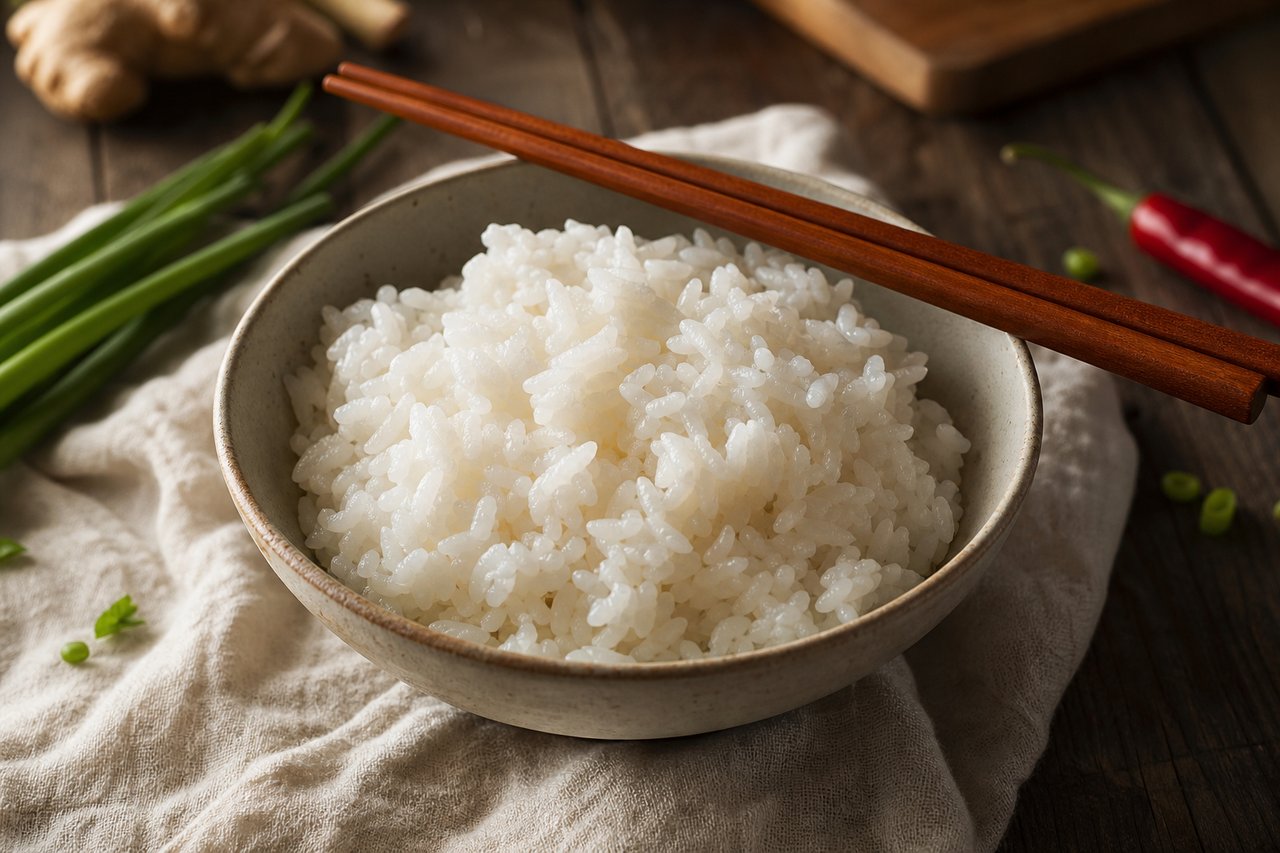
Short-grain rice cooked to glossy, tender, slightly sticky grains — the quiet foundation under almost every Japanese meal.
- Prep
- 45 min
- Cook
- 25 min
- Serves
- 4 servings
- Level
- Easy
By Maya Chen
Method
- 01
Measure the rice into a bowl and cover with cold water. Swirl with your hand, then pour off the cloudy water. Repeat three or four times until the water runs almost clear.
- 02
Drain the rinsed rice in a sieve and let it sit for 15 minutes so the surface moisture is absorbed evenly.
- 03
Add the rice and the measured water to a heavy pot with a tight lid, or to a rice cooker. The standard ratio is one to one by volume for rinsed short-grain rice.
- 04
Let the rice soak in the cooking water for 20–30 minutes before turning on the heat; this gives plump, evenly cooked grains.
- 05
On the stove, bring to a boil over medium-high heat, then reduce to the lowest setting and cover. Cook undisturbed for 12 minutes, never lifting the lid.
- 06
Turn off the heat and let the pot stand, still covered, for 10 minutes. This resting steam finishes the centre of each grain.
- 07
Fluff gently with a wet paddle or spatula, lifting and folding from the bottom rather than stirring, to keep the grains intact.
Steamed rice rarely gets a recipe of its own, which is exactly why so many home cooks struggle with it. It is the base for donburi, the companion to grilled fish, and the wrapper for onigiri, and getting it right makes every other dish on the table look after itself. Done well, the grains are glossy, distinct, and just sticky enough to lift cleanly with chopsticks.
Rinse, then wait
Two unglamorous steps do most of the work. Rinsing washes away the loose surface starch that turns rice gummy, and a soak before cooking lets water penetrate to the centre of each grain so it cooks evenly rather than blowing out at the edges. Neither step takes effort, but skipping them is what separates clumpy rice from the real thing.
Heat low, then leave it alone
Once the pot is going, the cardinal rule is patience. A short rapid boil, a long gentle cook on the lowest heat, and a covered rest off the heat is the whole method. The lid stays on the entire time so the steam is never lost. Fluff at the end with a folding motion rather than a stir, and the grains stay separate and intact.