Dan Dan Noodles
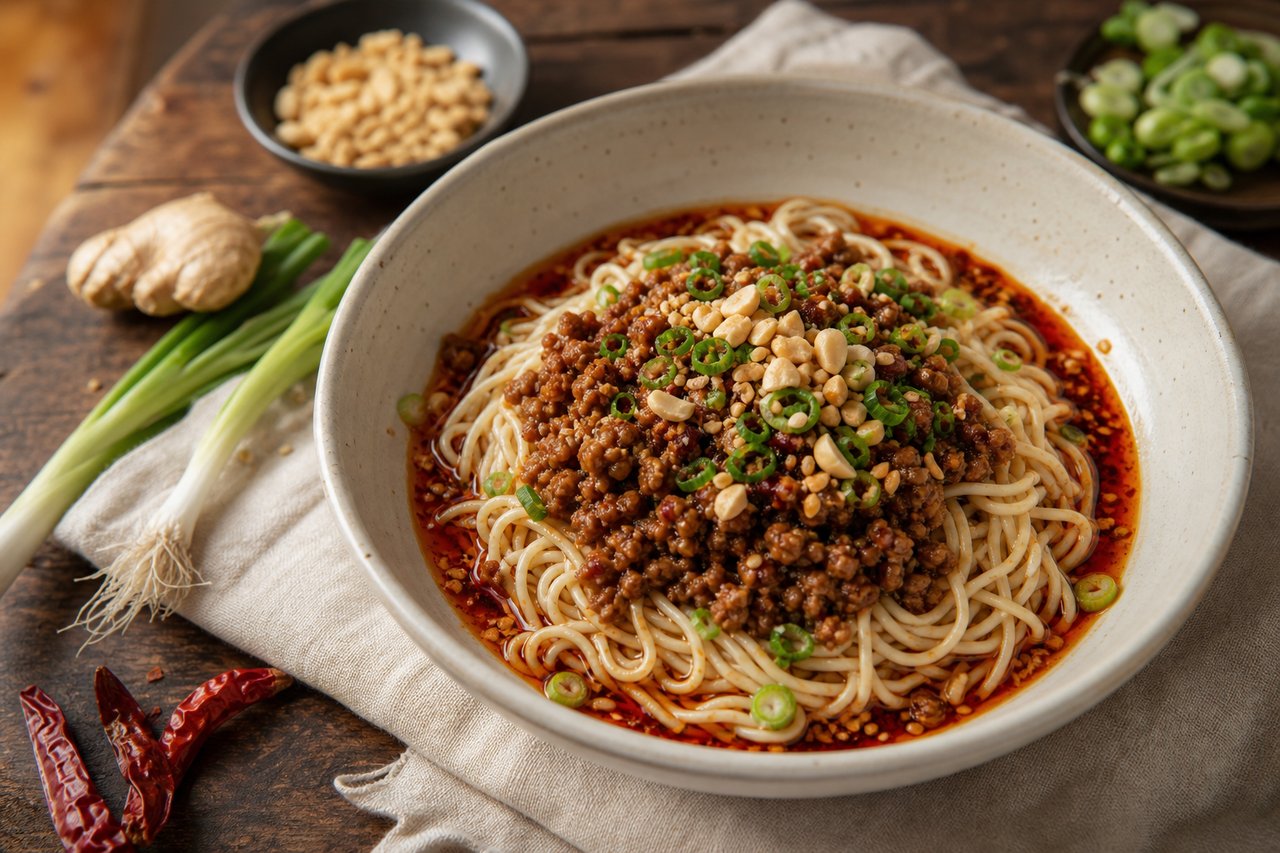
Springy wheat noodles over a numbing-spicy sauce of sesame paste, chilli oil and Sichuan peppercorn, topped with crisp minced pork and preserved vegetable.
- Prep
- 15 min
- Cook
- 15 min
- Serves
- 2 to 3
- Level
- Medium
By Maya Chen
Method
- 01
Fry the pork topping first: heat the oil in a wok over high heat, add the minced pork and fry hard until deeply browned and crisp at the edges.
- 02
Add the ya cai, Shaoxing wine and dark soy and stir-fry for another 2 minutes until the pork is dry, savoury and well coloured. Set aside.
- 03
Build the sauce in the serving bowls: divide the sesame paste, chilli oil, light soy, black vinegar, sugar, ground Sichuan peppercorn and grated garlic between two or three deep bowls.
- 04
Loosen each bowl of sauce with a couple of tablespoons of hot stock or noodle cooking water, whisking with chopsticks until it is smooth and pourable.
- 05
Cook the noodles in plenty of boiling water until just springy, following the packet timing for dried or 2–3 minutes for fresh.
- 06
Drain the noodles well and divide them over the sauce in each bowl. Do not stir yet.
- 07
Spoon the crisp pork and ya cai over the noodles and scatter with sliced spring onion.
- 08
Serve immediately, instructing diners to toss everything together from the bottom so the noodles are coated in the sauce before eating.
Dan dan noodles are a Sichuan street-food icon, named for the carrying pole (dan dan) that vendors once used to balance their baskets of noodles and sauce. At their core they are deceptively simple: a bowl of springy wheat noodles over a pool of bold, savoury sauce, crowned with crisp, dark minced pork. What makes them unforgettable is the layering of sesame richness, chilli heat and the tingling numbness of Sichuan peppercorn.
The dish is really two preparations meeting in the bowl. The first is the pork topping, fried hard with preserved mustard greens until it is dry, crisp and intensely savoury. The second is the sauce, which is not cooked at all but assembled in the serving bowl and loosened with hot stock or noodle water to a pourable consistency.
Build the sauce in the bowl
Unlike a tossed noodle dish, dan dan noodles are constructed in layers and mixed at the table. The seasoning sauce goes in first, the hot noodles sit on top, and the pork crowns the lot. Diners toss everything together from the bottom just before eating, which keeps the noodles springy rather than letting them go soft in the sauce.
Balance the mala
The defining flavour is mala — the partnership of chilli heat and peppercorn numbness. Because the chilli oil and the ground Sichuan peppercorn each contribute one half of that sensation, you can dial them separately to taste. Loosen and taste the sauce before the noodles go in, and add some of the chilli-oil sediment for extra colour and depth.