Thai

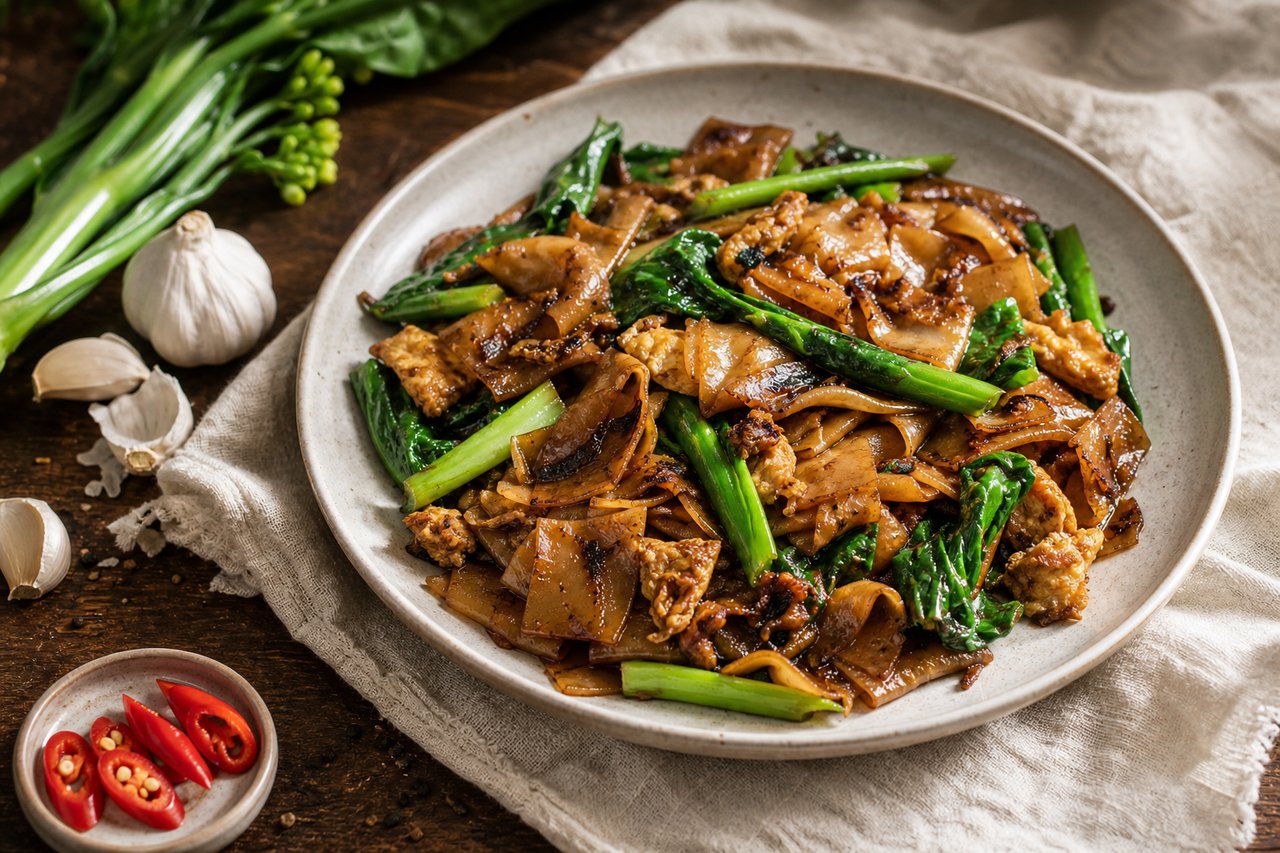
Pad See Ew — Thai Stir-Fried Wide Rice Noodles

Wide rice noodles charred in a hot wok with dark soy, egg and Chinese broccoli — smoky, savoury and lightly sweet Thai comfort food.

Prep
20 min
Cook
10 min
Serves
2
Level
Medium

By Maya Chen

Pad See Ew — Thai Stir-Fried Wide Rice Noodles

Method

  1. 01

    Mix the dark soy, light soy, oyster sauce and sugar in a small bowl and have it within reach of the stove.

  2. 02

    If using dried noodles, soak them until pliable but not soft; fresh noodles need only to be gently separated by hand.

  3. 03

    Heat a wok or wide pan until it is genuinely smoking hot, then add a tablespoon of oil and the garlic and protein. Stir-fry until the meat is just cooked, then push it to one side.

  4. 04

    Crack the eggs into the cleared space, let them set for a few seconds, then scramble roughly and fold into the meat.

  5. 05

    Add the gai lan stems first and stir for a minute, then the leaves, cooking until bright and wilted.

  6. 06

    Push everything aside, add the noodles, and let them sit untouched against the hot metal for 20 seconds to pick up colour before tossing.

  7. 07

    Pour the sauce around the edge of the wok so it sizzles, then toss everything together quickly so the noodles char rather than steam.

  8. 08

    Finish with a dusting of white pepper and serve at once, with chilli vinegar alongside.

Pad see ew is the dark, savoury cousin of pad thai: wide rice noodles tossed in a hot wok with dark soy, egg, a little meat and Chinese broccoli. The flavour is gentler and less tangy, and its whole character rests on one thing the home cook has to chase, which is heat.

Chase the char

The dish is named for the soy it is cooked in, but its soul is wok hei, the smoky note that comes from noodles searing against blistering-hot metal. Get the pan as hot as the stove allows, let the noodles sit untouched for a few seconds to take on colour, and add the sauce around the edge so it caramelises. Constant stirring and a lukewarm pan both kill the effect.

Mise en place, then move fast

Because the cook takes only a couple of minutes once the wok is hot, everything has to be ready before the first ingredient goes in. Mix the sauce, slice the meat, separate the noodles and split the gai lan into stems and leaves. With everything within reach, the stir-fry becomes a quick, confident sequence rather than a scramble.

Noodles that slide, not clump

Fresh wide noodles clump when cold, so loosen them by hand and warm them slightly if they have stiffened. In the wok, enough oil and enough heat let them slide and char instead of gumming together, which is the difference between a clean plate and a sticky one.
Frequently Asked Questions

What does pad see ew taste like compared to pad thai?+

The two are often confused because both are stir-fried Thai noodle dishes, but they taste quite different. Pad thai is tangy and sweet, dressed with tamarind, fish sauce and sugar and finished with peanuts and lime. Pad see ew is darker and savoury, built on dark soy sauce with just a touch of sugar, and its defining feature is the smoky char from a very hot wok. Pad see ew also uses wide, flat noodles rather than the thin ones in pad thai, giving it a softer, more slippery bite.

How do I keep the noodles from sticking and clumping?+

Fresh wide rice noodles are prone to clumping, especially if they have been refrigerated. Gently separate them by hand before cooking, and if they have hardened, a brief steam or a few seconds in the microwave loosens them. In the wok, the real fix is heat and oil: a properly hot pan with enough oil lets the noodles slide and char rather than gum together. Work in batches if your stove is weak, since overcrowding drops the temperature and turns the noodles sticky.

What gives pad see ew its smoky flavour?+

That signature smokiness is called wok hei, the breath of the wok, and it comes from food searing against intensely hot metal. To get it at home, heat the wok until it is genuinely smoking before adding oil, and let the noodles sit untouched for a moment so they pick up colour rather than constantly stirring. Adding the sauce around the hot edge so it caramelises also builds that flavour. A standard home burner will not match a restaurant flame, but high heat and patience get close.

Can I substitute the Chinese broccoli?+

Gai lan, or Chinese broccoli, is traditional and worth seeking out for its slightly bitter stems and tender leaves, which stand up to the wok. If it is unavailable, regular broccoli florets sliced thin, broccolini, or even bok choy make reasonable substitutes. Whatever you use, add the firmer stems first so they soften, then the leaves, which need only seconds. The vegetable is meant to add texture and a faint bitterness that balances the sweet, dark sauce.

You might also like

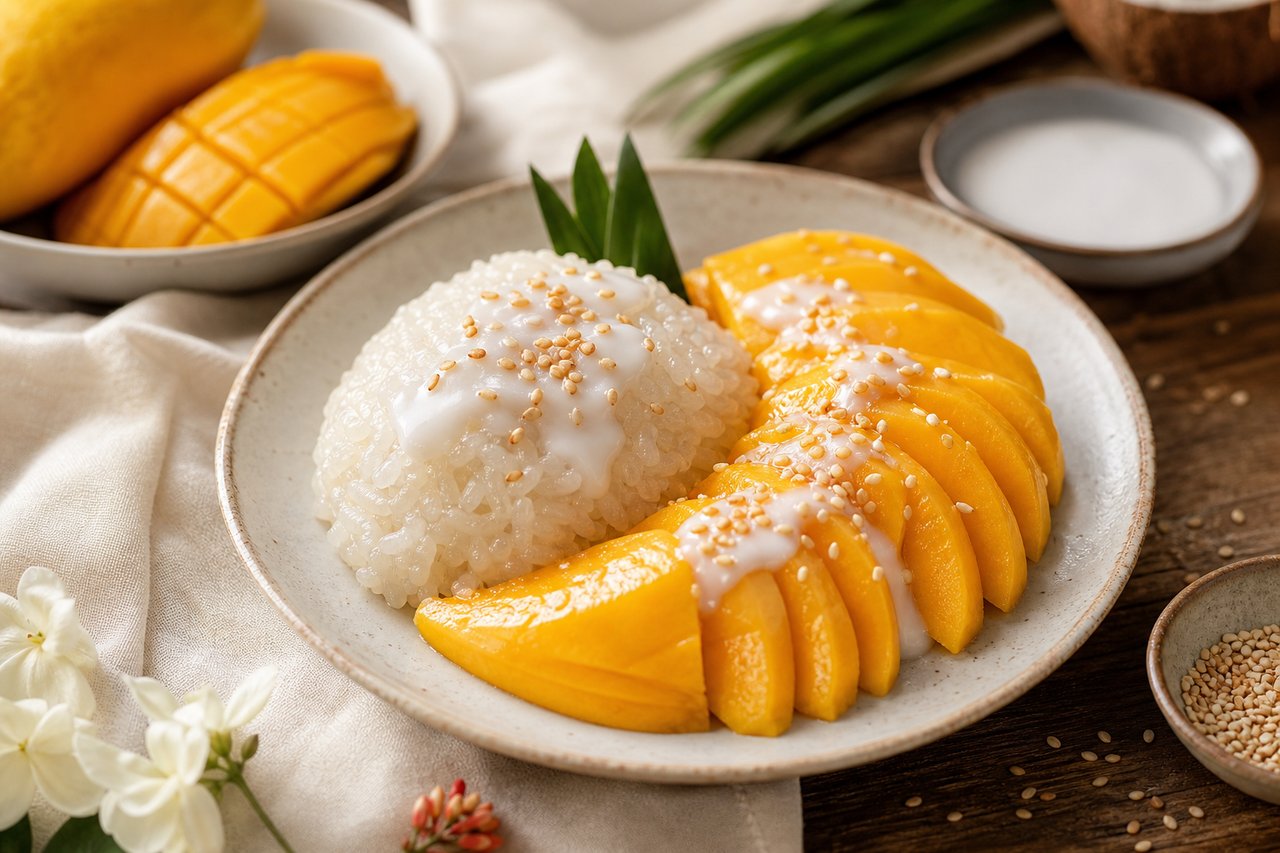
Mango Sticky Rice (Khao Niao Mamuang)

Thai

Mango Sticky Rice (Khao Niao Mamuang)

55 min Easy

Thailand's best-loved dessert — warm glutinous rice steeped in sweet, salted coconut cream, served with ripe mango and a sprinkle of toasted mung beans.

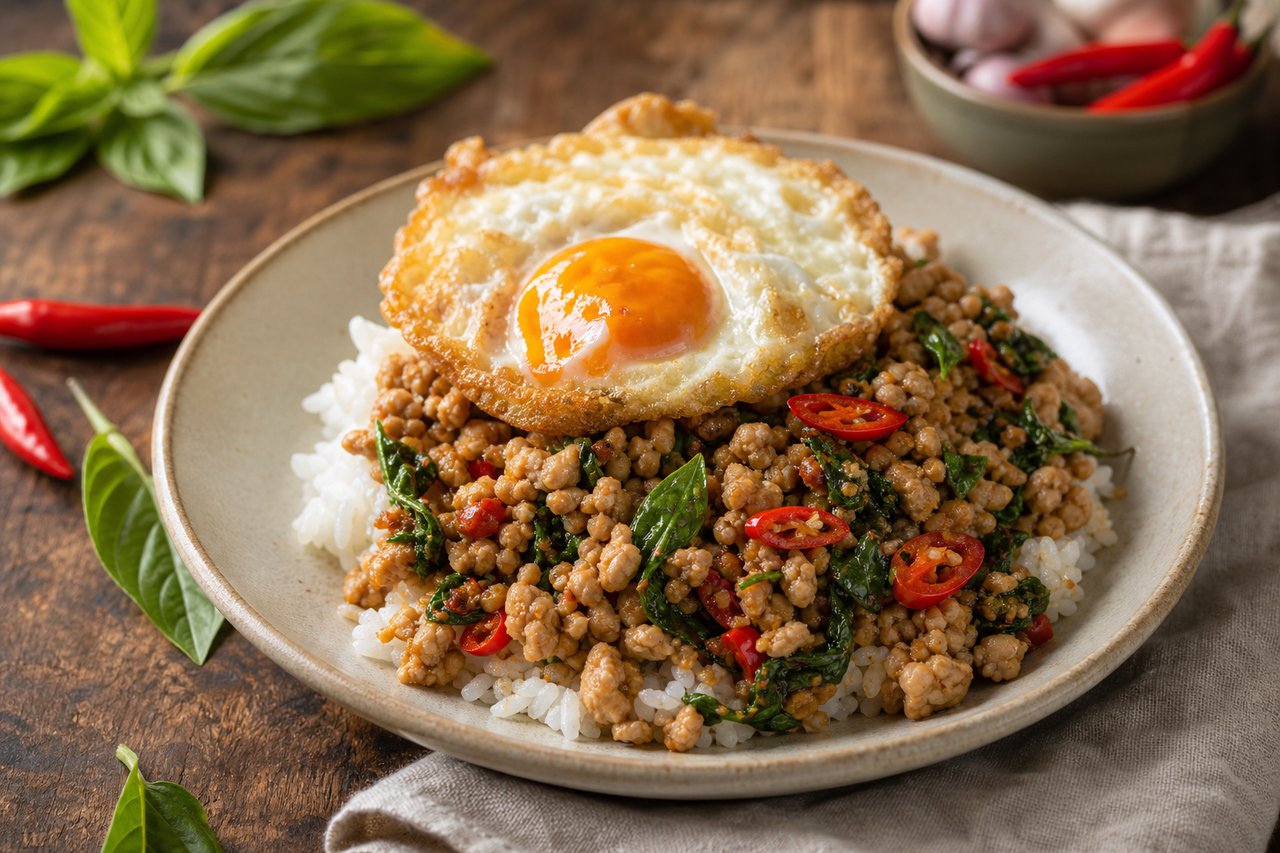
Pad Krapow Gai (Thai Holy Basil Chicken)

Thai

Pad Krapow Gai (Thai Holy Basil Chicken)

20 min Easy

The fast, fiery street-food stir-fry of minced chicken with garlic, chilli and holy basil, served over rice with a crispy fried egg.

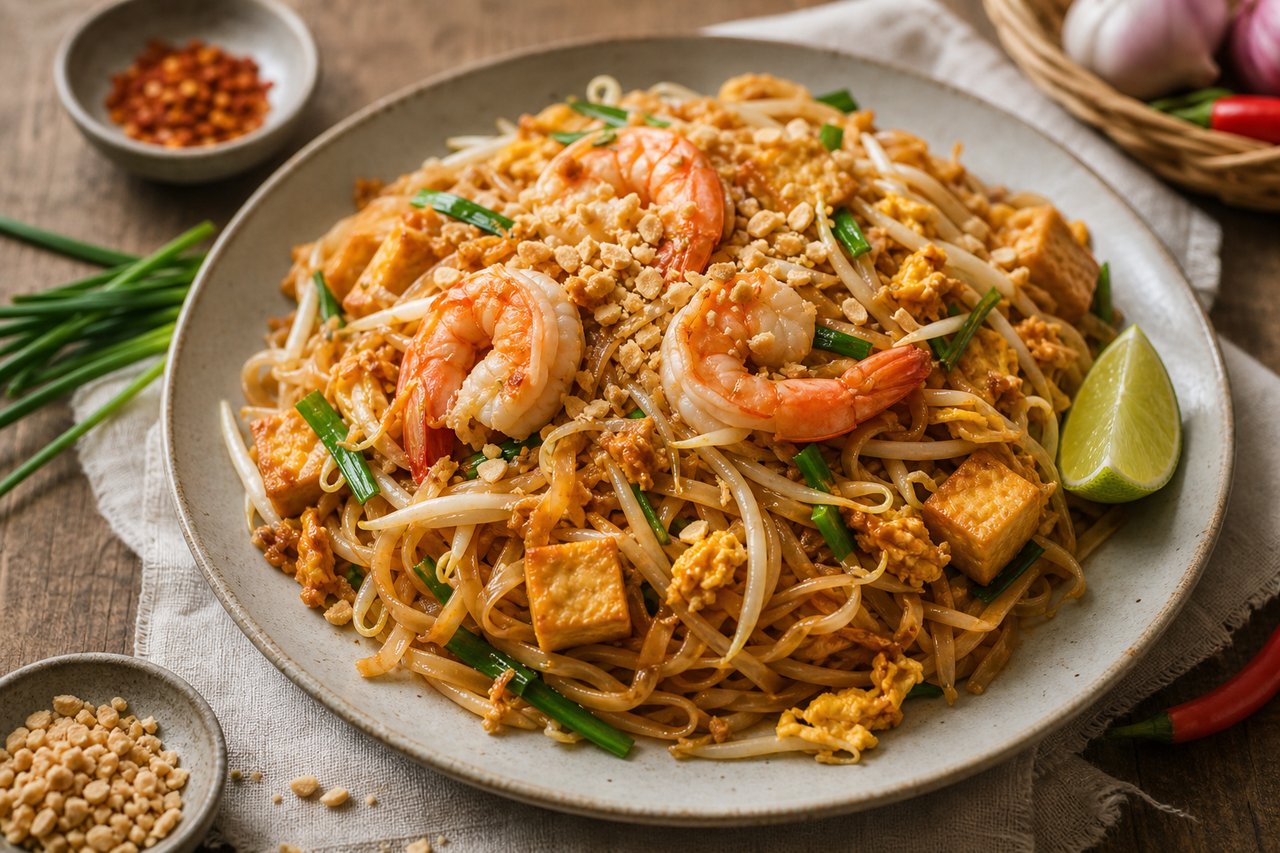
Pad Thai

Thai

Pad Thai

35 min Medium

Stir-fried rice noodles balanced on tamarind, fish sauce and palm sugar, with prawns, egg, tofu and a crunch of peanuts — the four-flavour classic in noodle