Cook with
Recipes with Miso
Fermented soybean paste, the base of miso soup and many glazes.
Miso is a thick, savoury paste made by fermenting soybeans with salt and a grain culture called koji, usually rice or barley. Central to Japanese cooking, it ranges from pale and sweet to dark and intensely savoury, and a single spoonful brings a deep, rounded umami that few other ingredients can match. Beyond its famous soup, it is a quiet workhorse in marinades, glazes and dressings.
What it is and how it tastes
The koji culture slowly breaks the soybeans down over weeks or years, building glutamates that give miso its hallmark savoury depth. Colour is a reliable guide to flavour: the paler the miso, the shorter the fermentation and the milder and sweeter the taste; the darker it is, the longer it has aged and the saltier and more assertive it becomes. The grain used in the koji also matters, with rice miso tasting rounder and sweeter and barley miso earthier. The texture is smooth and spreadable, somewhere between peanut butter and thick paste, dissolving readily into warm liquid without leaving lumps if it is whisked in gently.
How to use it
Miso almost always goes in toward the end of cooking. For soup, dissolve it into hot broth off the boil so its aroma survives, ideally by loosening it in a ladle of liquid first so it disperses smoothly. As a glaze, whisk it with mirin and a little sugar and brush it over fish, chicken or vegetables before grilling, where it caramelises into a savoury-sweet crust. Thinned with vinegar and oil it dresses salads; stirred into braises and stews it adds body and depth; even a small spoonful can deepen a stock or a pan sauce. Because it is salty, it usually replaces some of the salt in a recipe rather than adding to it, so it is worth tasting and adjusting once it has gone in.
Buying and storing
Choose a paste sold refrigerated where possible, listing soybeans, koji and salt. White miso is the friendliest first purchase for its versatility, with red kept for heartier dishes. Once opened, keep it covered in the fridge with the surface pressed flat; it lasts up to a year, only deepening over time.
Where it shines and substitutes
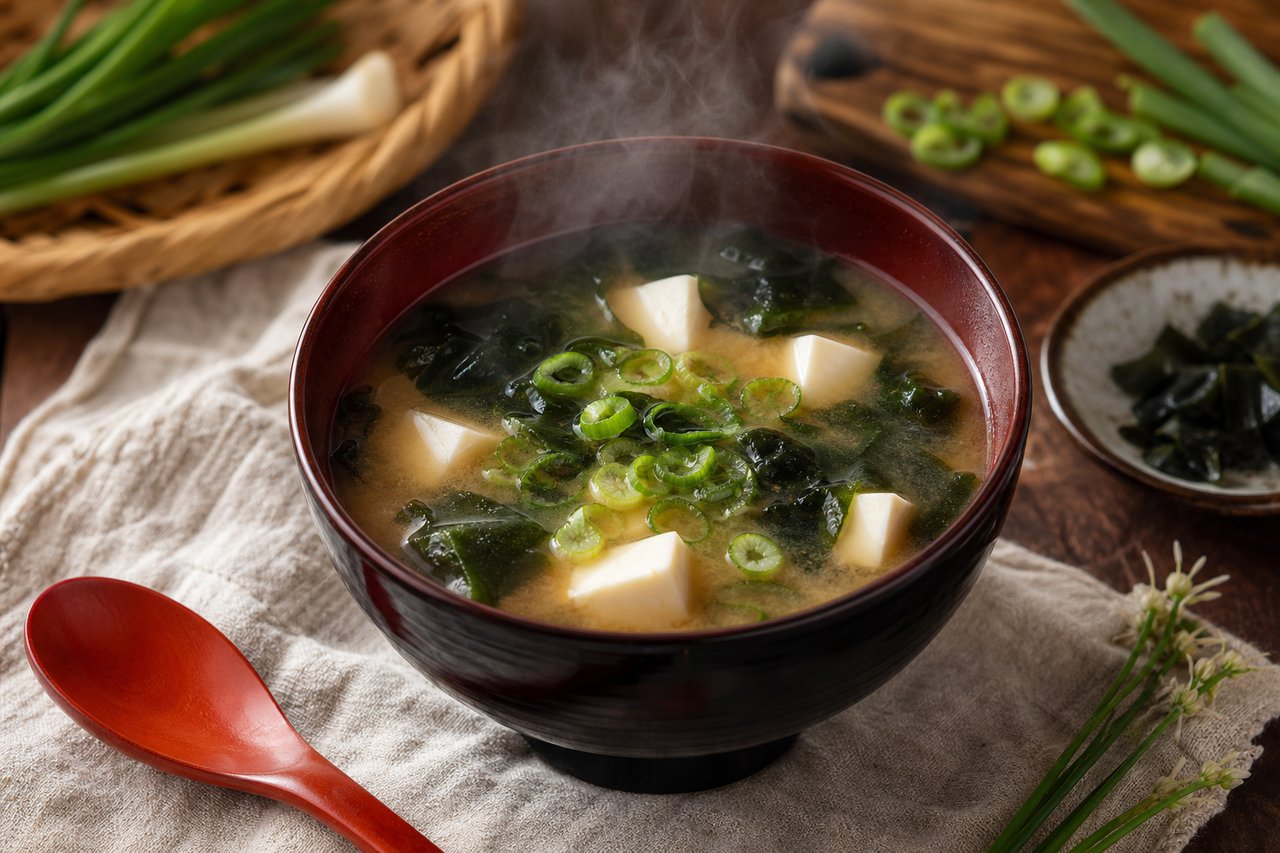
Miso is the heart of a classic miso soup, enriches a marinade for teriyaki salmon, and rounds out the broth of a hearty tonkotsu ramen. There is no exact substitute, though tahini blended with soy sauce roughly mimics its savoury thickness in a pinch, and a little soy sauce alone can stand in where only the salt and umami are wanted. Once a tub is open in the fridge, it quickly becomes one of the most reached-for seasonings in the kitchen. For more on stocking the staples it sits beside, see the Asian pantry guide.
The miso recipe (1)
See also the Asian pantry guide for more on stocking these ingredients.