Cook with
Recipes with Lemongrass
A fragrant, citrusy stalk bruised or sliced into Thai and Vietnamese soups and curries.
Lemongrass is one of the defining aromatics of Southeast Asian cooking — a tall, reedy stalk with a clean, citrus-floral fragrance that sits somewhere between lemon zest and fresh ginger, but with a perfume all its own. It runs through Thai and Vietnamese kitchens in particular, lending its brightness to soups, curries, marinades and grilled dishes without the sourness that actual citrus would bring.
What it is and how it tastes
The stalk grows in dense clumps and is harvested as a firm, pale-green cane. Raw, it is intensely fibrous and far too tough to eat whole; its job is to release aroma. Bruised and simmered it perfumes a liquid gently, while finely minced or pounded into a paste it disperses right through a dish. The flavour is fresh and lifting rather than heavy, which is why it so often appears alongside chilli, galangal and fish sauce — it keeps a rich, spicy dish feeling bright.
How to prepare and cook it
Start by trimming off the woody top and the hard root base, then peel away the dry outer layers until you reach the smoother, paler core. For pastes and stir-fries, slice the bottom third into thin rounds and pound or blitz it until no long fibres remain — under-processed lemongrass leaves unpleasant splinters in the finished dish. For broths and curries where the stalk will be removed, simply bruise the whole lower stalk with the flat of a knife to crack it open and release the oils, then add it whole. Lemongrass stands up well to long cooking, so it can go in early.
Buying and storing
Choose stalks that feel firm and heavy with tightly packed layers; limp, dried-out canes have lost much of their oil. The base should smell fragrant when scratched. At home it keeps for a couple of weeks in the fridge, but it freezes beautifully — keep a bag of whole stalks in the freezer and prepare them straight from frozen, which actually makes them easier to slice.
Where it shines
Lemongrass is essential to a fragrant Thai green curry and to the hot-and-sour broth of tom yum goong, where it is bruised and steeped. It is equally at home in Vietnamese cooking, perfuming grilled lemongrass chicken and many marinades. A little goes a long way, and once its prep becomes second nature it is one of the most rewarding aromatics to keep in the kitchen. For more on building a Southeast Asian pantry around it, see the Asian pantry guide.
Lemongrass recipes (3)
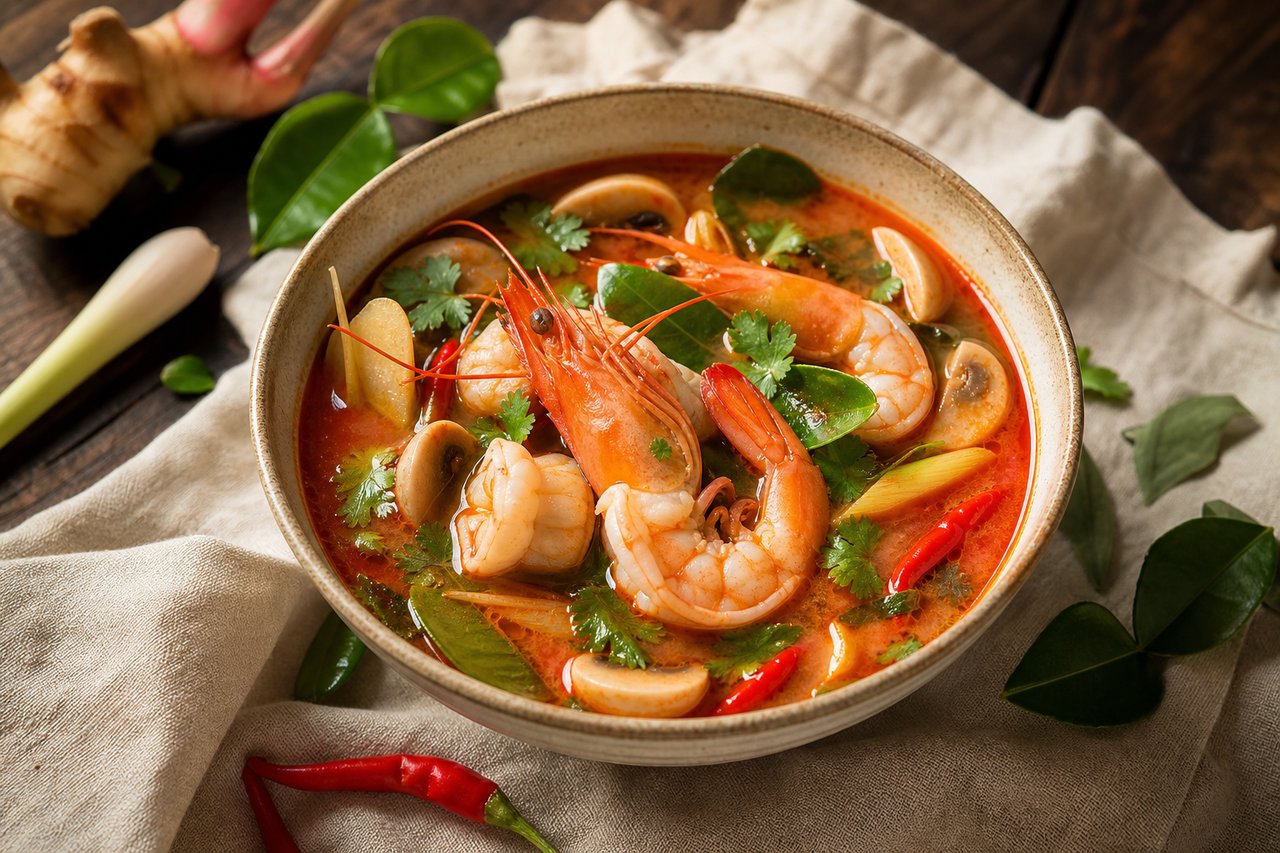
Thai
Tom Yum Goong
Thailand's iconic hot-and-sour prawn soup — fragrant with lemongrass, galangal and kaffir lime, sharpened with lime and chilli and ready in under half an hour.
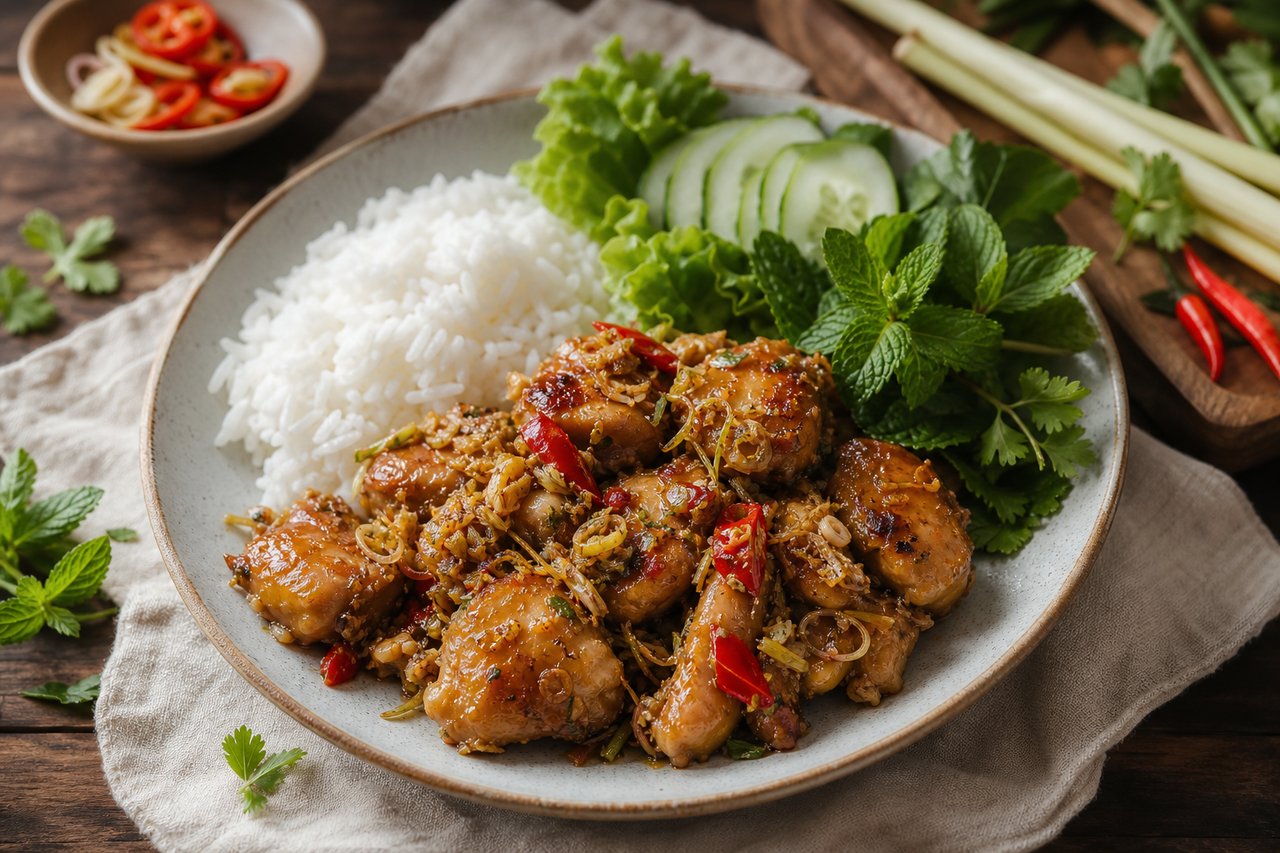
Vietnamese
Vietnamese Lemongrass Chicken (Ga Xao Sa Ot)
Quick stir-fried chicken in a fragrant lemongrass, garlic and chilli marinade with a savoury fish-sauce glaze — a bright, aromatic weeknight dish over rice.
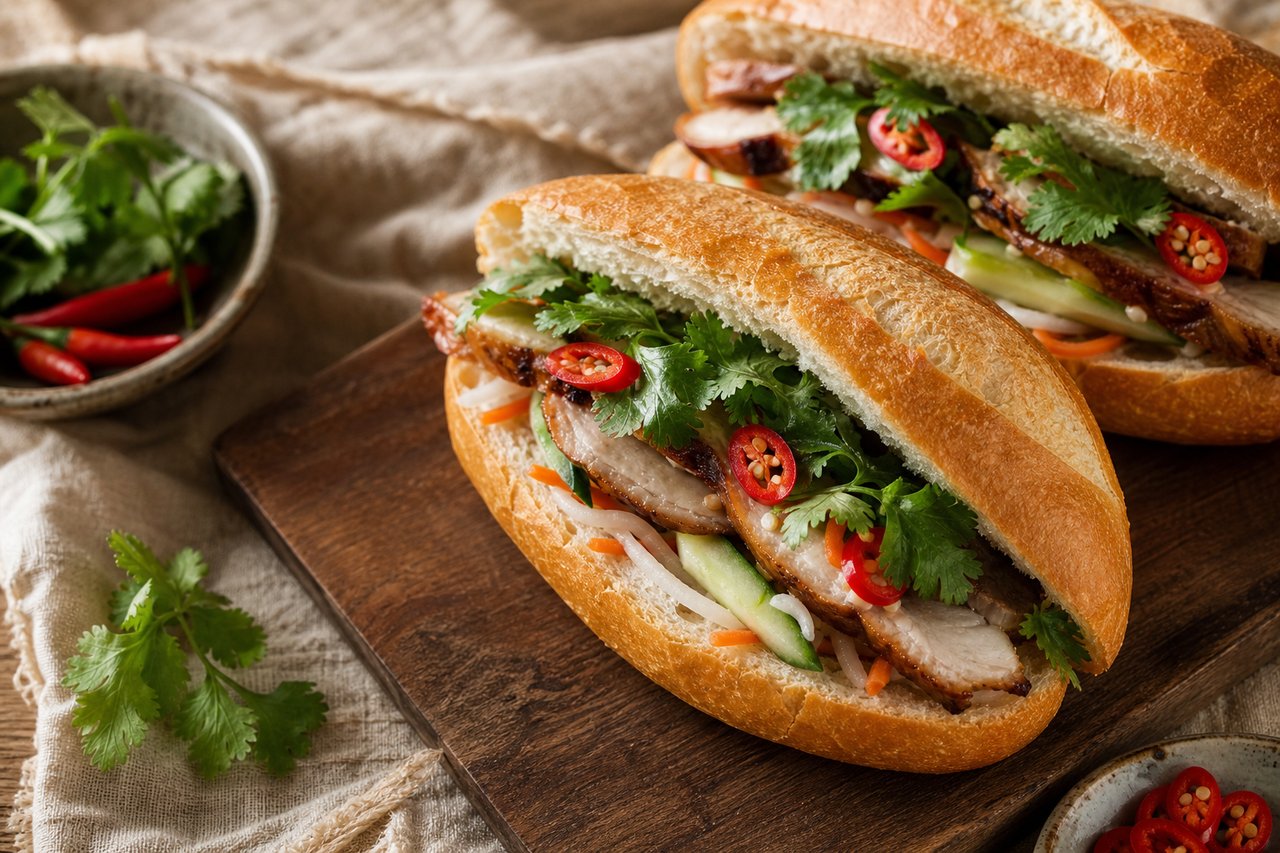
Vietnamese
Banh Mi (Vietnamese Pork Sandwich)
A shatteringly crisp baguette filled with savoury pork, quick-pickled carrot and daikon, cucumber, coriander and chilli — the four-taste balance in a sandwich.
See also the Asian pantry guide for more on stocking these ingredients.