Cook with
Recipes with Galangal
A sharper, piney cousin of ginger, essential to Thai curries and tom yum.
Galangal is a defining aromatic of Thai and wider Southeast Asian cooking — a rhizome closely related to ginger but sharper, harder and more perfumed, with a piney, citrusy bite that gives Thai soups and curry pastes their unmistakable character. Where ginger brings warmth, galangal brings a bright, almost medicinal edge, and the two are not interchangeable when galangal is leading the dish.
What it is and how it tastes
The rhizome looks like a paler, smoother cousin of ginger, often marked with faint bands and tipped with pink shoots. It is noticeably denser and more woody, far too fibrous to eat in chunks. The flavour is complex and lifting: piney and resinous, with citrus and a peppery sharpness that cuts cleanly through rich coconut and chilli. This brightness is exactly why it sits at the heart of so many Thai pastes and broths, balancing fat and heat without adding sweetness the way ginger would.
How to prepare and cook it
Because galangal is so hard, a sharp, sturdy knife is essential. For soups and broths, slice the root into thin coins and bruise them, then drop them in to steep, fishing them out before serving — they are there to perfume, not to be eaten. For curry pastes the root must be chopped extremely fine and pounded or blitzed at length, since its tough fibres never soften completely and can otherwise leave a stringy finish. Galangal stands up to long cooking, so it goes in early and holds its aroma throughout.
Buying and storing
Choose firm, heavy pieces with smooth, taut skin and a fresh, sharp scent at a cut surface; light, shrivelled or very woody roots have dried out. Younger, paler galangal is milder and a little easier to slice. It keeps for a couple of weeks wrapped in the fridge, but freezes especially well — store whole pieces in a bag and slice straight from frozen, which spares the effort of cutting the hard fresh root.
Where it shines
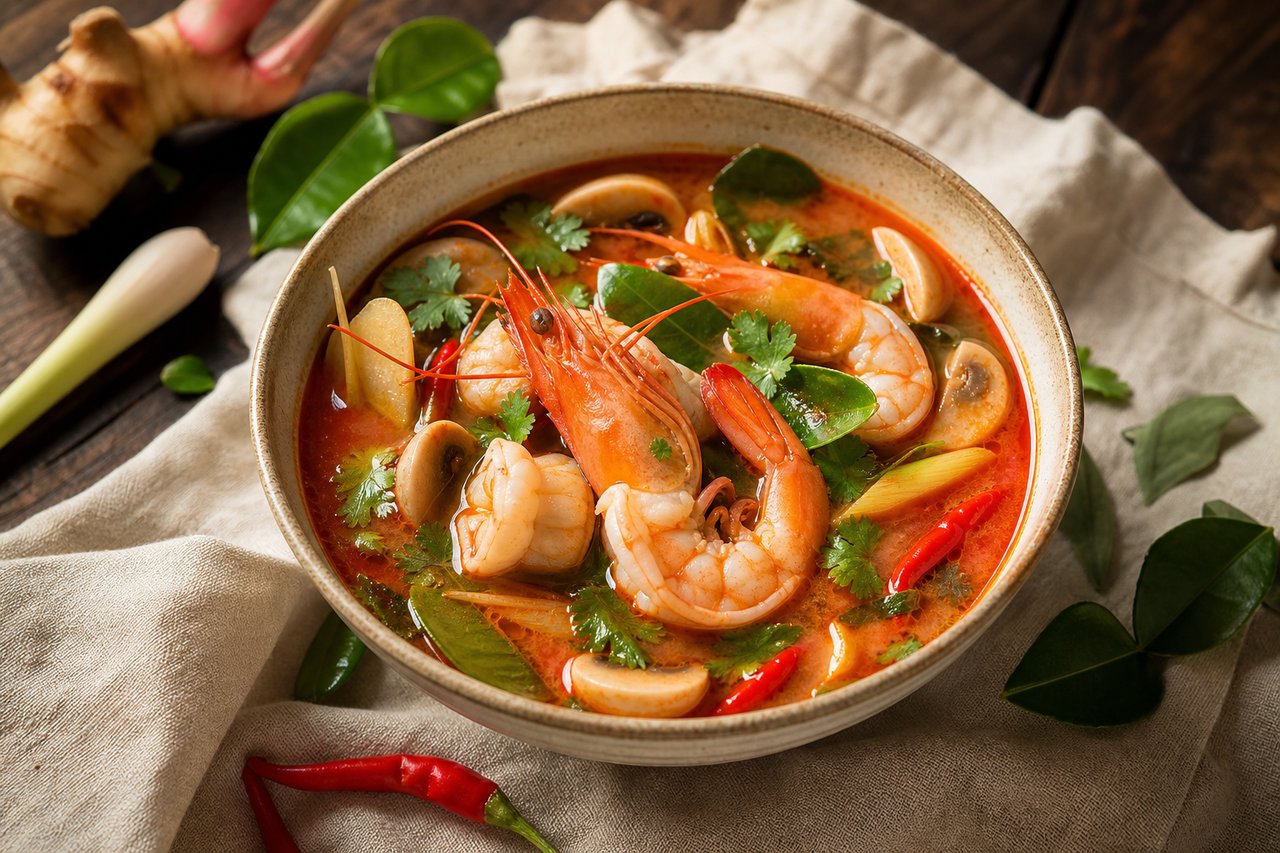
Galangal is indispensable to the hot-and-sour broth of tom yum goong, where it is bruised and steeped alongside lemongrass, and it is pounded into the paste behind a fragrant green curry and a rich massaman curry. No swap matches it exactly, though ginger with a little lime zest approximates its role in a broth. Where it defines a dish it is worth tracking down; for more on stocking these aromatics, see the Asian pantry guide.
The galangal recipe (1)
See also the Asian pantry guide for more on stocking these ingredients.